
Introduction
HDPE tube fitting plugs are essential components for sealing pipe ends, isolating sections, or capping off unused branches in HDPE networks. Unlike metal plugs, which may corrode or require thread sealants, HDPE plugs integrate seamlessly with polyethylene pipes via fusion, mechanical compression, or threaded connections. They provide leak-proof termination, protect pipelines from debris, and enable future modifications without compromising system integrity. This article explores plug types, installation techniques, and applications, empowering engineers and installers to optimize HDPE system reliability and safety.
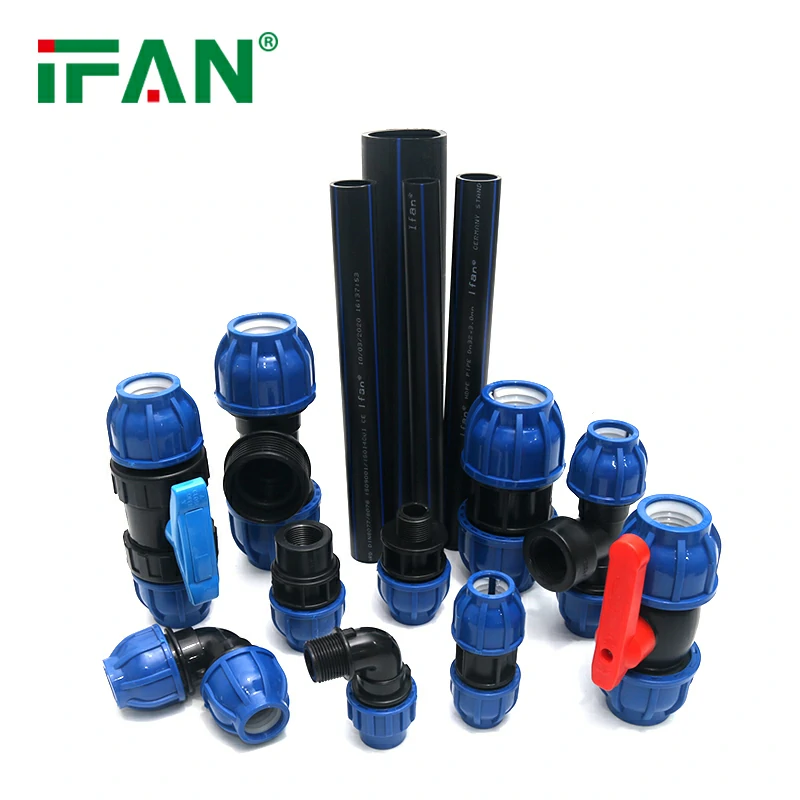
1. Understanding HDPE Plugs: Structure and Function
HDPE plugs are designed to create a permanent or temporary seal in HDPE pipes. Their construction combines a durable HDPE body with a sealing mechanism—such as a fusion-compatible socket, a compression ring, or male threads—to block fluid flow. Unlike metal plugs, which rely on gaskets or thread compounds, HDPE plugs leverage the material’s flexibility and chemical resistance to form a reliable barrier.
Key features include:
- Corrosion-Resistant HDPE Construction: Withstands aggressive media, UV exposure, and thermal cycling without degrading.
- Lightweight and Impact-Resistant: Simplifies handling and installation, even in rugged environments.
- Leak-Proof Sealing Options: Fusion welding, compression fittings, or precision threads ensure no leaks.
- Reusable or Permanent Designs: Choose between plugs that can be removed for system modifications or those that provide a permanent seal.
2. Types of HDPE Plugs and Their Applications
- Fusion-Welded HDPE Plugs:
- Function: Melt the plug’s socket to the pipe end using electrofusion or butt-fusion techniques.
- Best For: Permanent seals in municipal water mains, gas pipelines, or underwater installations where leaks are unacceptable.
- Compression HDPE Plugs:
- Function: Use a split ring and O-ring to grip the pipe’s outer diameter, creating a pressure-tight seal.
- Best For: Temporary closures during maintenance, repairs, or pressure testing.
- Threaded HDPE Plugs:
- Function: Screw into a female-threaded HDPE fitting (e.g., a tee or valve) to block flow.
- Best For: Capping off branch lines in irrigation systems, chemical processing plants, or fire suppression networks.
- Fabricated HDPE Blind Plugs:
- Function: Custom-made for large diameters or specialized applications, such as dual-containment systems.
- Best For: Industrial slurry lines, mining operations, or hazardous material transport where standard plugs are insufficient.
3. Advantages of HDPE Plugs Over Metal Alternatives
- Corrosion and Chemical Immunity: Unlike metal, HDPE does not rust, pit, or degrade when exposed to chlorinated water, fertilizers, or industrial chemicals.
- Seamless Integration with HDPE Pipes: Fusion joints create bonds as strong as the pipe itself, eliminating leaks that could contaminate water or soil.
- Thermal and Shock Resistance: HDPE plugs flex under ground movement or temperature fluctuations without cracking. PVC plugs, by contrast, become brittle in cold weather.
- Cost-Efficiency: Lower material, installation, and maintenance costs stem from HDPE’s durability. Plugs last 50+ years in optimal conditions, reducing replacement expenses.
- Environmental Sustainability: HDPE is recyclable, and its production emits fewer greenhouse gases than metal manufacturing.
4. Installation Best Practices for HDPE Plugs
Step 1: Select the Right Plug Type and Size
Match the plug’s sealing method (fusion, compression, or threaded) to the system’s requirements. Use fusion plugs for permanent seals, compression plugs for temporary closures, and threaded plugs for capping branch fittings.
Step 2: Prepare the HDPE Pipe or Fitting
Cut the pipe squarely with a fine-toothed saw or rotary tool. Deburr edges to prevent obstructions or uneven fusion. For threaded plugs, ensure the female fitting’s threads are clean and undamaged.
Step 3: Install the Plug
- For Fusion-Welded Plugs:
- Clamp the plug and pipe, ensuring alignment.
- Connect terminals to a fusion machine and apply the recommended voltage/time to melt the HDPE.
- For Compression Plugs:
- Slide the compression ring and O-ring onto the pipe.
- Insert the pipe into the plug’s socket and tighten the compression nut until hand-tight, then use a wrench for an additional 1–2 turns.
- For Threaded Plugs:
- Wrap the plug’s male threads with 3–5 turns of PTFE tape (clockwise) to create a leak-proof seal.
- Hand-tighten the plug into the female fitting, then use a wrench to turn it an additional 1–2 full rotations. Avoid overtightening, which could crack the HDPE.
Step 4: Pressure-Test the Seal
After cooling (for fusion) or tightening (for compression/threaded plugs), pressurize the line to 1.5 times the operating pressure. Inspect for drops or visible leaks at the plug-to-pipe or plug-to-fitting joint.
Step 5: Secure and Protect the Installation
Backfill trenches carefully to avoid damaging the plug. For above-ground plugs, install protective caps or paint them with UV-resistant coatings.
5. Common Installation Challenges and Solutions
- Improper Fusion: Underheating creates weak bonds, while overheating burns the HDPE. Use calibrated fusion machines and follow manufacturer guidelines.
- Thread Leaks: Insufficient PTFE tape or overtightening can cause leaks. Apply tape correctly and use a torque wrench for critical applications.
- Compression Nut Stripping: Over-tightening the compression nut can damage the O-ring or pipe. Tighten until resistance is felt, then stop.
- Thermal Expansion Issues: In extreme climates, leave slight slack in above-ground pipes to accommodate temperature swings without stressing the plug.
6. Maintenance and Longevity of HDPE Plugs
- Visual Inspections: Look for cracks, discoloration, or UV damage (if unprotected).
- Thread Integrity Checks: Ensure threaded plugs are tight and free of corrosion.
- Replacing Worn Components: If an O-ring or compression ring fails, disassemble the joint, clean the surfaces, and install new parts.
- Protecting Against UV Exposure: For outdoor installations, apply UV-resistant paint or install shrouds to prevent HDPE degradation.
7. Innovations Driving HDPE Plug Technology
- Smart Plugs with Pressure Sensors: These monitor seal integrity in real time, alerting operators to potential leaks before they escalate.
- 3D-Printed Custom Plugs: Tailor-made fittings for unique geometries reduce installation time and material waste.
- Bio-Based HDPE Plugs: Manufacturers are experimenting with plant-derived polymers to reduce reliance on fossil fuels.
- Quick-Release Compression Plugs: Some models feature push-to-connect designs for rapid installation and removal, ideal for modular systems.
8. Applications Driving HDPE Plug Adoption
- Municipal Water and Sewer Systems: Leak-proof seals protect water quality and prevent groundwater contamination.
- Agricultural Irrigation: Plugs withstand soil movement, fertilizer exposure, and UV rays, extending field lifespan.
- Industrial Chemical Processing: Their chemical resistance handles aggressive media without degrading.
- Marine and Offshore Projects: Saltwater resistance makes them ideal for desalination plants, fish farms, or coastal pipelines.
- Renewable Energy Systems: Geothermal and solar thermal installations use HDPE plugs for their thermal stability and ease of installation.
9. Environmental and Economic Benefits of HDPE Plugs
- Reduced Carbon Footprint: HDPE production emits fewer greenhouse gases than metal manufacturing. Lightweight shipping also lowers transport emissions.
- Recyclability: At end-of-life, HDPE plugs can be ground and reused in new products, diverting waste from landfills.
- Energy Efficiency: Smooth internal surfaces reduce pumping energy costs by minimizing friction (though plugs block flow, their role in system integrity supports overall efficiency).
- Long Service Life: Fewer replacements mean less material waste and lower lifecycle costs.
Conclusion
HDPE tube fitting plugs are more than just caps; they are guardians of system integrity, ensuring pipelines operate safely, efficiently, and sustainably. Their ability to withstand harsh environments, form leak-proof seals, and integrate with smart technologies makes them indispensable for modern infrastructure. By mastering installation techniques, embracing innovations, and prioritizing proactive maintenance, professionals can leverage HDPE plugs to build systems that meet today’s demands while safeguarding tomorrow’s resources.
IFAN factory started in 1993. And IFAN has workshop 120000 square meter with 610 staff. IFAN can design and produce all plumbing pipe and fitting include PPR,PVC,CPVC PPSU HDPE PEXA PEXB PERT pipe and fitting ,brass fitting, brass ball valve ,heating system , gas system , sanitary faucets and hose, In the past 30 Years, IFAN has never forgotten his mission-To protect health and safety. And IFAN factory use best materials to produce high quality pipe and fittings with automatic production line and high tech quality control machines. The most important,IFAN can guarantee that all pipes and fittings manufactured by IFAN are qualified. More information pls feel free contact us Whatsapp.