
Introduction
In modern plumbing systems, every fitting plays a specific role in ensuring leak-free and efficient operation. Among these, the PPR thread plug may seem minor, but its function is critical. Designed to seal the ends of threaded PPR pipes or fittings, the PPR thread plug is essential for pressure containment, maintenance access, and system safety.
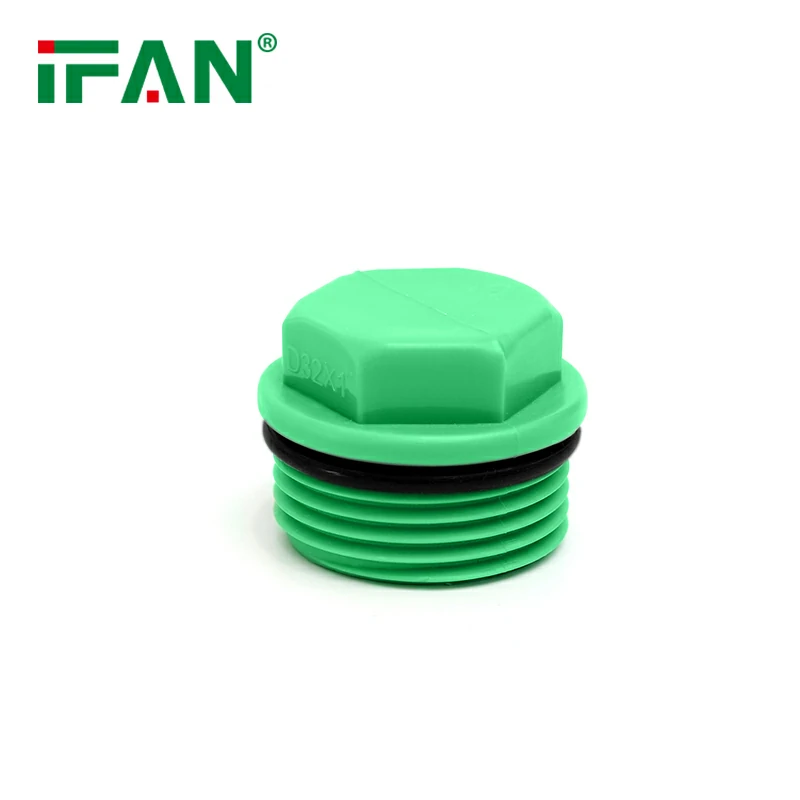
What Is a PPR Thread Plug?
A PPR thread plug is a threaded fitting made from polypropylene random copolymer (PPR) used to close off the ends of pipes or female-threaded fittings. It is typically screwed into the open end of a pipe or fitting to block fluid flow temporarily or permanently. These plugs come in various sizes to match standard PPR thread dimensions and can be used in both hot and cold water systems.
Key Features of PPR Thread Plugs
1. Excellent Sealing Capability
The primary function of a PPR thread plug is to prevent water leakage at the pipe’s end. When installed properly with sealing tape or compound, it forms a secure and tight connection.
2. High Durability
Made from high-grade PPR material, these plugs resist impact, pressure, and high temperatures. Their chemical resistance also makes them suitable for industrial or residential systems where aggressive water chemistry might be present.
3. Easy Installation
No welding or complex tools are required. The PPR thread plug simply screws into a threaded socket. This makes it a convenient solution for temporary pipe closures during maintenance or testing.
4. Reusable and Replaceable
Unlike glued or welded caps, a thread plug can be removed and reinstalled multiple times. This feature allows for easy future pipe access or system expansion.
Common Applications of PPR Thread Plugs
- Maintenance and Testing: Temporarily seal off a pipeline section during pressure testing or repair.
- System Isolation: Close off unused outlets in plumbing networks.
- Future Expansion Points: Prepare systems for future additions without leaving open pipe ends.
- Irrigation and Agricultural Systems: Seal outlets not currently in use but potentially needed later.
Advantages Over Metal Plugs
| Feature | PPR Thread Plug | Metal Plug |
|---|---|---|
| Corrosion Resistance | Excellent | Prone to rust |
| Thermal Insulation | Natural insulating material | Requires additional protection |
| Weight | Lightweight | Heavier and harder to install |
| Cost | More affordable | Typically more expensive |
Installation Tips
- Clean the Threads: Ensure both male and female threads are clean and undamaged.
- Use PTFE Tape: Wrap the male threads with PTFE tape to improve sealing performance.
- Avoid Over-Tightening: Tighten by hand, then use a wrench for a final snug fit — too much force may damage threads.
- Pressure Test: After installation, conduct a pressure test to confirm no leaks occur.
Conclusion
The PPR thread plug may be small, but it plays a vital role in the integrity and flexibility of plumbing systems. Whether you’re sealing a temporary outlet, performing maintenance, or preparing for future upgrades, this simple fitting ensures your pipeline remains safe, leak-free, and ready for service. Investing in high-quality PPR fittings—including plugs—ensures a longer lifespan for your entire piping system.
IFAN factory started in 1993. And IFAN has workshop 120000 square meter with 610 staff. IFAN can design and produce all plumbing pipe and fitting include PPR,PVC,CPVC PPSU HDPE PEXA PEXB PERT pipe and fitting ,brass fitting, brass ball valve ,heating system , gas system , sanitary faucets and hose, In the past 30 Years, IFAN has never forgotten his mission-To protect health and safety. And IFAN factory use best materials to produce high quality pipe and fittings with automatic production line and high tech quality control machines. The most important,IFAN can guarantee that all pipes and fittings manufactured by IFAN are qualified. More information pls feel free contact us Whatsapp.