
Introduction
PPR union fittings revolutionize polypropylene piping systems by providing detachable connection points without compromising system integrity. These ingenious components combine the durability of heat-fused joints with the convenience of mechanical disassembly, making them indispensable for maintenance, repairs, and system modifications. Unlike permanent fusion joints, unions allow for quick access to specific pipeline sections while maintaining the leak-proof performance expected from PPR systems.
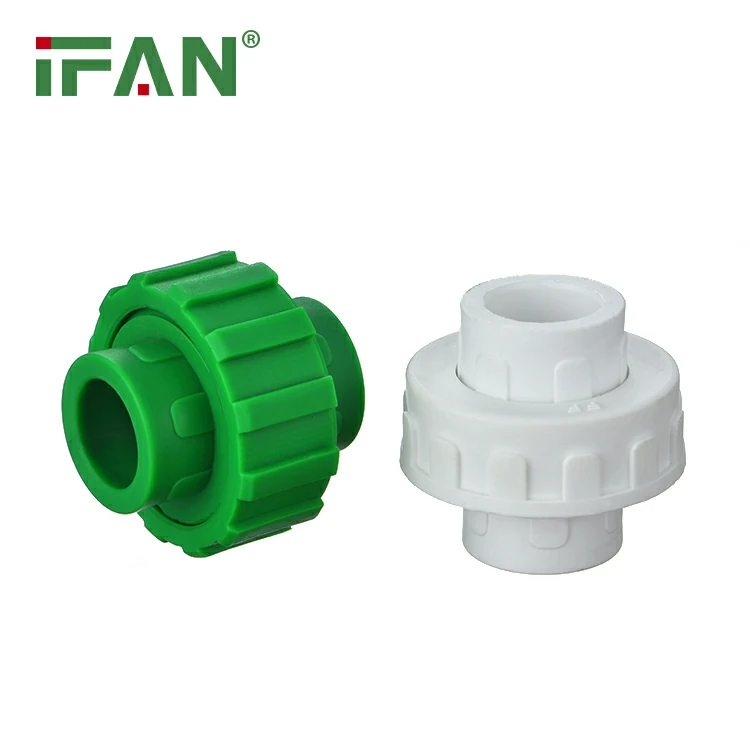
Key Advantages of PPR Unions
1. Maintenance-Friendly Design
- Enables section isolation without pipe cutting
- Simplifies component replacement
- Reduces downtime during repairs
2. Leak-Proof Performance
- Dual sealing mechanism (fusion + mechanical)
- Precision-machined mating surfaces
- Corrosion-resistant construction
3. System Flexibility
- Accommodates thermal expansion/contraction
- Allows for future system expansions
- Facilitates equipment installation/removal
4. Time-Saving Installation
- Combines fusion and threaded connections
- Eliminates need for special tools
- Reusable components
Types of PPR Union Fittings
1. Socket Union Fittings
- One side heat-fused, one side mechanical
- Ideal for equipment connections
- Common in pump installations
2. Threaded Union Fittings
- Male/female threaded ends
- For hybrid metal/PPR systems
- Requires thread sealant
3. Flange Adapter Unions
- Connects to standard pipe flanges
- For high-pressure applications
- Used in industrial systems
4. Compact Slip Unions
- Space-saving design
- Quick-connect mechanism
- For tight spaces
Professional Installation Guide
Preparation Phase
- Verify pipe and union compatibility
- Clean all connection surfaces
- Prepare fusion welding equipment
Fusion Connection
- Heat fuse the fixed union end per standard PPR procedure
- Maintain proper alignment during cooling
Mechanical Connection
- Hand-tighten the union nut initially
- Final tighten with appropriate wrench
- Avoid over-torquing
Pressure Testing
- Test at 1.5x working pressure
- Check for leaks at union interface
- Re-tighten if necessary
Maintenance & Troubleshooting
Routine Checks
- Annual torque verification
- Seal inspection during system service
- Lubrication of threads (food-grade lubricant)
Common Issues
| Symptom | Likely Cause | Solution |
|---|---|---|
| Seepage at joint | Loose union nut | Proper re-tightening |
| Persistent leak | Damaged O-ring | Seal replacement |
| Difficult disassembly | Corroded threads | Penetrating oil application |
| Cracked body | Over-tightening | Complete replacement |
Technical Specifications
| Parameter | Specification |
|---|---|
| Material | PPR + Brass/Nickel-plated components |
| Pressure Rating | PN16-PN25 |
| Temperature Range | -10°C to 95°C |
| Connection Types | Socket/Threaded/Slip |
| Reusability | 50+ cycles (proper maintenance) |
5 Essential FAQs
1. How often should union connections be inspected?
Conduct visual checks annually and torque verification every 3 years for critical systems.
2. Can PPR unions handle hot water applications?
Yes, when properly specified – verify temperature ratings with manufacturer.
3. What’s the proper tightening procedure?
Hand-tight plus 1/4 to 1/2 turn with wrench – never exceed manufacturer’s torque specs.
4. Are unions as reliable as fused joints?
For properly installed quality unions – yes, though fused joints remain slightly more permanent.
5. Can I reuse a disassembled union?
Yes, provided all seals are intact and threads undamaged – always replace O-rings.
Conclusion
PPR union fittings represent the perfect marriage of PPR’s fusion benefits with mechanical connection convenience. Their intelligent design solves one of traditional PPR systems’ few limitations – permanent connections – while maintaining all the material’s inherent advantages. By selecting quality unions, following proper installation techniques, and performing routine maintenance, these fittings deliver decades of reliable, maintenance-friendly service.
IFAN factory started in 1993. And IFAN has workshop 120000 square meter with 610 staff. IFAN can design and produce all plumbing pipe and fitting include PPR,PVC,CPVC PPSU HDPE PEXA PEXB PERT pipe and fitting ,brass fitting, brass ball valve ,heating system , gas system , sanitary faucets and hose, In the past 30 Years, IFAN has never forgotten his mission-To protect health and safety. And IFAN factory use best materials to produce high quality pipe and fittings with automatic production line and high tech quality control machines. The most important,IFAN can guarantee that all pipes and fittings manufactured by IFAN are qualified. More information pls feel free contact us Whatsapp.