
CPVC (Chlorinated Polyvinyl Chloride) ball valves are essential components in fluid control systems, offering reliable shut-off capabilities for corrosive liquids and high-temperature applications. Known for their durability, chemical resistance, and ease of operation, these valves are widely used in industrial, commercial, and residential plumbing.
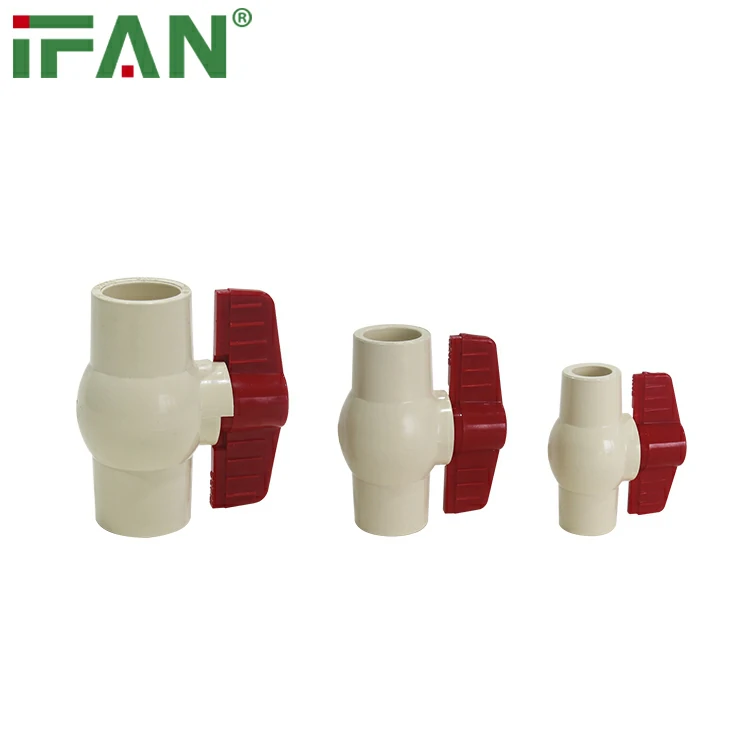
This guide explores their working principles, material advantages, key applications, performance specifications, and tips for selecting the right valve for your needs.
1. How CPVC Ball Valves Work
CPVC ball valves operate via a simple quarter-turn mechanism:
- Ball Design: A hollow, perforated ball rotates inside the valve body.
- Flow Control: When aligned with the pipe (0° rotation), the valve allows full flow. A 90° turn blocks the passage, stopping fluid movement.
- Sealing Mechanism: PTFE (Teflon) seats or O-rings ensure a leak-proof seal, even under high pressure.
Key Benefits:
- Instant on/off control with minimal pressure drop.
- Suitable for both manual and automated (actuator-driven) systems.
- Low maintenance requirements due to fewer moving parts.
2. Why Choose CPVC Over Other Materials?
CPVC ball valves outperform traditional metals (like brass or steel) and other plastics (such as PVC) in specific environments:
| Feature | CPVC Ball Valves | PVC Ball Valves | Metal Ball Valves |
|---|---|---|---|
| Temperature Range | Up to 200°F (93°C) | Up to 140°F (60°C) | Up to 400°F (204°C) (varies) |
| Chemical Resistance | Excellent against acids, alkalis, and salts | Good for neutral liquids | Prone to corrosion in aggressive chemicals |
| Pressure Rating | Typically 150–300 PSI | 125–200 PSI | 600+ PSI (higher cost) |
| Cost Efficiency | Moderate (cheaper than metal) | Lowest | Highest |
Ideal For:
- Hot water systems (e.g., solar heating, boilers).
- Chemical processing plants (handling acids, solvents).
- Wastewater treatment and pool plumbing.
3. Common Applications of CPVC Ball Valves
- Residential Plumbing:
- Hot water supply lines and water heater connections.
- Swimming pool circulation systems (resistant to chlorine).
- Industrial Processes:
- Chemical storage and transfer pipelines.
- Electroplating and metal finishing operations.
- Commercial Buildings:
- HVAC systems for glycol-based cooling loops.
- Fire sprinkler systems (when rated for fire safety).
4. Key Performance Specifications
When selecting a CPVC ball valve, consider these factors:
- Size Range: Typically ½” to 4″ (larger sizes available for industrial use).
- End Connections:
- Socket/Solvent Weld: Permanent, leak-proof joints (requires CPVC cement).
- Threaded (NPT/BSP): Easy installation/removal for repairs.
- Flanged: Suitable for high-pressure or large-diameter systems.
- Pressure Rating:
- Standard: 150 PSI at 73°F (23°C).
- High-performance: Up to 300 PSI for industrial use.
- Certifications: Look for NSF/ANSI 61 (potable water safety) or UL/FM approvals for fire systems.
5. How to Select the Right CPVC Ball Valve
- Fluid Compatibility: Ensure the valve material resists your application’s chemicals (e.g., sulfuric acid, sodium hypochlorite).
- Temperature & Pressure: Choose a valve rated above your system’s maximum operating conditions.
- Actuation Needs: Decide between manual handles or automated actuators (pneumatic/electric) for remote control.
- Installation Type:
- For permanent systems, solvent-welded valves offer superior strength.
- Threaded valves simplify future modifications.
Pro Tip: For outdoor installations, select UV-stabilized CPVC valves to prevent degradation from sunlight exposure.
6. Maintenance & Troubleshooting
- Regular Inspection: Check for leaks, cracks, or corrosion around seals.
- Lubrication: Apply silicone-based grease to O-rings annually to maintain flexibility.
- Common Issues:
- Stuck Valve: Clean debris from the ball and seats; avoid over-tightening.
- Leaking Seals: Replace worn PTFE seats or O-rings.
7. Top Brands for CPVC Ball Valves
- Spears Manufacturing: Known for high-quality socket-weld valves with NSF certification.
- Nibco: Offers threaded and flanged CPVC valves for industrial markets.
- Georg Fischer (GF Piping Systems): Provides UV-resistant valves for outdoor applications.
- Lasco Fittings: Budget-friendly options for residential plumbing.
Final Thoughts
CPVC ball valves are a cost-effective, durable solution for controlling corrosive or high-temperature fluids. Their resistance to chemicals, ease of installation, and low maintenance make them a top choice across industries.
IFAN factory started in 1993. And IFAN has workshop 120000 square meter with 610 staff. IFAN can design and produce all plumbing pipe and fitting include PPR,PVC,CPVC PPSU HDPE PEXA PEXB PERT pipe and fitting ,brass fitting, brass ball valve ,heating system , gas system , sanitary faucets and hose, In the past 30 Years, IFAN has never forgotten his mission-To protect health and safety. And IFAN factory use best materials to produce high quality pipe and fittings with automatic production line and high tech quality control machines. The most important,IFAN can guarantee that all pipes and fittings manufactured by IFAN are qualified. More information pls feel free contact us Whatsapp.