
1. Introduction to UPVC Bush Fittings
UPVC (Unplasticized Polyvinyl Chloride) bush fittings are specialized pipe connectors designed to facilitate the transition between pipes of different diameters while maintaining system integrity. These fittings feature a conical or stepped internal structure that ensures smooth flow and pressure distribution, making them indispensable in applications requiring precise diameter adjustments. Unlike rigid metal reducers, UPVC bush fittings offer flexibility, corrosion resistance, and cost-efficiency, making them a preferred choice in industrial and residential piping systems.
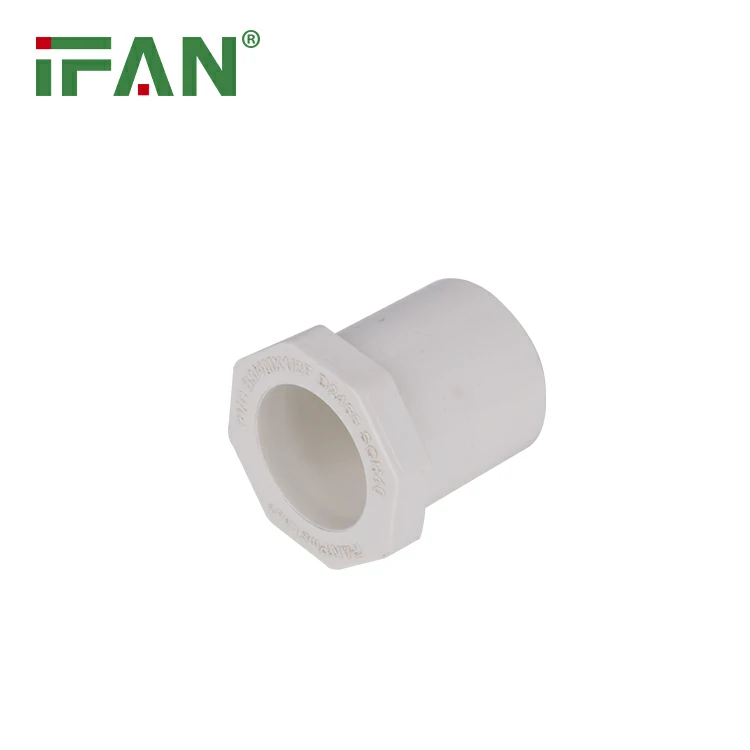
2. Key Features and Benefits
2.1 Seamless Diameter Transition
- Conical design: Gradually reduces pipe diameter, minimizing turbulence and pressure drop in fluid flow.
- Stepped variants: Provide precise diameter matching for modular piping systems, ensuring compatibility with standard pipe sizes (e.g., DN50 to DN25).
2.2 Superior Corrosion Resistance
- UPVC’s chemical inertness makes it immune to degradation from acids, alkalis, salts, and organic solvents.
- Ideal for:
- Chemical processing plants (e.g., connecting reactors to storage tanks).
- Wastewater treatment systems (resisting hydrogen sulfide and chlorine).
2.3 Lightweight and Easy to Install
- Weight: UPVC bush fittings weigh 60–70% less than steel equivalents, reducing labor costs during installation.
- Assembly: No welding or specialized tools required; connections are made via solvent cementing or threaded engagement, cutting installation time by up to 40%.
2.4 High Pressure and Temperature Tolerance
- Pressure rating: UPVC bush fittings can withstand pressures up to PN16 (1.6 MPa), suitable for industrial pipelines.
- Temperature range: Effective from 0°C to 60°C (short-term exposure up to 60°C, long-term use up to 45°C). For higher temperatures, CPVC or metal fittings are recommended.
2.5 Cost-Effectiveness
- Material cost: UPVC is 30–50% cheaper than stainless steel or brass.
- Maintenance: Resists scaling, fouling, and biological growth, lowering lifecycle costs by 35% compared to metal alternatives.
3. Applications Across Industries
3.1 Chemical Processing
- Use case: Connecting pipes of varying diameters in acid/alkali production lines.
- Advantage: Prevents leaks caused by corrosion, ensuring continuous operation.
3.2 Water Treatment
- Use case: Transitioning between large-diameter intake pipes and smaller filtration units in municipal water systems.
- Advantage: Resists chlorine degradation, maintaining water quality over decades.
3.3 HVAC and Cooling Systems
- Use case: Linking chillers to distribution pipes of different sizes in industrial facilities.
- Advantage: Withstands thermal cycling without cracking, unlike rigid metal joints.
3.4 Agriculture and Irrigation
- Use case: Adjusting pipe diameters in drip irrigation networks to optimize water flow.
- Advantage: Lightweight design simplifies installation in remote fields, while UV resistance ensures longevity under sunlight.
4. Types of UPVC Bush Fittings
| Type | Design | Applications |
|---|---|---|
| Conical Bush | Smooth, tapered internal bore | Low-pressure systems (e.g., drainage) |
| Stepped Bush | Internal steps for precise diameter matching | High-pressure industrial pipelines |
| Threaded Bush | External threads for screw-on installation | Connecting to threaded pipes or valves |
| Socket Bush | Solvent-cement socket for UPVC pipes | Residential plumbing, simple systems |
5. Installation Best Practices
5.1 Step-by-Step Guide
- Measure and cut pipes: Use a fine-tooth saw to ensure square, clean cuts.
- Deburr edges: Remove sharp protrusions with sandpaper to prevent seal damage.
- Clean surfaces: Wipe pipes and fittings with UPVC-compatible cleaner to remove oil and dirt.
- Apply solvent cement (for socket/threaded variants):
- Coat both pipe and fitting socket evenly.
- Insert pipe fully with a slight twisting motion to distribute cement.
- Tighten threaded bushings: Use a wrench for final adjustment (avoid over-tightening to prevent cracking).
- Allow curing: Wait 24 hours before pressure testing to ensure full bond strength.
5.2 Critical Tips
- Avoid thermal shock: Do not install UPVC bush fittings near heat sources exceeding 60°C.
- Use compatible sealants: For threaded fittings, opt for PTFE tape or silicone-based lubricants to prevent galling.
- Support long spans: Install pipe hangers every 1.5 meters to prevent sagging and stress on fittings.
6. Comparison with Alternative Materials
| Feature | UPVC Bush Fittings | Stainless Steel Bushings | Brass Bushings |
|---|---|---|---|
| Corrosion Resistance | Excellent (all chemicals) | Good (requires coating for chlorides) | Poor (tarnishes in acidic environments) |
| Weight | Lightweight | Heavy | Moderate |
| Cost | Low | High | Moderate |
| Installation Complexity | Simple (solvent/threaded) | Complex (welding required) | Moderate (threaded) |
| Temperature Range | 0–60°C | -20°C to 300°C+ | -20°C to 200°C |
7. Future Trends and Innovations
- Smart fittings: Integration of IoT sensors to monitor pressure, temperature, and leaks in real time.
- Hybrid materials: Development of UPVC-composite bushings with reinforced fibers for higher pressure applications.
- Eco-friendly additives: Biodegradable stabilizers to reduce environmental impact during disposal.
8. Conclusion
Plastic UPVC bush fittings offer a versatile, durable, and economical solution for connecting pipes of different diameters. Their resistance to corrosion, ease of installation, and low maintenance requirements make them indispensable in industries ranging from water treatment to chemical manufacturing. By adhering to proper installation practices and selecting fittings rated for specific pressure/temperature needs, engineers and contractors can ensure reliable, long-lasting performance while minimizing total cost of ownership.
IFAN factory started in 1993. And IFAN has workshop 120000 square meter with 610 staff. IFAN can design and produce all plumbing pipe and fitting include PPR,PVC,CPVC PPSU HDPE PEXA PEXB PERT pipe and fitting ,brass fitting, brass ball valve ,heating system , gas system , sanitary faucets and hose, In the past 30 Years, IFAN has never forgotten his mission-To protect health and safety. And IFAN factory use best materials to produce high quality pipe and fittings with automatic production line and high tech quality control machines. The most important,IFAN can guarantee that all pipes and fittings manufactured by IFAN are qualified. More information pls feel free contact us Whatsapp.