
1. Definition and Composition
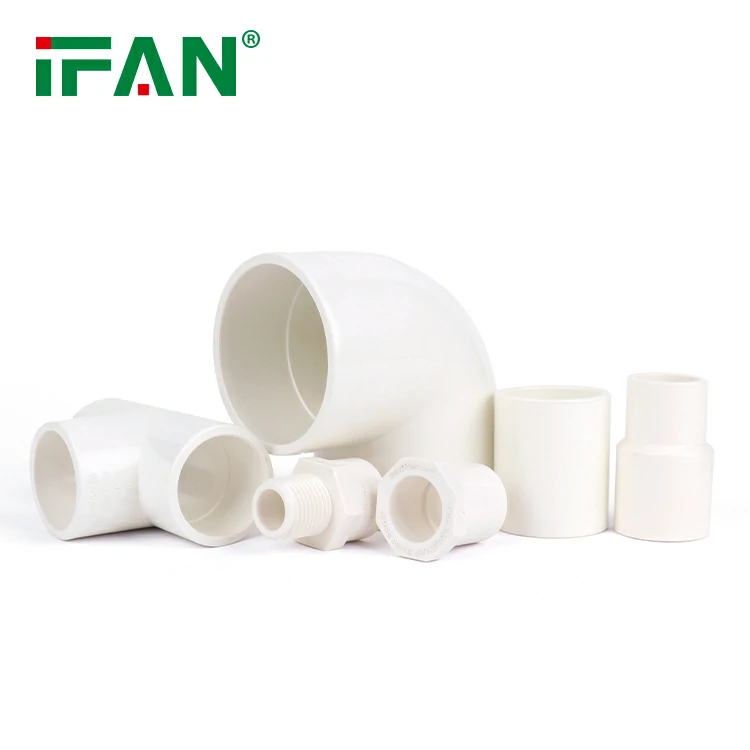
UPVC (Unplasticized Polyvinyl Chloride) plumbing fittings are connectors designed to join or redirect UPVC pipes in plumbing networks. Made from rigid thermoplastic polymer, they are free from plasticizers, ensuring high strength, dimensional stability, and resistance to deformation under pressure. This makes them ideal for transporting water, chemicals, and wastewater in residential, commercial, and industrial settings.
2. Key Properties and Advantages
- Chemical Resistance: UPVC fittings are immune to corrosion from acids, alkalis, salts, and organic solvents, making them suitable for aggressive environments like chemical plants and sewage systems.
- Thermal Stability: Effective in temperatures ranging from 0°C to 60°C (short-term exposure up to 60°C, long-term use up to 45°C). Not recommended for high-temperature steam applications.
- Mechanical Strength: High tensile and impact resistance ensure durability under pressure and physical stress, with a lifespan exceeding 50 years in most applications.
- Lightweight and Easy Handling: Weigh significantly less than metal fittings, reducing transportation and labor costs during installation.
- Cost-Efficiency: Lower material and maintenance costs compared to stainless steel or copper alternatives, with long-term savings due to minimal replacement needs.
- Non-Conductive and Fire-Safe: Electrical insulator properties enhance safety, while self-extinguishing characteristics reduce fire hazards.
- Environmental Benefits: Recyclable material with low environmental impact, contributing to sustainable waste management practices.
3. Common Types of UPVC Plumbing Fittings
- Elbows (90° and 45°): Redirect pipe flow at right or angled turns, minimizing pressure loss.
- Tees (Equal and Reducing): Split a single pipe into two directions (equal tees) or connect pipes of different diameters (reducing tees).
- Couplings and Adapters: Join pipes end-to-end (couplings) or transition between pipe sizes/materials (adapters).
- Unions: Allow disassembly without cutting pipes, ideal for maintenance-heavy systems like filtration units.
- End Caps and Plugs: Seal pipe ends temporarily or permanently during construction or repairs.
- Reducers and Expanders: Adjust pipe diameters to match system requirements.
- Valves (Ball, Gate, Check): Control fluid flow, pressure, and direction within the piping network.
4. Applications of UPVC Plumbing Fittings
- Residential Plumbing:
- Cold and hot water supply systems (up to 60°C).
- Drainage, waste, and vent (DWV) pipelines.
- Industrial Piping:
- Chemical processing plants (transporting acids, alkalis, and solvents).
- Cooling water circuits in power generation and HVAC systems.
- Agricultural Irrigation:
- Drip and sprinkler systems for efficient water distribution.
- Municipal Infrastructure:
- Stormwater drainage networks and sewage treatment facilities.
- Swimming Pools and Spas:
- Chlorinated water circulation systems (UPVC resists chlorine degradation).
5. Installation Guidelines
Step-by-Step Process:
- Pipe Preparation:
- Cut pipes squarely using a fine-tooth saw or pipe cutter.
- Deburr the edges with sandpaper to remove sharp protrusions.
- Cleaning and Priming:
- Wipe pipe ends and fitting sockets with a UPVC-compatible cleaner to remove dirt, oil, and moisture.
- Apply primer (if using solvent cement) to soften the pipe surface for better adhesion.
- Solvent Cement Application:
- Use a brush to apply solvent cement evenly to both the pipe end and fitting socket.
- Avoid excess cement to prevent drips that may weaken joints.
- Assembly:
- Insert the pipe fully into the fitting socket with a slight twisting motion to distribute cement evenly.
- Hold the joint in place for 30–60 seconds to allow initial bonding.
- Curing:
- Allow the joint to cure for at least 24 hours before pressure testing or use (longer in cold/humid conditions).
Best Practices:
- Follow manufacturer instructions for solvent cement type and curing times.
- Use proper safety gear (gloves, goggles) when handling solvents.
- Avoid installing UPVC fittings near heat sources exceeding 60°C.
6. Comparison with Alternative Materials
| Feature | UPVC Fittings | Metal (Copper/Stainless Steel) | PPR/PE Plastic Fittings |
|---|---|---|---|
| Chemical Resistance | Excellent (all chemicals) | Poor (copper oxidizes; SS needs chloride protection) | Good (PPR for acids; PE for alkalis) |
| Weight | Lightweight | Heavy | Very lightweight |
| Cost | Low | High | Very low (PPR/PE) |
| Installation Method | Solvent cement/threaded | Soldering/welding (copper), threaded (SS) | Heat fusion (PPR), electrofusion (PE) |
| Temperature Range | 0–60°C | -20°C to 250°C+ (metal) | PPR: -20°C to 95°C; PE: -40°C to 60°C |
| Flexibility | Rigid | Rigid (copper), semi-flexible (SS) | Flexible (PE) |
When to Choose UPVC:
- For corrosive environments or budget-sensitive projects.
- In applications requiring frequent disassembly (e.g., unions in filtration systems).
When to Avoid UPVC:
- For high-temperature steam systems (opt for CPVC or metal).
- Where extreme mechanical flexibility is needed (consider PE for earthquakes or ground movement).
7. Conclusion
UPVC plumbing fittings offer an unbeatable combination of durability, affordability, and ease of installation, making them a preferred choice for diverse piping needs. Their resistance to corrosion, chemicals, and wear ensures long-term reliability, while their lightweight design simplifies handling and reduces costs. By selecting UPVC fittings and adhering to proper installation techniques, engineers and contractors can create efficient, low-maintenance plumbing systems tailored to residential, industrial, or agricultural requirements.
IFAN factory started in 1993. And IFAN has workshop 120000 square meter with 610 staff. IFAN can design and produce all plumbing pipe and fitting include PPR,PVC,CPVC PPSU HDPE PEXA PEXB PERT pipe and fitting ,brass fitting, brass ball valve ,heating system , gas system , sanitary faucets and hose, In the past 30 Years, IFAN has never forgotten his mission-To protect health and safety. And IFAN factory use best materials to produce high quality pipe and fittings with automatic production line and high tech quality control machines. The most important,IFAN can guarantee that all pipes and fittings manufactured by IFAN are qualified. More information pls feel free contact us Whatsapp.