
Polyethylene (PE) Elbows for Directional Flow Control in Water, Gas, and Industrial Applications
1. Introduction
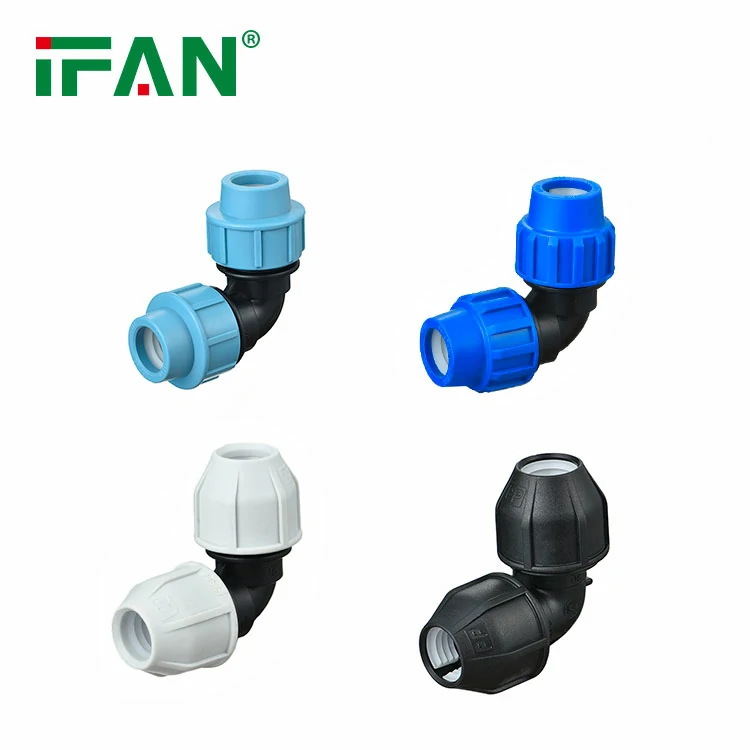
PE elbow fittings are critical components in pipeline systems, enabling smooth directional changes while maintaining flow efficiency and structural integrity. Manufactured from high-density polyethylene (HDPE) or medium-density polyethylene (MDPE), these fittings resist corrosion, chemicals, and impact, making them ideal for buried or above-ground installations. Widely used in municipal networks, industrial plants, and residential plumbing, PE elbows ensure reliable performance with minimal maintenance.
2. Key Features & Benefits
2.1 Material Advantages
- Corrosion Resistance: Immune to rust, scaling, and chemical degradation, even in aggressive environments.
- Impact Strength: Withstands ground movement, vibrations, and external loads without cracking.
- Temperature Range: Operates efficiently from -40°C to 60°C (-40°F to 140°F).
- Lightweight: 70% lighter than steel elbows, reducing transportation and handling costs.
2.2 Performance Benefits
✔ Smooth Flow: Internal curvature minimizes turbulence and pressure loss.
✔ Leak-Proof Joints: Fusion welding creates monolithic connections.
✔ Longevity: 50+ years in buried or exposed applications.
✔ Flexibility: Accommodates minor pipeline misalignments.
3. Types of PE Elbow Fittings
3.1 By Angle
- 45° Elbows: Used for gradual directional changes to reduce friction.
- 90° Elbows: Common for sharp turns in tight spaces (e.g., building corners).
- Custom Angles: Fabricated for specialized layouts (e.g., 22.5°, 60°).
3.2 By Connection Method
- Butt Fusion Elbows: Welded end-to-end with pipes using heated plates.
- Electrofusion Elbows: Embedded heating coils enable precise, tool-free welding.
- Mechanical Elbows:
- Compression Elbows: Rubber gaskets and clamps for quick repairs.
- Push-Fit Elbows: Snap-on design for PEX-PE transitions.
3.3 By Application
- Water Supply Elbows: NSF/ANSI 61-certified for potable water systems.
- Gas Distribution Elbows: Rated for natural gas and propane (ASTM D2513).
- Industrial Elbows: Chemical-resistant models for acids, alkalis, and slurries.
4. Applications
4.1 Municipal Infrastructure
- Potable water distribution networks.
- Sewer and drainage systems.
- Stormwater management pipelines.
4.2 Industrial & Commercial
- Chemical processing plants (e.g., acid transport).
- Mining operations (slurry pipelines).
- Fire suppression systems (dry/wet risers).
4.3 Residential & Agricultural
- Irrigation systems (90° elbows for field layouts).
- Rural water supply lines (45° elbows for terrain adaptation).
- Geothermal heating loops (custom-angle elbows).
5. Installation Guidelines
5.1 Fusion Welding Techniques
- Butt Fusion:
- Bevel pipe ends to a 30° angle using a chamfering tool.
- Heat plates to 210–230°C (410–446°F) and clean surfaces with lint-free cloths.
- Align pipes and elbows, then press together for 5–10 seconds under controlled pressure.
- Electrofusion:
- Clean pipe ends and elbow sockets with isopropyl alcohol.
- Clamp the elbow onto the pipe and tighten evenly.
- Connect the electrofusion machine and activate the welding cycle (typically 5–15 minutes).
5.2 Mechanical Installation
- Compression Elbows:
- Tighten nuts to manufacturer torque specifications (usually 15–25 Nm).
- Avoid over-tightening (risks gasket compression set).
- Push-Fit Elbows:
- Ensure pipe ends are square and deburred.
- Push the elbow onto the pipe until the locking ring clicks into place.
5.3 Best Practices
- Cutting: Use a fine-toothed saw or PE-specific cutter for clean, square edges.
- Deburring: Remove internal/external burrs with a deburring tool to prevent flow restriction.
- Support: Install hangers every 1.5–2.0 meters for horizontal runs to prevent sagging.
5.4 Common Mistakes to Avoid
- Contaminating pipe surfaces with dirt or grease before welding (weakens joints).
- Using underpowered welding machines (leads to incomplete fusion).
- Ignoring temperature/humidity guidelines (affects electrofusion quality).
6. Standards & Certifications
- ISO 4427: International standard for PE pressure pipes and fittings.
- ASTM D3350: U.S. standard for PE materials in piping systems.
- EN 12201-3: European standard for PE fittings (includes elbow specifications).
- NSF/ANSI 61: Certifies safety for potable water applications.
- ASTM D2513: Specifies requirements for gas distribution fittings.
7. Maintenance & Troubleshooting
7.1 Regular Inspections
- Check for leaks at fusion joints (damp spots or discoloration).
- Verify mechanical elbow tightness annually.
- Monitor pipeline alignment for ground settlement.
7.2 Repair Procedures
- Minor Leaks: Tighten compression fittings or re-weld electrofusion joints.
- Cracked Elbows: Cut out the damaged section and install a new coupling with a replacement elbow.
- Corrosion (Rare): Replace with HDPE elbows (PE is inherently corrosion-resistant).
Conclusion
PE elbow fittings provide a durable, cost-effective, and environmentally friendly solution for directional flow control in pipelines. Their resistance to corrosion, flexibility, and ease of installation make them ideal for water, gas, and industrial applications. By adhering to proper welding techniques and maintenance protocols, engineers and contractors can ensure decades of reliable service.
IFAN factory started in 1993. And IFAN has workshop 120000 square meter with 610 staff. IFAN can design and produce all plumbing pipe and fitting include PPR,PVC,CPVC PPSU HDPE PEXA PEXB PERT pipe and fitting ,brass fitting, brass ball valve ,heating system , gas system , sanitary faucets and hose, In the past 30 Years, IFAN has never forgotten his mission-To protect health and safety. And IFAN factory use best materials to produce high quality pipe and fittings with automatic production line and high tech quality control machines. The most important,IFAN can guarantee that all pipes and fittings manufactured by IFAN are qualified. More information pls feel free contact us Whatsapp.