
Polypropylene Random Copolymer (PPR) Valves for Potable Water, Heating, and Industrial Applications
1. Introduction
PPR (Polypropylene Random Copolymer) valves are engineered for durability, chemical resistance, and long-term performance in plumbing and heating systems. Made from high-grade PPR material, these valves offer a corrosion-free, lightweight, and cost-effective alternative to traditional metal valves. Widely used in residential, commercial, and industrial projects, PPR valves ensure reliable fluid control with minimal maintenance.
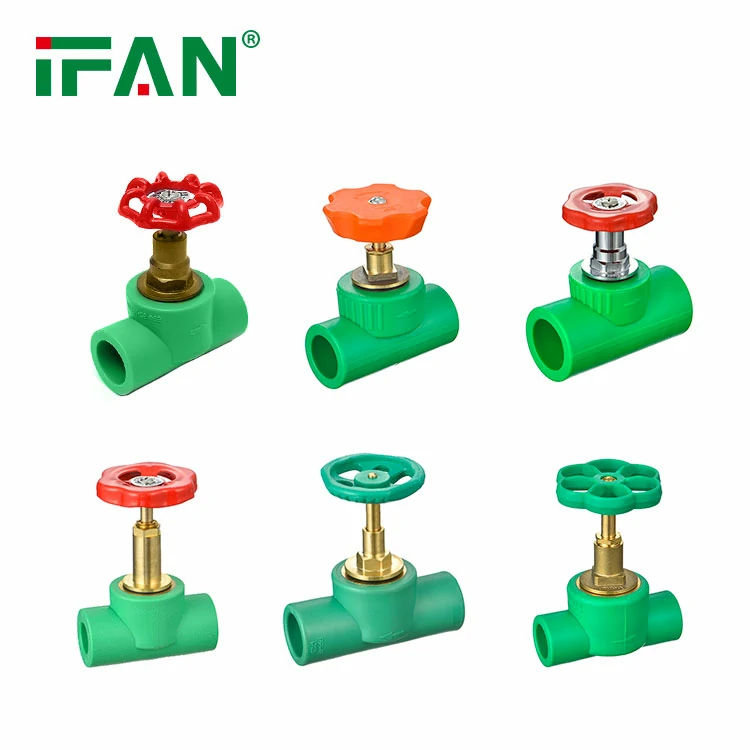
2. Key Features & Benefits
2.1 Material Advantages
- Corrosion Resistance: Immune to rust, scaling, and chemical degradation.
- High Temperature Tolerance: Withstands continuous use at 95°C (203°F) and short-term peaks up to 110°C (230°F).
- Pressure Rating: Suitable for systems operating up to 16–25 bar (232–362 PSI), depending on valve type.
- Lightweight & Easy to Install: 50% lighter than steel valves, reducing labor costs.
2.2 Performance Benefits
✔ Long Service Life: 50+ years with proper installation.
✔ Leak-Proof Design: Fusion-welded joints eliminate threading risks.
✔ Hygienic & Safe: NSF/ANSI 61-certified for potable water use.
✔ Energy Efficient: Low thermal conductivity reduces heat loss in hot water systems.
3. Types of PPR Valves
3.1 By Function
- Ball Valves: Full-bore design for unrestricted flow (ideal for main supply lines).
- Gate Valves: Throttling capability for precise flow control.
- Check Valves: Prevent backflow in heating and solar systems.
- Stop Valves: Isolate sections for maintenance (e.g., under sinks).
3.2 By Connection Type
- Socket Fusion Valves: Welded directly to PPR pipes for permanent joints.
- Threaded Valves: Compatible with metal fittings (e.g., brass adapters).
- Compression Valves: Tool-free installation for quick repairs.
3.3 By Application
- Potable Water Valves: FDA-approved for drinking water systems.
- Heating System Valves: Rated for high-temperature radiator loops.
- Industrial Valves: Chemical-resistant models for aggressive fluids.
4. Applications
4.1 Residential Plumbing
- Hot/cold water distribution in homes and apartments.
- Underfloor heating manifold systems.
- Solar water heater connections.
4.2 Commercial & Industrial Uses
- HVAC cooling/heating networks.
- Process water control in food/beverage plants.
- Fire sprinkler systems (with fire-rated PPR variants).
4.3 Specialized Systems
- Chilled water lines in data centers.
- Potable water supply in hospitals and schools.
5. Installation Guidelines
5.1 Joining Methods
- Socket Fusion Welding:
- Heat pipe and valve socket to 260°C (500°F).
- Press together for 5–10 seconds to form a homogenous joint.
- Electrofusion Welding: Uses embedded heating coils for precise joints.
- Threaded Connections: Apply Teflon tape to brass adapters for metal-to-PPR transitions.
5.2 Best Practices
- Cutting: Use a fine-toothed saw or PPR-specific cutter for clean edges.
- Deburring: Remove internal burrs to prevent flow restriction.
- Support: Install hangers every 1.0–1.5 meters for horizontal runs.
5.3 Common Mistakes to Avoid
- Overheating during fusion welding (causes material degradation).
- Using standard PVC glue on PPR valves (incompatible).
- Ignoring manufacturer torque specifications for threaded valves.
6. Standards & Certifications
- ISO 15874: International standard for PPR piping systems.
- DIN 8077/8078: German standards for PPR pressure pipes and fittings.
- NSF/ANSI 61: Certifies safety for potable water applications.
- ASTM F2389: U.S. standard for PPR pressure pipes.
7. Maintenance & Troubleshooting
7.1 Regular Checks
- Inspect for leaks at fusion joints.
- Verify handle operation (stiff valves may indicate sediment buildup).
- Flush systems annually to remove debris.
7.2 Repair Tips
- Minor Leaks: Tighten threaded connections or re-weld socket joints.
- Valve Stuck: Apply penetrating oil to threaded stems (avoid force).
- Cracked Body: Replace the valve (PPR cannot be repaired post-fracture).
Conclusion
PPR valves provide a durable, hygienic, and energy-efficient solution for modern plumbing and heating systems. Their resistance to corrosion, high temperatures, and chemical attack makes them ideal for diverse applications. By following proper installation techniques and maintenance protocols, engineers and contractors can ensure decades of reliable service.
IFAN factory started in 1993. And IFAN has workshop 120000 square meter with 610 staff. IFAN can design and produce all plumbing pipe and fitting include PPR,PVC,CPVC PPSU HDPE PEXA PEXB PERT pipe and fitting ,brass fitting, brass ball valve ,heating system , gas system , sanitary faucets and hose, In the past 30 Years, IFAN has never forgotten his mission-To protect health and safety. And IFAN factory use best materials to produce high quality pipe and fittings with automatic production line and high tech quality control machines. The most important,IFAN can guarantee that all pipes and fittings manufactured by IFAN are qualified. More information pls feel free contact us Whatsapp.