
1. Introduction to PPR Crossover Fittings
PPR Crossover Fittings, also known as PPR Cross Tees or PPR Four-Way Connectors, are specialized plumbing components designed to split or redirect fluid flow in multiple directions within a single junction. Made from Polypropylene Random Copolymer (PPR Type 3), these fittings combine durability, chemical resistance, and thermal stability, making them ideal for residential, commercial, and industrial piping systems. Their ability to connect four pipes at 90-degree angles simplifies complex layouts, reduces installation time, and minimizes the need for additional adapters.
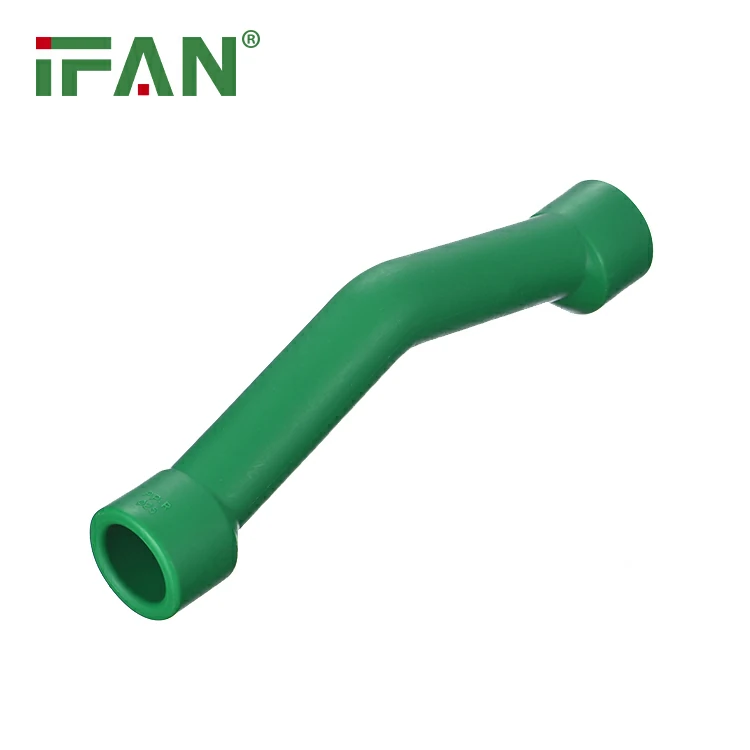
2. Technical Specifications & Key Features
- Material: PPR Type 3 – A non-toxic, food-grade thermoplastic with high impact resistance and UV stability.
- Design:
- Four-Way Cross Configuration: Allows simultaneous connection of four pipes (two inlet, two outlet or vice versa).
- Symmetrical Geometry: Ensures balanced flow distribution and reduces pressure drops.
- Dimensions:
- Size Range: ½” to 4″ (DN15 to DN100), compatible with standard PPR piping.
- Wall Thickness: Adheres to ISO 15874 standards for pressure ratings (PN10 to PN25).
- Pressure & Temperature Ratings:
- Working Pressure: Up to 2.5 MPa (PN25) for high-pressure applications.
- Temperature Range: -20°C to 95°C (continuous use), with short-term tolerance up to 110°C.
- Connection Methods:
- Socket Fusion Welding: Permanent joint achieved by heating and fusing PPR pipes to the crossover’s sockets.
- Electrofusion: Optional for automated, leak-proof connections in large-scale projects.
- Certifications: ISO 15874, DIN 8077/8078, CE, WRAS, NSF 61, and ASTM F2389 for potable water safety.
- Color Coding:
- White: Cold water systems.
- Red: Hot water systems.
- Grey/Blue: Industrial or chemical applications.
3. Core Advantages Over Traditional Fittings
- Space Efficiency: Replaces multiple tees and elbows with a single compact unit, saving space in tight installations.
- Reduced Leak Points: Fewer joints mean lower risks of leaks, enhancing system reliability.
- Flow Optimization: Symmetrical design minimizes turbulence and pressure loss compared to stacked tees.
- Chemical Resistance: Withstands acids, alkalis, and chlorinated water without corrosion or scaling.
- Thermal Insulation: Low thermal conductivity (0.22 W/mK) reduces heat loss in hot water systems.
- Lightweight & Durable: Weighs 70% less than metal alternatives, reducing transportation and handling costs.
4. Primary Applications
- Residential Plumbing:
- Distributing water to multiple fixtures (e.g., sinks, showers, toilets) from a single supply line.
- Underfloor heating manifolds for even heat distribution.
- Commercial Infrastructure:
- Hotels, hospitals, and schools requiring centralized water distribution.
- Fire sprinkler systems with cross-connected piping.
- Industrial Systems:
- Chemical processing plants for fluid routing in closed-loop systems.
- Compressed air lines and cooling towers.
- Agricultural Irrigation:
- Drip irrigation networks distributing water to multiple zones.
- Fertilizer injection systems requiring precise flow control.
- Renewable Energy:
- Solar thermal collectors and geothermal heat pumps with cross-connected loops.
5. Installation Best Practices
- Pipe Preparation:
- Cut PPR pipes squarely using a pipe cutter to ensure clean edges.
- Deburr the ends to prevent damage during fusion.
- Socket Fusion Welding:
- Heat the crossover’s sockets and pipe ends to 260°C using a heating plate.
- Insert the pipe into the socket within 5 seconds and hold for 10–15 seconds to cool.
- Alignment:
- Ensure all four pipes are level and perpendicular to the crossover to avoid stress.
- Pressure Testing:
- Conduct a hydrostatic test at 1.5x the working pressure (e.g., 15 bar for PN10 systems).
- Thermal Expansion Consideration:
- Install expansion loops or compensators in hot water systems to accommodate PPR’s 0.16 mm/m°C expansion rate.
6. Performance Benefits
- Leak-Proof Reliability: Socket fusion creates a homogeneous joint stronger than the pipe itself.
- Cost Efficiency: Reduces labor and material costs by eliminating extra fittings.
- Longevity: 50+ years of service life in standard conditions with minimal maintenance.
- Energy Efficiency: Smooth internal surfaces reduce friction, lowering pumping energy consumption.
- Hygienic: Non-toxic material prevents bacterial growth, meeting drinking water standards.
7. Innovations & Market Trends
- Hybrid Crossovers: PPR Crossovers with brass inserts for enhanced durability in high-pressure industrial use.
- Smart Crossovers: IoT-enabled fittings with pressure and flow sensors for real-time monitoring.
- Modular Designs: Pre-assembled crossovers with integrated valves for rapid deployment in emergency repairs.
- Eco-Friendly Materials: Recycled PPR compounds and biodegradable additives for sustainable projects.
8. Real-World Case Studies
- Residential Retrofit (Dubai): A luxury villa replaced cast iron cross tees with PPR Crossovers, reducing installation time by 40% and eliminating corrosion-related leaks.
- Industrial Application (Germany): A chemical plant used PPR Crossovers for acid transport, achieving zero degradation in aggressive environments over five years.
- Agricultural Project (Brazil): Irrigation systems with PPR Crossovers improved water distribution uniformity by 25%, boosting crop yields.
9. Future Prospects
- 3D-Printed Customization: On-demand manufacturing of bespoke crossover sizes and angles for unique projects.
- AI-Optimized Flow Designs: Machine learning algorithms to minimize pressure drops in complex networks.
- Self-Healing Materials: PPR Crossovers with microcapsules that release sealants upon detecting minor cracks.
10. Conclusion
PPR Crossover Fittings are indispensable for modern plumbing systems, offering unmatched versatility, durability, and cost-effectiveness. Their ability to streamline complex piping layouts while ensuring leak-proof performance makes them a preferred choice across residential, commercial, and industrial sectors. As sustainable and smart plumbing solutions gain traction, PPR Crossovers will continue to evolve, driving efficiency and reliability in global infrastructure projects.
IFAN factory started in 1993. And IFAN has workshop 120000 square meter with 610 staff. IFAN can design and produce all plumbing pipe and fitting include PPR,PVC,CPVC PPSU HDPE PEXA PEXB PERT pipe and fitting ,brass fitting, brass ball valve ,heating system , gas system , sanitary faucets and hose, In the past 30 Years, IFAN has never forgotten his mission-To protect health and safety. And IFAN factory use best materials to produce high quality pipe and fittings with automatic production line and high tech quality control machines. The most important,IFAN can guarantee that all pipes and fittings manufactured by IFAN are qualified. More information pls feel free contact us Whatsapp.