
Introduction
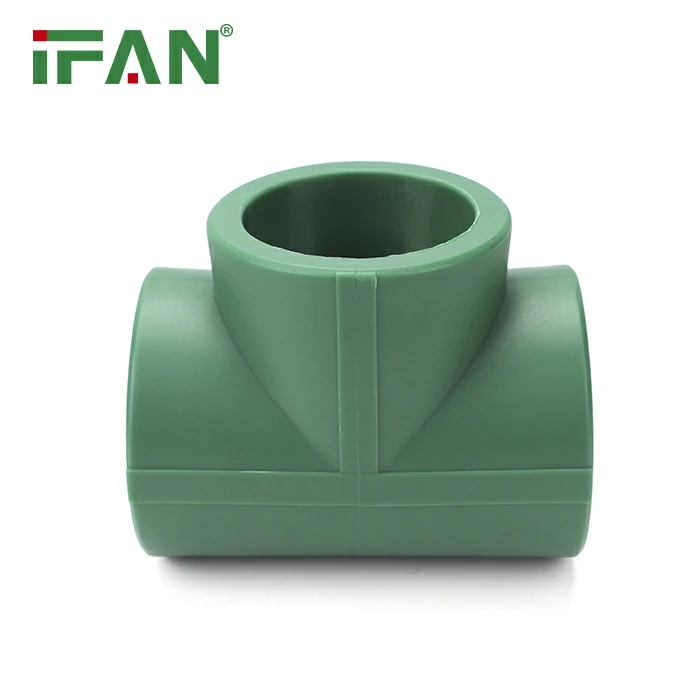
PPR (Polypropylene Random Copolymer) fitting tees are indispensable components in modern plumbing systems, enabling 90-degree branching of pipelines for hot and cold water distribution. These fittings, manufactured through injection molding processes, combine durability with chemical resistance, making them ideal for residential, commercial, and industrial applications. This guide examines their technical properties, installation challenges, and market trends while providing actionable solutions for common issues.
Technical Specifications and Performance
Material Composition and Standards
PPR fitting tees are engineered from random copolymer polypropylene, meeting international standards such as DIN 8077/8078 and ISO 15874. The raw material, often imported from Korea, ensures:
- Thermal Stability: Withstands temperatures up to 95°C for hot water systems.
- Pressure Resistance: Handles pressures up to 2.5 MPa (PN25 rating).
- Chemical Inertness: Resists corrosion from acids, alkalis, and salts.
Manufacturers like G And N Fortune Limited offer tees with dimensions ranging from 20mm to 160mm outer diameter, catering to diverse flow requirements. For instance, a 63mm tee with PN2.0 rating features a wall thickness of 8.6mm, ensuring structural integrity under high pressure.
Types of PPR Fitting Tees
- Standard Equal Tee: Three outlets of identical diameter for uniform flow distribution. Common in residential plumbing and HVAC systems.
- Reducing Tee: Two equal inlets and one smaller outlet, facilitating diameter transitions without additional adapters. Used in chemical processing plants to connect pipes of varying sizes.
- Reinforced Tee: Internal steel or fiber layers enhance strength for industrial applications like high-pressure water systems.
- UV-Resistant Tee: Gamma-stabilized polypropylene prevents degradation from sunlight, ideal for agricultural irrigation networks.
Installation Challenges and Solutions
Hot Melting Connection Issues
Over 60% of PPR system failures stem from improper hot melting, as highlighted by industry analyses. Key pitfalls include:
- Temperature Mismanagement: Exceeding 270°C causes material carbonization, leading to brittle joints. Solution: Use calibrated welding machines set to 260°C and verify with thermal indicators.
- Incomplete Insertion: Insufficient depth results in voids. For example, a 32mm tee requires 15mm insertion depth to achieve a “double-eye” fusion pattern.
- Contaminated Surfaces: Dust or oil on mating surfaces reduces adhesion. Pre-clean with isopropyl alcohol and dry thoroughly before welding.
Case Study: A 2023 project in Shenzhen reported leaks in a 110mm PPR network. Investigation revealed workers used 300°C settings, causing localized melting. After retraining and adopting 260°C protocols, leak rates dropped by 92%.
Mechanical Stress Factors
- Thermal Expansion: PPR expands 0.15mm/m per °C rise. Install expansion joints every 30m in long runs to prevent buckling.
- Vibration Damage: Use rubber-lined clamps to isolate pipes from machinery vibrations in industrial settings.
- Soil Corrosion: In underground installations, apply epoxy coatings to tees exposed to acidic soils.
Market Trends and Global Demand
The global PPR pipe fitting market, valued at $3.2 billion in 2024, is projected to grow at 6.8% CAGR through 2030. Key drivers include:
- Urbanization: China’s “New Infrastructure” plan will deploy 12 million km of PPR pipelines by 2026.
- Sustainability: PPR’s 100% recyclability aligns with EU Green Deal targets, boosting adoption in eco-conscious markets.
- Technological Advancements: Smart tees with embedded sensors for real-time pressure monitoring are gaining traction in smart building projects.
Regional Insights:
- Asia-Pacific: Dominates with 45% market share, driven by residential construction in India and Southeast Asia.
- Europe: Strict hygiene standards favor PPR’s use in hospitals and laboratories. Germany’s DIN certification remains the gold standard.
- Americas: UV-resistant variants are popular in Latin American agricultural projects, where sunlight exposure exceeds 2,500 hours/year.
FAQs
Q1: What is the lifespan of a PPR fitting tee?
A: Properly installed PPR tees last 50+ years, outperforming PVC (25 years) and copper (30 years) in corrosion resistance.
Q2: Can PPR tees be used for compressed air systems?
A: No. PPR’s 2.5 MPa limit makes it unsuitable for air compressors (typically requiring 8–10 MPa). Use metal fittings instead.
Q3: How to identify fake PPR products?
A: Check for DIN/ISO certification marks. Authentic tees have uniform wall thickness and a matte finish; counterfeits often appear glossy and brittle.
Q4: Are PPR tees compatible with other pipe materials?
A: Transition fittings with brass inserts enable connections to copper or PEX pipes. Avoid direct welding between different polymers.
Q5: What maintenance is required for PPR systems?
A: Annual inspections for UV damage (outdoor installations) and pressure testing every 5 years. Replace tees showing cracks or discoloration immediately.
Conclusion
PPR fitting tees offer a cost-effective, durable solution for modern plumbing challenges. By adhering to installation best practices and leveraging advancements like reinforced and UV-resistant variants, engineers can optimize system performance across industries. As global demand surges, mastering PPR technology will remain critical for sustainable infrastructure development.
IFAN factory started in 1993. And IFAN has workshop 120000 square meter with 610 staff. IFAN can design and produce all plumbing pipe and fitting include PPR,PVC,CPVC PPSU HDPE PEXA PEXB PERT pipe and fitting ,brass fitting, brass ball valve ,heating system , gas system , sanitary faucets and hose, In the past 30 Years, IFAN has never forgotten his mission-To protect health and safety. And IFAN factory use best materials to produce high quality pipe and fittings with automatic production line and high tech quality control machines. The most important,IFAN can guarantee that all pipes and fittings manufactured byIFAN are qualified. More information pls feel free contact us Whatsapp.