
Introduction
PPR pipe fittings are the backbone of modern plumbing systems, offering a seamless, corrosion-resistant solution for connecting PPR pipes. With a global market projected to grow at 6.8% CAGR through 2030, these fittings are replacing traditional metal and PVC alternatives in 80% of new water supply installations across Europe and Asia. Their ability to withstand high temperatures, resist chemical degradation, and ensure airtight joints makes them ideal for potable water, heating systems, and industrial applications. This guide delves into PPR fitting types, installation best practices, and industry trends to help you optimize your plumbing projects.
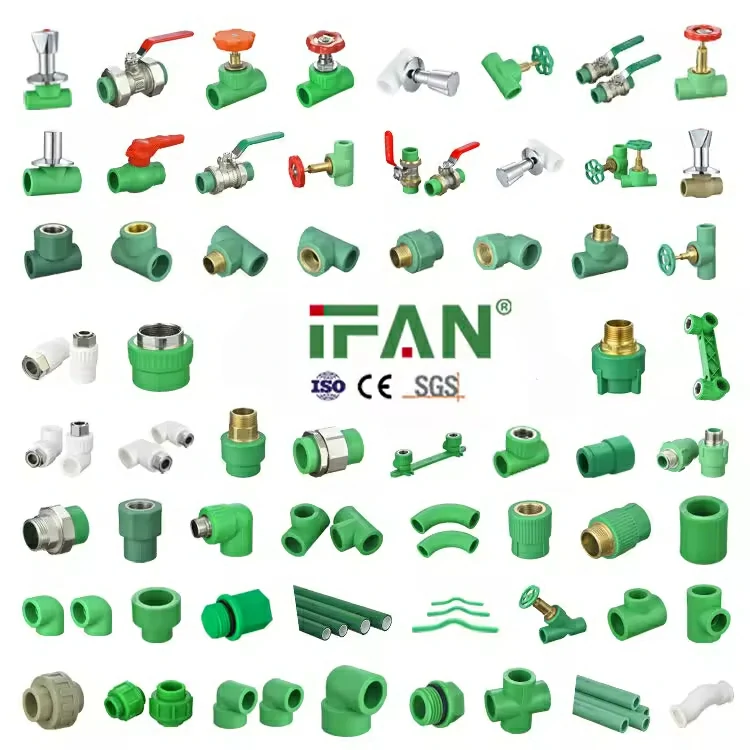
What Are PPR Pipe Fittings?
PPR fittings are injection-molded components designed to join PPR pipes through heat fusion welding or mechanical connections. Made from the same polypropylene random copolymer material as PPR pipes, they share critical properties:
- Thermal Stability: Withstand temperatures up to 200°F (95°C) for hot water systems.
- Chemical Resistance: Unaffected by acids, alkalis, and chlorine in municipal water.
- Leak-Proof Design: Fusion welding creates monolithic joints stronger than the pipe itself.
- Longevity: Last 50+ years with proper installation, reducing replacement costs.
Key Applications:
- Residential plumbing (hot/cold water distribution)
- Underfloor heating systems
- Industrial chemical transport
- Solar water heater installations
Types of PPR Pipe Fittings
1. Socket Fusion Fittings
Features:
- Most common type, used with heat fusion welding.
- Includes elbows, tees, couplings, and reducers.
- Available in standard (SDR11) and high-pressure (SDR7.4) variants.
Best For: Permanent, leak-proof connections in residential and commercial plumbing.
2. Electrofusion Fittings
Features:
- Embedded heating coils activated by an electrofusion machine.
- Ideal for complex layouts or hard-to-reach areas.
- Requires specialized equipment but ensures consistent joint quality.
Best For: Industrial pipelines and underground installations.
3. Compression Fittings
Features:
- Mechanical joints with rubber O-rings and locking nuts.
- No welding required; installable with basic tools.
- Reusable but less durable than fusion-welded joints.
Best For: Temporary setups or DIY repairs.
4. Threaded Fittings
Features:
- Male/female threads for connecting PPR to metal pipes (e.g., brass, stainless steel).
- Often used at system entry/exit points.
- Requires Teflon tape or sealant to prevent leaks.
Best For: Integrating PPR with existing metal plumbing.
5. Specialty Fittings
- Ball Valves: Control water flow with a 90° turn handle.
- Check Valves: Prevent backflow in pumping systems.
- Manifolds: Distribute water to multiple outlets in underfloor heating.
Installation Best Practices
Step-by-Step Guide for Socket Fusion Welding
- Prepare the Tools:
- Use a socket fusion welder heated to 518°F (270°C).
- Ensure pipe ends are clean, square, and deburred.
- Mark Insertion Depth:
- Use a permanent marker to indicate how far the pipe should enter the fitting (typically 1/2 the fitting length).
- Heat the Components:
- Simultaneously insert the pipe and fitting into the welder’s sockets for 5–7 seconds (adjust based on diameter).
- Join and Cool:
- Quickly push the pipe into the fitting until it reaches the marked depth.
- Hold without twisting for 2 minutes to allow the joint to solidify.
- Inspect the Joint:
- Check for uniform beading around the fusion zone (a sign of proper welding).
Common Mistakes to Avoid
- Overheating: Causes warping and weak joints. Use a timer to standardize heating cycles.
- Insufficient Cooling Time: Moving pipes too soon creates brittle connections.
- Mixing Fitting Grades: Using PPR-Green fittings with PPR-Orange pipes may fail due to different melting points.
- Improper Storage: Exposure to sunlight or temperatures >104°F (40°C) can deform fittings.
IFAN factory started in 1993. And IFAN has workshop 120000 square meter with 610 staff. IFAN can design and produce all plumbing pipe and fitting include PPR,PVC,CPVC PPSU HDPE PEXA PEXB PERT pipe and fitting ,brass fitting, brass ball valve ,heating system , gas system , sanitary faucets and hose, In the past 30 Years, IFAN has never forgotten his mission-To protect health and safety. And IFAN factory use best materials to produce high quality pipe and fittings with automatic production line and high tech quality control machines. The most important,IFAN can guarantee that all pipes and fittings manufactured byIFAN are qualified. More information pls feel free contact us Whatsapp.