
1. Product Overview
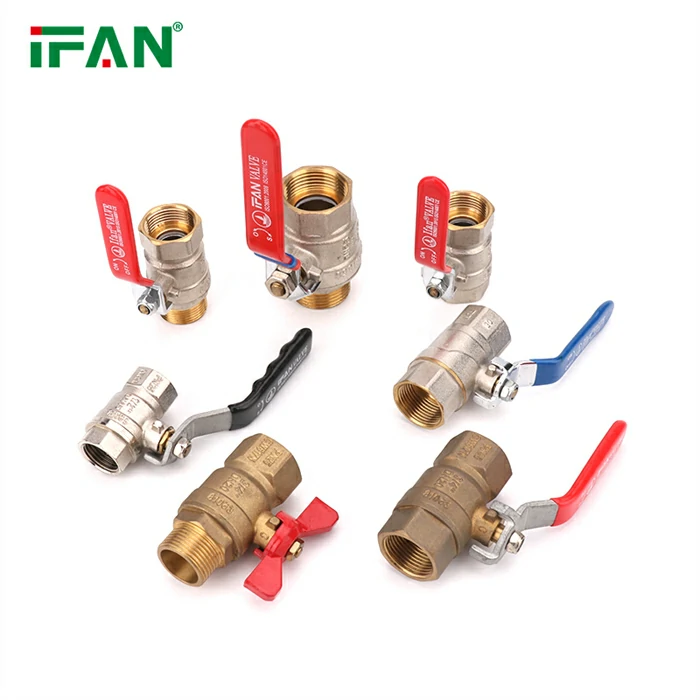
Brass ball valves are quarter-turn flow control devices made from brass alloy—a durable and corrosion-resistant material composed primarily of copper and zinc. Featuring an internal rotating ball with a precision-drilled bore, they provide reliable shut-off service across countless plumbing, heating, gas, and industrial applications.
2. Key Specifications & Ratings
- Pressure Rating: Common classes: Class 150 (WOG*), 200 WOG, or higher. Standard working pressure: 150-600 PSI.
- Temperature Range: Typically -20°F to 400°F (-29°C to 204°C) for standard seals; higher with specialized seats.
- End Connections: NPT (National Pipe Thread), BSP (British Standard Pipe), union, solder, or compression ends.
- Standards & Certifications: ASME B16.34, NSF/ANSI 61 (lead-free), UL, CSA, and API 607/6FA (fire-safe).
*WOG = Water, Oil, Gas (non-shock)
3. Design & Material Advantages
These valves offer several distinct benefits. Primarily, brass provides excellent machinability, allowing for precise component manufacturing. Additionally, the material demonstrates strong corrosion resistance to water, fuels, and many chemicals. Moreover, brass alloys offer superior mechanical strength and durability for long-term service. Notably, their design ensures a compact form factor with full-port or standard-port flow options.
4. Core Types & Configurations
Standard Two-Piece Design: Most common, with a body and end cap.
Three-Piece Design: Features a removable center section for easier inline maintenance.
Full Port (Full Bore): Ball orifice matches pipe ID, minimizing pressure drop.
Standard Port: Smaller orifice, more compact and economical.
Multi-Port Valves (3-Way, 4-Way): For flow diversion or mixing applications.
Actuated Versions: Manual lever, gear-operated, or automated (electric/pneumatic).
5. Material Composition & Features
- Body: Lead-free brass alloy (CuZn with trace elements like silicon or bismuth).
- Ball: Chrome-plated brass, stainless steel, or brass for corrosion resistance.
- Stem: Brass or stainless steel, often with blow-out-proof design.
- Seats & Seals: PTFE (standard), reinforced PTFE, or Viton® for higher temperatures.
- Handle: Zinc-aluminum alloy, plastic-coated metal, or locking lever options.
6. Installation Best Practices
Preparation:
- First, verify valve specifications match the system’s pressure, temperature, and media.
- Next, ensure pipe threads are clean, undamaged, and properly aligned.
- Subsequently, apply appropriate thread sealant (tape or compound) to male threads only, avoiding the first two threads.
Installation Steps:
- Hand-tighten the valve to ensure proper thread engagement.
- Then, use appropriate wrenches—one to hold the valve body, the other to tighten the fitting—to avoid distorting the valve.
- Finally, cycle the valve several times to ensure free operation before system pressurization.
7. Primary Applications
Plumbing Systems:
Brass ball valves serve as main shut-offs, fixture isolators, and water heater connections in residential and commercial buildings.
HVAC & Heating:
They control flow in boilers, chillers, radiators, and hydronic systems due to their temperature tolerance.
Gas Service:
Specifically designed gas ball valves (often with a green handle) are used for natural gas and propane lines.
Industrial & Process:
Used for compressed air, process water, fuel lines, and general industrial fluid control.
8. Selection Criteria
- Media Compatibility: Confirm brass and seal materials are suitable for the fluid (e.g., potable water requires lead-free certification).
- Pressure/Temperature: Select a class rating that exceeds system operating conditions.
- Flow Requirements: Choose full-port for minimal restriction, standard-port for cost-sensitive applications.
- Frequency of Use: For frequent operation, specify a valve with reinforced seals and a durable stem design.
- Connection Type: Match to existing piping (e.g., NPT for North America, BSP for many other regions).
9. Maintenance & Troubleshooting
Routine Care:
- Exercise valves periodically if they are normally left in one position.
- Additionally, inspect for external corrosion or mineral deposits, especially in humid environments.
- Furthermore, check for minor leaks at the stem or body seals during system maintenance.
Common Issues:
- Leakage at Stem: Often resolved by tightening the stem packing gland nut slightly.
- Leakage through Seat: May indicate worn seals or debris; requires disassembly or replacement.
- Stiff Operation: Can result from sediment buildup or stem corrosion; exercise carefully or service the valve.
- Frozen Handle: Frequently caused by galvanic corrosion in moist environments; may require valve replacement.
10. Professional Recommendations
- Always install with accessible orientation for the handle’s full 90-degree sweep.
- Support piping near the valve to prevent stress on the connections.
- For gas applications, use only valves clearly marked for gas service and rated accordingly.
- In critical systems, consider installing a union before and after the valve to facilitate future service.
- Most importantly, keep a record of valve locations and specifications for future maintenance.
SUMMARY: Brass ball valves are versatile, durable components essential for reliable flow control. Their material strength and corrosion resistance make them suitable for demanding applications across plumbing, heating, gas, and industrial systems. Successful implementation depends on proper selection for the specific media, pressure, and temperature conditions, combined with correct installation techniques. Consequently, understanding their configurations, material options, and maintenance requirements ensures optimal performance and longevity. In conclusion, whether for a simple water shut-off or a complex industrial process, brass ball valves offer a time-tested solution backed by global standards and proven engineering.
IFAN factory started in 1993. And IFAN has workshop 120000 square meter with 610 staff. IFAN can design and produce all plumbing pipe and fitting include PPR,PVC,CPVC PPSU HDPE PEXA PEXB PERT pipe and fitting ,brass fitting, brass ball valve ,heating system , gas system , sanitary faucets and hose, In the past 30 Years, IFAN has never forgotten his mission-To protect health and safety. And IFAN factory use best materials to produce high quality pipe and fittings with automatic production line and high tech quality control machines. The most important,IFAN can guarantee that all pipes and fittings manufactured byIFAN are qualified. More information pls feel free contact us Whatsapp.