
1. Product Overview
PE (Polyethylene) pipe fittings are specialized components used to connect, redirect, and control flow within polyethylene piping systems. These fittings are manufactured from the same polyethylene resin grades as PE pipes, ensuring perfect material compatibility and creating homogeneous, leak-free joints through thermal fusion methods. PE systems are renowned for their flexibility, chemical resistance, and exceptional durability in a wide range of pressurized and non-pressurized applications.
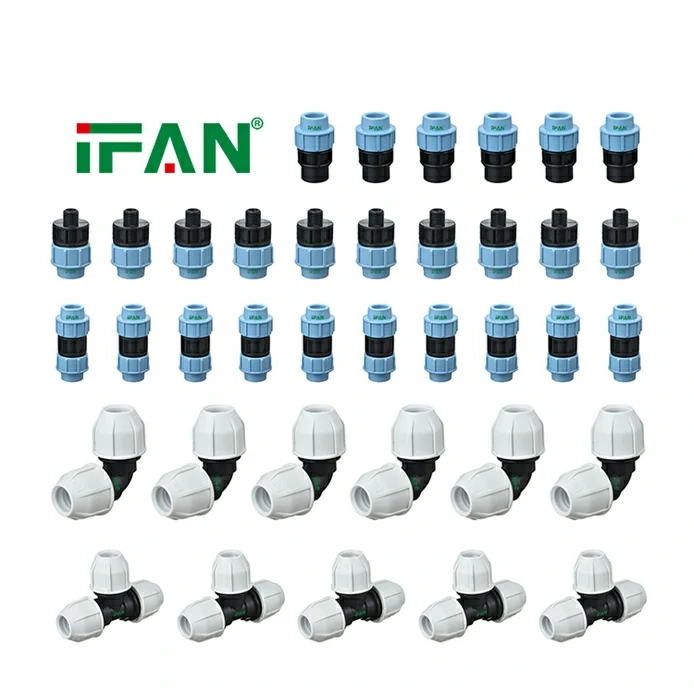
2. Material Grades & Properties
Primary PE Grades:
- PE 80: Medium-density polyethylene with good strength and flexibility
- PE 100: High-density polyethylene offering superior pressure resistance and durability
- PE 100-RC: Enhanced stress crack resistance for demanding applications
Key Material Properties:
- Density Range: 0.941–0.965 g/cm³
- Melt Flow Index: 0.1–0.5 g/10 min (190°C/5 kg)
- Thermal Conductivity: 0.42 W/m·K
- Coefficient of Expansion: 0.2 mm/m·°C
- Chemical Resistance: Excellent for acids, bases, salts, and many organic compounds
3. Connection Methods
Thermal Fusion Techniques:
- Butt Fusion: For joining pipes of same diameter using heated plates
- Socket Fusion: For smaller diameters using heated tooling
- Electrofusion: Using fittings with integrated heating elements
- Sidewall Fusion: For branch connections and repairs
Mechanical Connections:
- Flange Adaptors: Transition to flanged systems
- Compression Fittings: For temporary or transitional connections
- Push-Fit Systems: Quick installation without special tools
- Victaulic/Grooved: For specific industrial applications
4. Fitting Types & Applications
Pressure Fittings (PN Rated):
- Elbows: 45°, 90°, and custom angles for directional changes
- Tees: Equal and reducing for branch connections
- Reducers: For diameter transitions
- End Caps: System termination
- Repair Sleeves: For damaged pipe sections
Non-Pressure Fittings:
- Drainage Fittings: For gravity flow systems
- Manholes & Chambers: Access and inspection points
- Couplings & Adaptors: Connection to other materials
Specialized Fittings:
- Restraint Fittings: For thrust applications
- Insulated Fittings: For thermal management
- Anti-static Fittings: For hazardous environments
- Corrugated Fittings: For flexible drainage systems
5. Technical Specifications
Pressure Ratings:
- PN 3.2 to PN 25 (0.32 to 2.5 MPa)
- Standard Dimension Ratio (SDR): SDR 11, SDR 17, SDR 26
- Temperature Derating: Pressure capacity decreases with temperature increase
Size Range:
- Diameters: 16mm to 2000mm (⅝” to 78″)
- Wall Thickness: Varies by SDR and pressure rating
- Standard Lengths: Typically 6m, 12m, or coiled for smaller diameters
Standards Compliance:
- ISO 4427: PE pipes for water supply
- ASTM D3350: PE plastics materials
- EN 12201: Plastics piping systems
- AS/NZS 4130: PE pipes for pressure applications
6. Installation Guidelines
Site Preparation:
- Store materials away from direct sunlight and heat sources
- Handle fittings carefully to prevent damage
- Verify material grades and pressure ratings
Fusion Process:
- Preparation: Clean and square pipe ends using proper tools
- Heating: Apply correct temperature (200–230°C) for specified time
- Joining: Apply appropriate pressure during heating and cooling phases
- Cooling: Allow undisturbed cooling as per manufacturer specifications
Quality Assurance:
- Visual inspection of fusion beads
- Pressure testing before commissioning
- Documentation of fusion parameters
- Third-party inspection for critical applications
7. Application Areas
Water Systems:
- Potable water distribution networks
- Irrigation and agricultural systems
- Fire protection lines
- Desalination plants
Gas Distribution:
- Natural gas mains and services
- Landfill gas collection
- Industrial gas lines
Industrial Applications:
- Chemical processing lines
- Mining slurry transport
- Geothermal systems
- Marine and offshore installations
Environmental Systems:
- Wastewater collection
- Stormwater management
- Landfill leachate systems
- Environmental remediation
8. Design Considerations
Hydraulic Design:
- Flow characteristics and pressure losses
- Water hammer analysis and surge protection
- Temperature effects on pressure capacity
- Friction loss through fittings
Structural Design:
- Soil loading and bedding requirements
- Thermal expansion and contraction
- Buoyancy control for buried installations
- Seismic and ground movement considerations
Material Selection:
- Chemical compatibility assessment
- UV stabilization requirements
- Operating temperature range
- Regulatory compliance needs
9. Performance Characteristics
Mechanical Properties:
- High impact resistance at low temperatures
- Excellent flexibility and elongation
- Good abrasion resistance
- Low creep under sustained loading
Chemical Resistance:
- Resistant to most inorganic chemicals
- Good performance with hydrocarbons
- Limited resistance to strong oxidizers
- No corrosion or electrochemical degradation
Long-Term Performance:
- 50+ year design life for underground applications
- Resistance to environmental stress cracking
- Minimal maintenance requirements
- Recyclability at end of service
10. Standards & Certifications
International Standards:
- ISO 4427: Polyethylene pipes for water supply
- ISO 4437: Buried polyethylene piping for gas supply
- ASTM F714: Standard specification for polyethylene pipe
- EN 12201: Plastics piping systems for water supply
Regional Approvals:
- NSF/ANSI 61: Drinking water system components
- DOT Part 192: Transportation of natural gas
- WRAS: Water Regulations Advisory Scheme
- KIWA: European water product certification
Industry Certifications:
- API 15LE: Polyethylene line pipe
- AWWA C901/C906: Waterworks applications
- DIN Standards: German technical standards
11. Economic Analysis
Cost Factors:
- Material costs competitive with alternatives
- Installation savings through fast joining methods
- Lower transportation costs due to light weight
- Reduced equipment requirements
Lifecycle Benefits:
- Minimal maintenance and repair costs
- Energy savings from low friction characteristics
- No corrosion-related replacements
- Extended service life
Sustainability Advantages:
- Recyclable material with low environmental impact
- Energy efficient manufacturing process
- Contribution to water conservation
- Reduced carbon footprint
12. Industry Developments
Technological Advances:
- New PE grades with enhanced properties
- Improved fusion equipment and controls
- Smart monitoring systems
- Advanced manufacturing techniques
Market Trends:
- Increasing adoption in gas distribution
- Growing use in renewable energy projects
- Expansion into larger diameter applications
- Global standardization of specifications
Quality Initiatives:
- Enhanced testing and certification programs
- Improved installation training and certification
- Advanced quality control methods
- Digital documentation systems
Summary: PE pipe fittings provide a versatile, durable, and cost-effective solution for a wide range of piping applications. Their compatibility with various thermal fusion methods ensures leak-free, permanent joints that match or exceed the strength of the pipe itself. With excellent chemical resistance, flexibility, and a long service life, PE fittings are particularly suited for water distribution, gas transmission, industrial processing, and environmental applications. Proper material selection, system design, and installation quality are essential for achieving optimal performance and realizing the full benefits of PE piping systems. The ongoing development of new PE materials and installation techniques continues to expand the applications and improve the performance of these essential piping components.
IFAN factory started in 1993. And IFAN has workshop 120000 square meter with 610 staff. IFAN can design and produce all plumbing pipe and fitting include PPR,PVC,CPVC PPSU HDPE PEXA PEXB PERT pipe and fitting ,brass fitting, brass ball valve ,heating system , gas system , sanitary faucets and hose, In the past 30 Years, IFAN has never forgotten his mission-To protect health and safety. And IFAN factory use best materials to produce high quality pipe and fittings with automatic production line and high tech quality control machines. The most important,IFAN can guarantee that all pipes and fittings manufactured byIFAN are qualified. More information pls feel free contact us Whatsapp.