
Introduction
Proper installation of HDPE pipe fittings is crucial for ensuring maximum durability, leak-proof connections, and long-term performance. Whether used in industrial, agricultural, or municipal applications, following the correct installation procedures prevents premature failures and extends the system’s lifespan. This step-by-step guide covers the best practices for installing HDPE pipe fittings while maintaining structural integrity and pressure resistance.
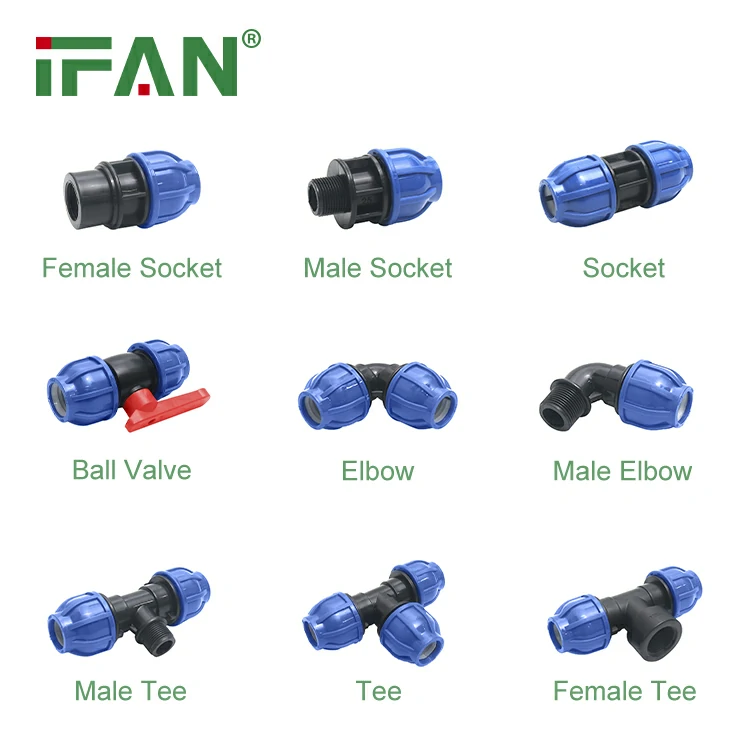
Step 1: Choose the Right HDPE Pipe Fittings
1.1 Consider the Application
- For high-pressure systems (industrial, gas, or municipal water supply), select SDR 11 or SDR 9 fittings.
- For low-pressure systems (agriculture, drainage, or irrigation), SDR 17 or SDR 21 fittings work well.
- For chemical transport, ensure fittings are chemical-resistant.
1.2 Select the Correct Fitting Type
- Butt Fusion Fittings – Best for permanent, high-strength connections.
- Electrofusion Fittings – Ideal for underground installations and precision connections.
- Compression Fittings – Useful for low-pressure systems and quick installations.
Step 2: Prepare HDPE Pipes and Fittings
2.1 Inspect Pipes and Fittings
- Check for cracks, defects, or dirt on the pipe ends.
- Ensure fittings match the pipe’s diameter and SDR rating.
2.2 Cut the Pipe to the Required Length
- Use a pipe cutter or fine-tooth saw to make a clean, straight cut.
- Remove any burrs or rough edges with a deburring tool.
2.3 Clean the Pipe and Fitting Surfaces
- Wipe both surfaces with a clean cloth to remove dust and moisture.
- For electrofusion joints, use an approved alcohol-based cleaner.
Step 3: Jointing Methods for HDPE Pipe Fittings
3.1 Butt Fusion Welding (Best for High-Pressure Systems)
Required Tools
- Butt fusion machine
- Pipe clamps
- Heating plate
Welding Process
- Align the Pipes – Secure the pipes in the fusion machine.
- Heat the Ends – Press both pipe ends against the heating plate until they soften.
- Join the Pipes – Remove the heating plate and quickly press the ends together.
- Cool the Joint – Allow it to cool naturally before moving the pipe.
👉 Tip: Ensure the weld bead is even around the joint for a strong, leak-proof connection.
3.2 Electrofusion Welding (Best for Underground and Precision Work)
Required Tools
- Electrofusion machine
- Electrofusion fittings
- Pipe clamps
Fusion Process
- Mark the Insertion Depth – Measure and mark where the pipe enters the fitting.
- Scrape the Pipe Surface – Remove the pipe’s oxidation layer with a scraper.
- Insert the Pipe into the Fitting – Ensure a snug fit inside the electrofusion coupler.
- Apply Electrical Current – Use an electrofusion machine to weld the joint.
- Allow Cooling Time – Let the joint cool before applying pressure.
👉 Tip: Avoid moving or disturbing the pipe while the joint cools to maintain strength.
3.3 Compression Fittings (Best for Low-Pressure Systems)
Installation Steps
- Insert the Pipe into the Compression Fitting until it reaches the internal stop.
- Tighten the Nut by hand, then use a wrench for a secure fit.
- Check for Leaks before full system pressurization.
👉 Tip: Do not overtighten, as it may damage the fitting or pipe.
Step 4: Pressure Testing the HDPE Pipe System
- Seal all Open Ends – Use end caps or valves.
- Fill the System with Water or Air – Use a controlled pump to introduce pressure.
- Monitor for Leaks – Inspect joints and connections under pressure for at least 30 minutes.
- Gradually Release Pressure before making adjustments.
Step 5: Proper Support and Installation Techniques
5.1 Provide Adequate Pipe Support
- Use clamps, hangers, or saddles to prevent sagging.
- Support points should be placed every 1.5 to 2 meters (5 to 6 feet).
5.2 Consider Expansion and Contraction
- HDPE pipes expand and contract with temperature changes.
- Use expansion loops or flexible joints in long pipe runs.
5.3 Protect Against UV Exposure (For Outdoor Use)
- Use UV-resistant HDPE for direct sunlight exposure.
- Apply protective coatings or bury the pipes if needed.
Conclusion
Installing HDPE pipe fittings correctly ensures maximum durability, leak-free joints, and long-term performance. Following proper cutting, cleaning, and jointing techniques, along with pressure testing and support considerations, helps maintain a reliable piping system for industrial, agricultural, and municipal applications. By choosing the right installation method—butt fusion, electrofusion, or compression fittings—you can optimize strength, efficiency, and longevity in your HDPE piping network.
IFAN factory started in 1993. And IFAN has workshop 120000 square meter with 610 staff. IFAN can design and produce all plumbing pipe and fitting include PPR,PVC,CPVC PPSU HDPE PEXA PEXB PERT pipe and fitting ,brass fitting, brass ball valve ,heating system , gas system , sanitary faucets and hose, In the past 30 Years, IFAN has never forgotten his mission-To protect health and safety. And IFAN factory use best materials to produce high quality pipe and fittings with automatic production line and high tech quality control machines. The most important,IFAN can guarantee that all pipes and fittings manufactured by IFAN are qualified. More information pls feel free contact us Whatsapp.