
1. Introduction to PPR Ball Valves
PPR (Polypropylene Random Copolymer) ball valves are essential components in plumbing systems, designed to control water flow efficiently. They are widely used in residential, commercial, and industrial applications due to their durability, corrosion resistance, and smooth operation.
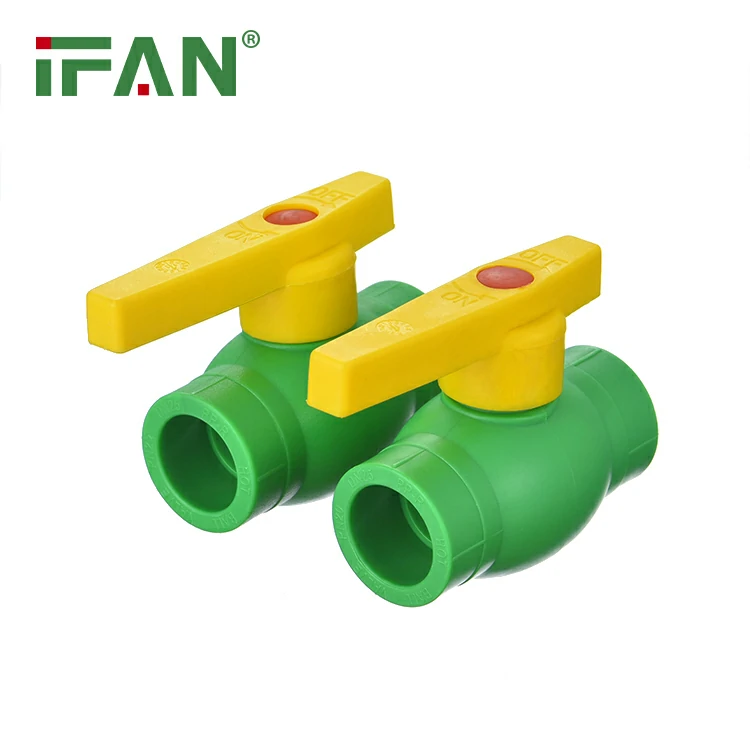
2. Types of PPR Ball Valves
- Full-Port Ball Valve – Provides unrestricted flow with minimal pressure drop.
- Standard-Port Ball Valve – Compact design with slightly reduced flow capacity.
- Threaded PPR Ball Valve – Features threaded ends for easy connection to metal pipes.
- Union Ball Valve – Allows for easy disassembly and maintenance without cutting pipes.
3. Pre-Installation Preparation
- Select the Correct Valve – Ensure the valve size (DN20, DN25, DN32) matches your pipe system and pressure rating (PN20 or PN25).
- Prepare the Pipes – Cut the pipes squarely, remove burrs, and clean the ends with isopropyl alcohol for a secure weld.
- Set Up the Welding Machine – Preheat the welding tool to 260°C (±5°C) for optimal fusion.
4. Installation Steps
- Position the Valve – Place the valve in an accessible location for easy operation. For underground installations, use a valve box for protection.
- Weld the Connections – Heat the pipe end and valve socket simultaneously for 5-8 seconds (depending on pipe diameter). Insert the pipe straight into the valve without twisting and hold for 10-15 seconds.
- Cool and Test – Allow the joint to cool for 2-4 minutes before pressurizing the system. Check for leaks using soapy water or a pressure gauge.
5. Common Installation Issues
- Misalignment – Can stress the valve. Use support brackets to ensure proper alignment.
- Overheating – May warp the valve body. Follow recommended heating times strictly.
- Closed Valve During Welding – Damages the internal ball. Always weld with the valve fully open.
6. Maintenance Tips
- Lubricate the Handle – Apply silicone grease if the handle becomes stiff.
- Check for Leaks – Tighten the gland nut or replace O-rings if necessary.
- Avoid Freezing – Thaw a frozen valve with warm water (never use a torch).
7. Technical Specifications
- Maximum Pressure: 20-25 bar (PN20/PN25)
- Temperature Range: -10°C to 95°C (short-term up to 110°C)
- Service Life: 50+ years with proper installation
8. Safety Precautions
- Always weld with the valve open to prevent heat damage.
- Avoid excessive force when operating the handle.
- Use a backup wrench when connecting threaded valves to prevent damage.
9. When to Replace a PPR Ball Valve
- Visible cracks or deformation
- Persistent leaks despite repairs
- Difficulty turning the handle (indicating internal wear)
10. Conclusion
PPR ball valves are reliable and long-lasting when installed and maintained correctly. Following these guidelines ensures optimal performance and prevents common issues. Always refer to the manufacturer’s instructions for specific details.
IFAN factory started in 1993. And IFAN has workshop 120000 square meter with 610 staff. IFAN can design and produce all plumbing pipe and fitting include PPR,PVC,CPVC PPSU HDPE PEXA PEXB PERT pipe and fitting ,brass fitting, brass ball valve ,heating system , gas system , sanitary faucets and hose, In the past 30 Years, IFAN has never forgotten his mission-To protect health and safety. And IFAN factory use best materials to produce high quality pipe and fittings with automatic production line and high tech quality control machines. The most important,IFAN can guarantee that all pipes and fittings manufactured by IFAN are qualified. More information pls feel free contact us Whatsapp.