
Introduction to Brass Fittings
Brass fittings are essential components in plumbing, HVAC, and industrial systems, offering superior durability and corrosion resistance. Made from copper-zinc alloys, these fittings provide reliable connections for water, gas, oil, and compressed air systems. This comprehensive guide covers everything you need to know about brass fittings, from types and applications to proper installation techniques.
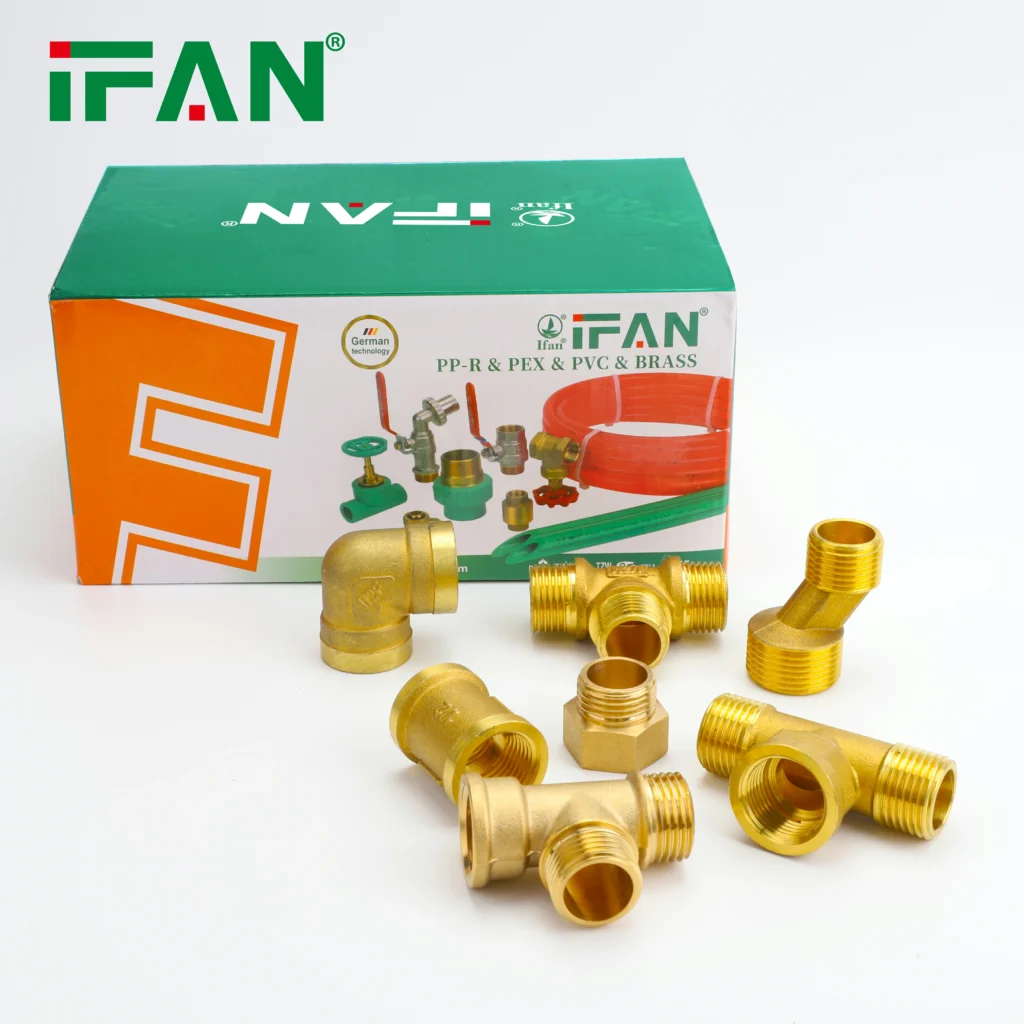
Key Benefits of Brass Fittings
✔ Excellent corrosion resistance – withstands water, chemicals, and weather
✔ High temperature tolerance – performs well in hot water and steam applications
✔ Durable and long-lasting – typical lifespan of 20-50 years
✔ Malleable yet strong – easier to work with than steel while maintaining strength
✔ Lead-free options available – safe for potable water systems
Common Types of Brass Fittings
1. Compression Fittings
- No soldering required
- Create watertight seals with compression rings
- Ideal for repairs and connections to different materials
2. Threaded Fittings
- NPT (National Pipe Thread) standard
- Include couplings, elbows, tees, and bushings
- Require thread sealant or Teflon tape
3. Flare Fittings
- Used in gas lines and high-pressure applications
- Create metal-to-metal seals
- Common in refrigeration and fuel systems
4. Push-to-Connect Fittings
- Quick installation without tools
- Contain O-rings for watertight seals
- Great for temporary installations and repairs
5. Sweat (Soldered) Fittings
- Permanent connections
- Require soldering skills
- Most common for copper pipe systems
Technical Specifications
| Specification | Details |
|---|---|
| Materials | C36000 (Free-machining brass), C37700 (Forging brass), CZ121 (DZR brass) |
| Pressure Rating | 150-300 PSI (varies by type and size) |
| Temperature Range | -40°F to 400°F (-40°C to 204°C) |
| Common Sizes | 1/8″ to 4″ (3mm to 100mm) |
| Standards | ASTM B16, ASME B1.20.1, NSF/ANSI 61, 372 |
Installation Best Practices
1. Preparation
- Clean all mating surfaces thoroughly
- Deburr pipe ends
- Apply appropriate sealant (Teflon tape, pipe dope)
2. Threaded Fitting Installation
- Wrap male threads clockwise with Teflon tape (2-3 wraps)
- Hand-tighten first, then wrench tighten 1/2 to 1-1/2 turns
- Avoid overtightening to prevent cracking
3. Compression Fitting Installation
- Slide nut and ferrule onto pipe
- Insert pipe fully into fitting body
- Hand-tighten nut, then wrench tighten 1/2 to 3/4 turn
Industry Applications
- Plumbing: Water supply lines, fixtures, and appliances
- HVAC: Refrigerant lines, condensate drains
- Industrial: Pneumatic systems, hydraulic lines
- Marine: Boat plumbing and fuel systems
- Gas: Natural gas and propane distribution
Maintenance & Troubleshooting
Common Issues
- Leaks: Often caused by improper installation or worn seals
- Corrosion: Typically appears as dezincification (white powder)
- Cracks: Usually from overtightening or thermal stress
Prevention Tips
- Use dielectric unions when connecting to dissimilar metals
- Install brass fittings after other metals in water direction
- Inspect annually for signs of corrosion or wear
Frequently Asked Questions
Q: Are all brass fittings safe for drinking water?
A: Only fittings marked “lead-free” and NSF/ANSI 61 certified are approved for potable water.
Q: How can I tell if a brass fitting is high quality?
A: Look for smooth machining, proper markings (size, material grade), and certification stamps.
Q: What’s the difference between brass and bronze fittings?
A: Bronze contains tin and is more corrosion-resistant for marine applications, while brass is more economical for most uses.
Q: Can brass fittings be used outdoors?
A: Yes, but for coastal areas, consider DZR (dezincification-resistant) brass or bronze.
Q: How do I prevent brass fittings from seizing?
A: Use anti-seize compound on threads and avoid overtightening.
Conclusion
Brass fittings remain the preferred choice for countless plumbing and industrial applications due to their exceptional balance of durability, workability, and corrosion resistance. When selecting brass fittings, always consider the specific requirements of your application including fluid type, pressure, temperature, and environmental conditions. Proper installation using the right tools and techniques will ensure leak-free performance for decades. For critical systems, consult with a qualified professional to ensure compliance with all relevant codes and standards.
IFAN factory started in 1993. And IFAN has workshop 120000 square meter with 610 staff. IFAN can design and produce all plumbing pipe and fitting include PPR,PVC,CPVC PPSU HDPE PEXA PEXB PERT pipe and fitting ,brass fitting, brass ball valve ,heating system , gas system , sanitary faucets and hose, In the past 30 Years, IFAN has never forgotten his mission-To protect health and safety. And IFAN factory use best materials to produce high quality pipe and fittings with automatic production line and high tech quality control machines. The most important,IFAN can guarantee that all pipes and fittings manufactured by IFAN are qualified. More information pls feel free contact us Whatsapp.