UPVC Fittings: A Complete Guide to Types, Applications
Description
Introduction
UPVC fittings are essential components in modern piping systems, offering a lightweight, corrosion-resistant, and cost-effective alternative to metal and traditional plastic fittings. Used globally in plumbing, drainage, irrigation, and chemical transport, UPVC fittings are prized for their durability, ease of installation, and low maintenance requirements. This guide explores their types, benefits, applications, and best practices for installation.
What Are UPVC Fittings?
UPVC fittings are rigid plastic connectors designed to join UPVC pipes in pressurized or non-pressurized systems. Unlike PVC (which contains plasticizers for flexibility), UPVC is rigid and chemically inert, making it ideal for transporting aggressive fluids like acids, alkalis, and wastewater. These fittings are manufactured via injection molding and are available in socket (solvent-welded) or threaded configurations for versatile connections.
How Do UPVC Fittings Work?
UPVC fittings are installed using solvent cement welding, a process that chemically bonds pipes and fittings:
Cut the pipe to length using a fine-tooth saw or pipe cutter.
Deburr the edges with sandpaper to remove sharp edges.
Apply solvent cement to both the pipe end and fitting socket using a dauber brush.
Insert the pipe fully into the fitting socket, twisting slightly to ensure even distribution.
Hold the joint for 30 seconds to allow initial bonding, then let it cure for 24 hours before pressurizing.
This method creates a permanent, leak-proof seal that withstands pressures up to 16 bar (232 PSI) in cold water systems.
Key Benefits of UPVC Fittings
Corrosion Resistance
UPVC is immune to rust, scaling, and chemical degradation, making it ideal for wastewater, saltwater, and industrial applications.
Lightweight and Easy to Handle
Weighs 70% less than steel, reducing transportation and labor costs during installation.
Low Thermal Conductivity
Minimizes heat loss in hot water systems and prevents condensation in cold water lines.
Smooth Interior Surface
Reduces friction and pressure drops, improving flow efficiency in irrigation and drainage systems.
Long Service Life
Withstands UV exposure, temperature fluctuations, and impact, lasting 50+ years with minimal maintenance.
Eco-Friendly Material
UPVC is recyclable and produces fewer emissions during manufacturing compared to metal alternatives.
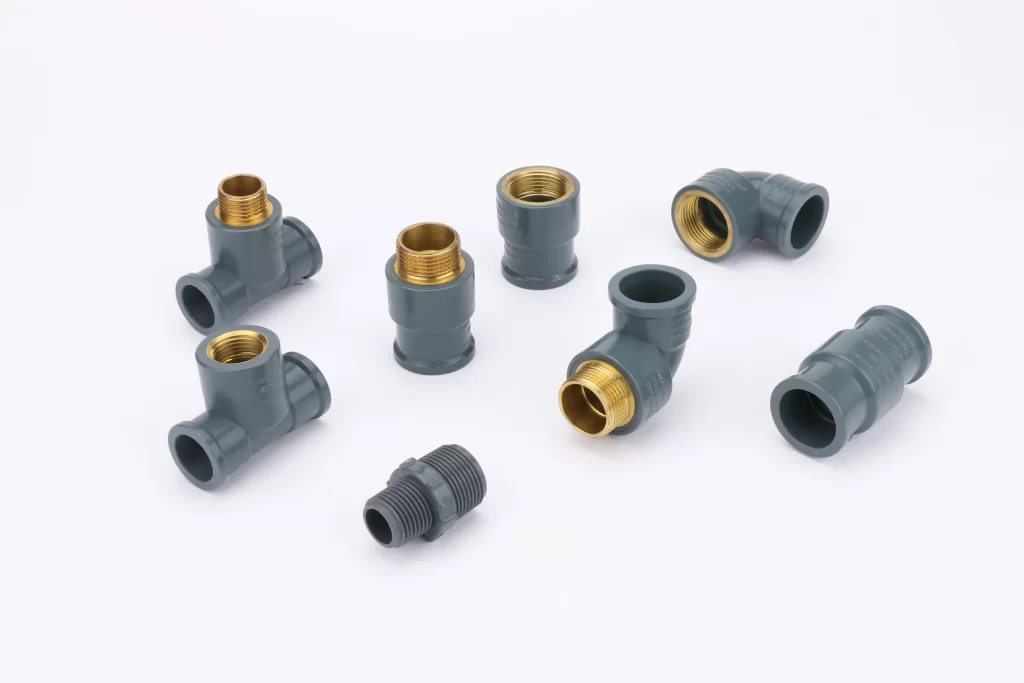
Types of UPVC Fittings
Socket Fittings (Solvent-Welded)
Function: Joins pipes via solvent cement for permanent, leak-proof connections.
Types:
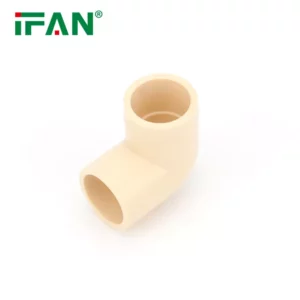
Elbows: 90° or 45° directional changes.
Tees: Splits flow into two directions.
Couplings: Connects two pipes end-to-end.
Reducers: Joins pipes of different diameters.
End Caps: Seals pipe ends for pressure testing or future expansion.
Threaded Fittings
Function: Features male or female threads for connecting to valves, taps, or metal pipes.
Types:
Male Adapters: External threads for screwing into female sockets.
Female Adapters: Internal threads for receiving male-threaded components.
Unions: Disconnectable joints for easy maintenance.
Flange Fittings
Function: Bolts to flat surfaces (e.g., tanks or pumps) for secure, high-pressure connections.
Best For: Industrial piping and mechanical equipment.
Saddle Fittings
Function: Clamps onto existing pipes to create a branch outlet without cutting.
Best For: Retrofitting irrigation systems or adding taps to main lines.
Check Valve Fittings
Function: Allows one-way flow to prevent backflow in drainage systems.
Best For: Sump pumps, sewage lines, and industrial processes.
Common Applications
Residential Plumbing: Cold and hot water supply lines, drainage systems, and underground sewage pipes.
Commercial Buildings: Fire sprinkler systems, HVAC ductwork, and wastewater disposal in hospitals and hotels.
Agricultural Irrigation: Drip and sprinkler systems for crops, greenhouses, and nurseries.
Industrial Piping: Transporting chemicals, acids, and brine in factories, mines, and water treatment plants.
Swimming Pools: Filtration systems, skimmers, and return lines due to resistance to chlorine and saltwater.
Marine Applications: Dock piping, boat plumbing, and seawater intake lines for coastal installations.
Installation Best Practices
Use compatible pipes: Ensure pipes are rated for the same pressure and temperature as the fittings.
Cut pipes squarely: Avoid angled cuts that can create leaks.
Apply solvent cement evenly: Use a dauber brush to coat both surfaces thoroughly.
Support pipes properly: Use hangers or clamps every 1.5 meters to prevent sagging.
Test the system: After curing, pressurize the system to 1.5x the working pressure to check for leaks.
Maintenance Tips
Avoid abrasive cleaners: Scrubbing with steel wool can scratch the surface.
Protect from UV exposure: Paint outdoor pipes with UV-resistant coating or use pre-colored UPVC.
Inspect regularly: Check for cracks, discoloration, or loose joints annually.
Replace damaged fittings: Never reuse solvent-welded joints that have been cut or stressed.
Conclusion
UPVC fittings are a versatile, durable, and cost-effective solution for residential, commercial, and industrial piping systems. Their resistance to corrosion, chemicals, and UV damage, combined with easy installation via solvent welding, makes them a preferred choice over metal and traditional plastics. By selecting the right type of fitting and following proper installation practices, you can ensure leak-free performance for decades.IFAN factory started in 1993. And IFAN has workshop 120000 square meter with 610 staff. IFAN can design and produce all plumbing pipe and fitting include PPR,PVC,CPVC PPSU HDPE PEXA PEXB PERT pipe and fitting ,brass fitting, brass ball valve ,heating system , gas system , sanitary faucets and hose, In the past 30 Years, IFAN has never forgotten his mission-To protect health and safety. And IFAN factory use best materials to produce high quality pipe and fittings with automatic production line and high tech quality control machines. The most important,IFAN can guarantee that all pipes and fittings manufactured by IFAN are qualified. More information pls feel free contact us Whatsapp.



 CPVC ASTM2846