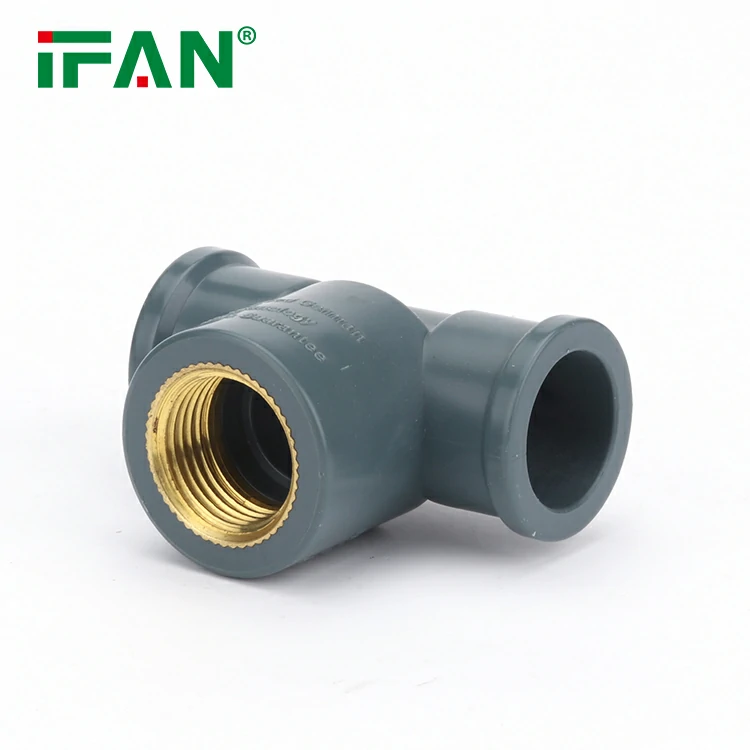
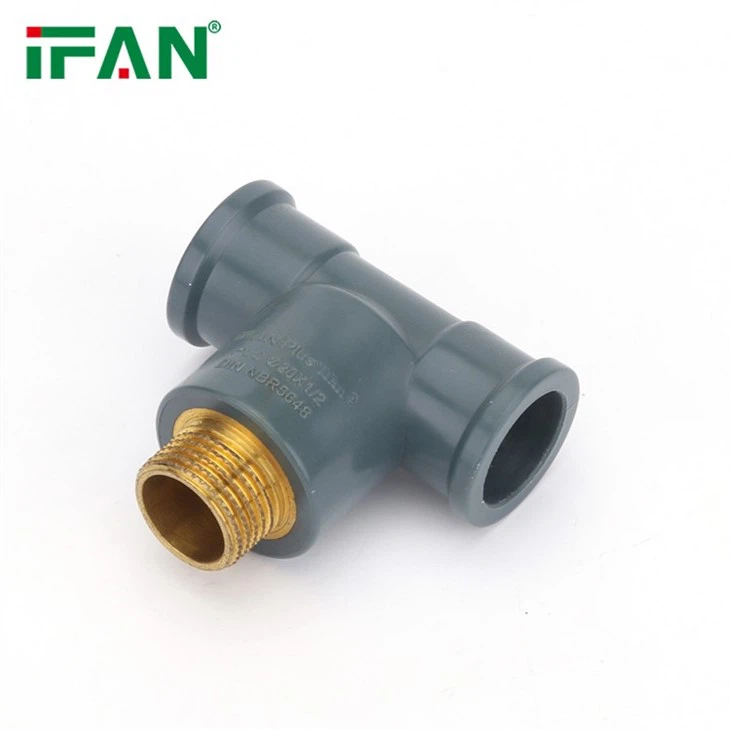
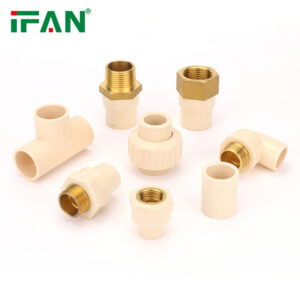
UPVC fitting female tees are indispensable components in modern piping systems, designed to split or redirect fluid flow efficiently. Unlike male tees, which require threaded connections, female tees feature socket-style openings that use solvent cement welding for permanent, leak-proof joints. This guide explores their design, applications, installation best practices, and how they compare to alternative fittings. Whether you’re a DIY enthusiast or a professional plumber, understanding UPVC female tees is key to building reliable, low-maintenance piping networks.
What Is a UPVC Fitting Female Tee?
A UPVC fitting female tee is a T-shaped plastic connector with three socket-style openings: one straight (run) and two perpendicular (branch). These sockets are engineered to fit over the outer diameter (OD) of UPVC pipes, creating a seamless bond when joined with solvent cement. The female tee’s design eliminates the need for threads, gaskets, or clamps, ensuring a stronger, more durable connection than mechanical fittings.
How Does a UPVC Female Tee Work?
The installation process relies on solvent welding, a chemical bonding method that melts the UPVC surfaces to fuse them permanently:
Cut and Prepare Pipes:
Use a fine-tooth saw or pipe cutter to make a square cut.
Deburr the edges with sandpaper to remove sharp ridges.
Clean the pipe ends and tee sockets with a dry cloth to eliminate dust or grease.
Apply Solvent Cement:
Use a dauber brush to coat the pipe OD and tee socket interior with a thin, even layer of UPVC-specific solvent cement.
Avoid over-application, as excess cement can weaken the joint.
Assemble and Cure:
Insert the pipe fully into the tee socket, twisting slightly to distribute the cement.
Hold the joint for 30 seconds to prevent slippage.
Allow 24 hours for full curing before pressurizing the system.
This method creates a bond stronger than the pipe itself, withstanding pressures up to 16 bar (232 PSI) in cold water applications.
Key Benefits of UPVC Female Tees
Leak-Proof Performance
Solvent welding ensures no gaps exist between the pipe and tee, making it ideal for underground drainage, chemical transport, and potable water systems.
Chemical Resistance
UPVC is inert to acids, alkalis, salts, and organic solvents, ensuring longevity in industrial wastewater and agricultural irrigation systems.
Corrosion-Free
Unlike metal tees, UPVC female tees won’t rust or scale, reducing maintenance costs and extending system lifespan.
Smooth Interior Flow
The seamless design minimizes friction, improving flow efficiency in low-pressure applications like drip irrigation.
Cost-Effective
UPVC female tees are 40–60% cheaper than stainless steel or brass alternatives and require no specialized tools for installation.
Lightweight and Easy to Handle
Weighing less than metal fittings, they simplify transportation and installation in tight spaces.
Types of UPVC Female Tees
Standard Female Tee
Function: Splits flow into two perpendicular directions (e.g., branching a main water line to a sink and dishwasher).
Best For: Residential plumbing, laboratory drainage, and greenhouse irrigation.
Reducing Female Tee
Function: Connects pipes of different diameters (e.g., 50mm main line to a 25mm branch).
Best For: Retrofitting older systems or adjusting flow rates in industrial processes.
Equal Female Tee
Function: Maintains the same pipe diameter across all three openings (e.g., splitting a 40mm line into two 40mm branches).
Best For: Fire sprinkler systems, HVAC condensate lines, and pool plumbing.
Double Socket Female Tee
Function: Features sockets on all three ends for solvent-welded connections (common in most UPVC tees).
Best For: Permanent installations requiring high pressure resistance.
Threaded Female Tee (Hybrid Design)
Function: Combines socket ends with a female threaded outlet for attaching valves or taps.
Best For: Mixed systems where some components require threaded connections.
Installation Best Practices
Use the Right Solvent Cement:
Select a cement rated for UPVC pipes and the operating temperature (e.g., cold-weather or high-temperature formulas).
Check Pipe Alignment:
Ensure pipes are straight before inserting them into the tee sockets to avoid stress fractures.
Support Heavy Pipes:
Use hangers or clamps every 1.5 meters to prevent sagging, which can crack the tee joint.
Avoid Over-Tightening:
Solvent-welded joints require no torque; manual pressure is sufficient.
Test Under Pressure:
After curing, fill the system with water and pressurize it to 1.5x the working pressure to check for leaks.
Common Applications
Residential Plumbing: Cold/hot water supply, sewage lines, and basement drainage.
Commercial Buildings: Fire sprinkler systems, HVAC condensate lines, and laboratory waste disposal.
Agriculture: Drip irrigation, greenhouse watering, and livestock watering systems.
Industrial: Chemical processing, saltwater transport, and mining slurry pipelines.
Marine: Dock piping, boat plumbing, and aquaculture farm installations.
IFAN factory started in 1993. And IFAN has workshop 120000 square meter with 610 staff. IFAN can design and produce all plumbing pipe and fitting include PPR,PVC,CPVC PPSU HDPE PEXA PEXB PERT pipe and fitting ,brass fitting, brass ball valve ,heating system , gas system , sanitary faucets and hose, In the past 30 Years, IFAN has never forgotten his mission-To protect health and safety. And IFAN factory use best materials to produce high quality pipe and fittings with automatic production line and high tech quality control machines. The most important,IFAN can guarantee that all pipes and fittings manufactured by IFAN are qualified. More information pls feel free contact us Whatsapp.