
Introduction
In industrial piping systems, sharp turns and directional changes are inevitable, but traditional metal elbows often fail under corrosive chemicals, high temperatures, or abrasive slurries. PPH (Polypropylene Homopolymer) fitting elbows provide a lightweight, cost-effective, and chemically inert solution designed to redirect flow smoothly while resisting degradation.
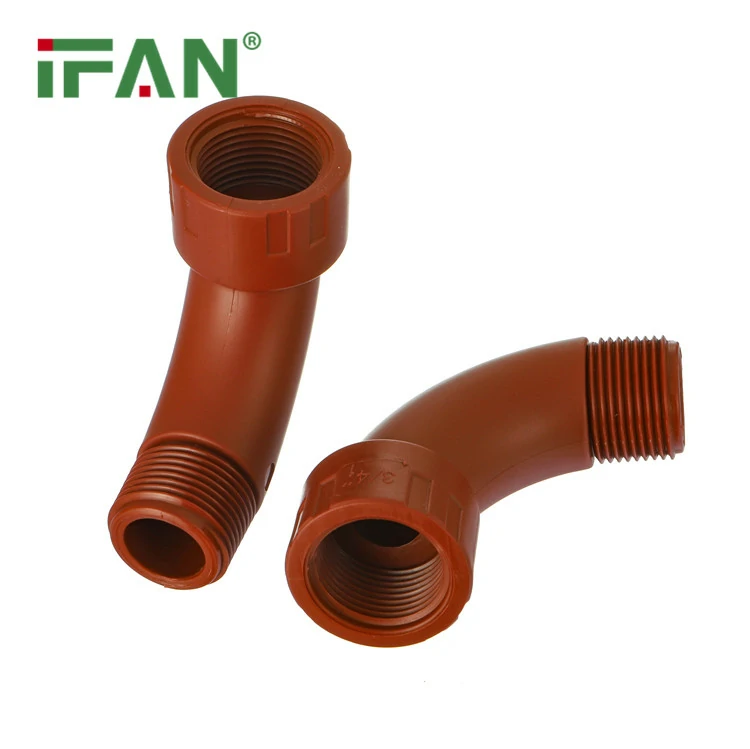
PPH fitting elbows are engineered to withstand over 100 industrial chemicals, including sulfuric acid, sodium hydroxide, and chlorine, making them ideal for chemical processing, wastewater treatment, and electroplating. Unlike steel or PVC, PPH maintains structural integrity under pressure without rusting, scaling, or thermal distortion.
This guide covers types of PPH elbows, their applications, installation best practices, and maintenance tips to help engineers and facility managers optimize their piping networks.
What Is a PPH Fitting Elbow?
A PPH fitting elbow is a 90° or 45° angled connector used to change the direction of flow in PPH piping systems. It features sockets or flanges on both ends for solvent cementing, heat fusion, or bolting to pipes or equipment.
Key properties of PPH include:
- Chemical Resistance: Withstands acids, alkalis, and solvents (pH 1–14 for short-term exposure).
- Temperature Range: Operates from -20°F to 212°F (-29°C to 100°C) (varies by grade).
- Pressure Rating: Up to 150 PSI at 73°F (23°C) for standard schedules.
- Lightweight: Weighs 70% less than steel, reducing installation labor.
Types of PPH Fitting Elbows
1. Standard PPH Socket Elbow (90°/45°)
- Design: Features two sockets for solvent cementing or heat fusion to PPH pipes.
- Best For:
- Permanent installations requiring leak-proof joints (e.g., chemical storage lines).
- Systems needing smooth interior surfaces to minimize turbulence and pressure drops.
- Pros:
- Creates a monolithic bond when fused correctly (no weak points).
- Resists thermal expansion better than threaded elbows.
- Cons:
- Requires solvent cement or heat fusion tools.
- Not reusable once bonded.
2. PPH Flanged Elbow
- Design: Combines a 90°/45° elbow body with ANSI/ASME-compliant flanges for bolting to valves, pumps, or tanks.
- Best For:
- Large-diameter pipes (e.g., 4″ and above).
- Systems requiring gaskets for chemical-resistant sealing (e.g., EPDM or Viton).
- Pros:
- Distributes stress evenly across the flange face.
- Easy to disassemble for maintenance or repairs.
- Cons:
- More expensive than socket elbows.
- Heavier and bulkier for tight spaces.
3. PPH Long Radius (LR) Elbow
- Design: Features a gentler bend (1.5× pipe diameter radius) to reduce turbulence and pressure loss.
- Best For:
- High-flow systems (e.g., cooling water loops or slurry transport).
- Applications requiring minimal energy loss (e.g., HVAC or chilled water systems).
- Pros:
- Lowers pumping costs by reducing friction.
- Extends pipe and equipment lifespan by minimizing wear.
- Cons:
- Takes up more space than standard elbows.
4. PPH Short Radius (SR) Elbow
- Design: Uses a tight bend (1× pipe diameter radius) for compact installations.
- Best For:
- Space-constrained areas (e.g., underfloor piping or equipment skids).
- Low-pressure systems where flow efficiency is less critical.
- Pros:
- Saves space in crowded installations.
- Cheaper than long-radius elbws.
- Cons:
- Increases turbulence and pressure drop compared to LR elbows.
When to Use PPH Fitting Elbows
- Chemical Processing: Transporting concentrated acids, bases, or solvents in reactors, scrubbers, or storage tanks.
- Wastewater Treatment: Handling chlorine, hydrogen sulfide, or sludge without corrosion.
- Electroplating & Anodizing: Resisting electrolytic corrosion in metal finishing lines.
- Food & Beverage: Distributing deionized water or CIP (Clean-in-Place) chemicals in FDA-compliant systems.
- HVAC & Chilled Water: Redirecting glycol solutions without scaling or biofilm buildup.
Step-by-Step Installation Guide for PPH Elbows
- Cut Pipes to Length: Use a fine-toothed saw or PPH pipe cutter for a clean, square cut.
- Debur Edges: Sand the pipe ends to remove burrs and ensure a smooth surface for fusion.
- Dry Fit: Assemble the elbow and pipes without cement to check alignment.
- Apply Solvent Cement (for socket elbows):
- Use a PPH-specific cement (e.g., Weld-On 725).
- Coat the socket interior and pipe exterior evenly.
- Insert & Rotate: Push the pipe into the socket fully, then twist 1/4 turn to distribute the cement.
- Cure: Hold the joint in place for 30 seconds and let it cure for 24 hours before pressure testing.
For flanged elbows:
- Align the flange holes with the mating component.
- Insert bolts and tighten evenly in a crisscross pattern to avoid warping.
- Use a gasket rated for the chemical and temperature (e.g., EPDM for acids, Viton for solvents).
IFAN factory started in 1993. And IFAN has workshop 120000 square meter with 610 staff. IFAN can design and produce all plumbing pipe and fitting include PPR,PVC,CPVC PPSU HDPE PEXA PEXB PERT pipe and fitting ,brass fitting, brass ball valve ,heating system , gas system , sanitary faucets and hose, In the past 30 Years, IFAN has never forgotten his mission-To protect health and safety. And IFAN factory use best materials to produce high quality pipe and fittings with automatic production line and high tech quality control machines. The most important,IFAN can guarantee that all pipes and fittings manufactured by IFAN are qualified. More information pls feel free contact us Whatsapp.