The Complete Guide to PPR Female Thread Sockets: Seamless Transition Solutions
Modern plumbing and industrial systems often require connections between different piping technologies. PPR female thread sockets provide the essential interface between permanent PPR piping systems and removable threaded components, offering a reliable, leak-proof transition that combines the best of both connection methods. These crucial fittings enable the integration of valves, fixtures, instruments, and other threaded equipment into otherwise seamless PPR networks.
The ability to create secure transitions between thermally fused PPR systems and threaded components makes these sockets indispensable for comprehensive system design. Whether you’re working on residential plumbing, industrial processing, or commercial installations, understanding PPR female thread sockets is fundamental to creating versatile, maintainable piping systems.
This comprehensive guide covers everything you need to know about PPR female thread sockets, from their design advantages and installation techniques to selection criteria and application best practices.
What Are PPR Female Thread Sockets?
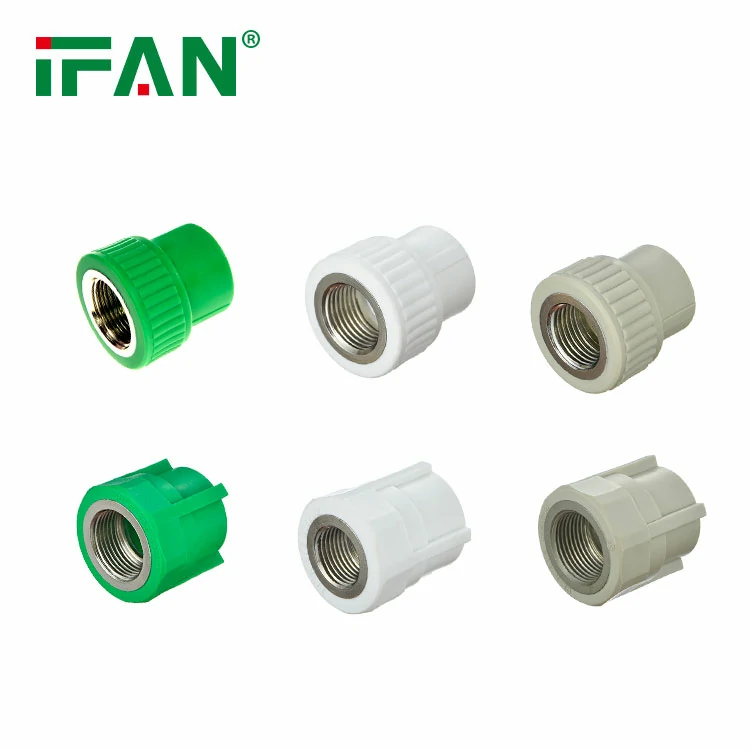
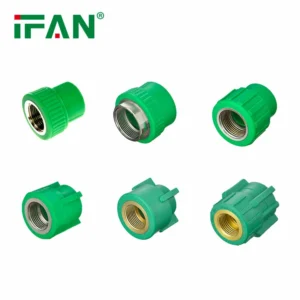
PPR female thread sockets are transition fittings featuring a standard PPR socket on one end for thermal fusion connection to PPR piping, and female threads (internal threads) on the opposite end to accept male threaded components. Manufactured from high-quality Polypropylene Random Copolymer, these sockets maintain all the beneficial properties of PPR while providing versatile connection options.
The female threaded end typically follows standard pipe threading specifications (NPT, BSPP, or BSPT), allowing connection to a wide range of threaded equipment including valves, gauges, filters, and other accessories. The PPR end enables permanent, leak-free joining to the main piping system through thermal fusion welding.
Key Benefits of PPR Female Thread Sockets
The unique design offers numerous advantages for system designers and installers:
System Flexibility: Enables integration of threaded components into PPR systems
Maintenance Friendly: Allows easy removal and replacement of connected equipment
Leak-Free Performance: Thermal fusion connection ensures permanent, reliable seals
Corrosion Resistance: Immune to electrolytic corrosion, scale buildup, and chemical degradation
Thermal Stability: Maintains integrity across temperature ranges from 0°C to 95°C (32°F to 203°F)
Smooth Flow: Maintains consistent internal diameter, minimizing turbulence and pressure drop
Long Service Life: 50+ year expectancy under proper operating conditions
Installation Process: How to Install PPR Female Thread Sockets
Proper installation ensures optimal performance and system integrity:
PPR End Connection:
Preparation: Cut PPR pipe square using a dedicated cutter, clean and deburr both surfaces
Heating: Use PPR welding machine set to 260°C (500°F), simultaneously heat pipe end and socket
Fusion: Quickly join heated components, maintain straight alignment without rotation
Cooling: Allow natural cooling without disturbance for recommended time
Threaded End Connection:
Thread Inspection: Check both male and female threads for damage or contamination
Sealant Application: Apply appropriate thread sealant (Teflon tape or pipe compound)
Hand Tightening: Start threads by hand to ensure proper alignment
Final Tightening: Use appropriate tools to achieve secure connection without over-tightening
Pressure Testing: Always conduct system pressure test before placing into service
Types of PPR Female Thread Sockets
Available in various configurations to meet different system requirements:
Straight Sockets: Basic transition from PPR to female threads
90° Elbow Sockets: Combine directional change with threaded connection
45° Elbow Sockets: Gradual angle changes with threaded access
Tee Sockets: Branch connections with threaded ports
Reducing Sockets: Different size connections on each end
Flush Thread Sockets: Designed for specific applications requiring flush connections
How to Choose the Right PPR Female Thread Socket
Selection considerations for optimal performance:
Size Compatibility: Match PPR size and thread specifications (DN20, DN25, etc.)
Thread Standard: Identify required thread type (NPT, BSPP, BSPT)
Pressure Rating: Verify fitting meets system pressure requirements
Temperature Requirements: Ensure suitability for operating temperatures
Certifications: Look for NSF, WRAS, or other relevant certifications
Material Quality: Choose virgin PPR material without recycled content
Technical Specifications
Pressure Rating: Typically 10-12 bar at 20°C (145-174 PSI at 68°F)
Temperature Range: -10°C to 95°C (14°F to 203°F)
Thread Standards: NPT (National Pipe Thread), BSPP (British Standard Parallel Pipe), BSPT (British Standard Tapered Pipe)
Sizes Available: DN15 (½”) to DN110 (4″) and larger
Material: PP-R (Polypropylene Random Copolymer) Grade 3
PPR Female Thread Sockets: FAQs
Q: Can these sockets be used for both hot and cold water?
A: Yes, PPR female thread sockets are suitable for both hot and cold water applications within their temperature ratings.
Q: What thread sealant should I use?
A: Use PTFE tape or approved pipe thread compound compatible with polypropylene and your system media.
Q: Are these fittings reusable?
A: The PPR fusion connection is permanent, but the threaded end can be disconnected and reconnected multiple times.
Q: Can I use these sockets with different thread standards?
A: No, you must match the thread standard exactly (NPT with NPT, BSPP with BSPP, etc.).
Q: Are PPR female sockets suitable for drinking water?
A: Yes, when they carry appropriate drinking water certifications (NSF/ANSI 61).
Applications for PPR Female Thread Sockets
Essential for numerous connection scenarios:
Valve Connections: Installing ball valves, gate valves, or check valves
Instrumentation: Connecting pressure gauges, thermometers, sensors
Fixture Connections: Linking to faucets, toilets, and other fixtures
Equipment Interfaces: Pumps, filters, water treatment equipment
System Access Points: For maintenance, drainage, or testing
Transition Points: Connecting to different piping materials
Maintenance and Best Practices
Ensure long-term performance with proper maintenance:
Regular Inspection: Check threaded connections for leaks or corrosion
Thread Protection: Use appropriate sealants and avoid over-tightening
System Compatibility: Verify chemical compatibility with system media
Temperature Monitoring: Ensure operating within specified temperature ranges
Re-torquing: Periodically check threaded connections in vibration-prone applications
Upgrade to Versatile System Connectivity
PPR female thread sockets provide the essential link between permanent PPR piping systems and removable threaded components, offering unmatched versatility in system design and maintenance. Their ability to combine the reliability of thermal fusion with the flexibility of threaded connections makes them indispensable for comprehensive piping solutions.
These fittings are particularly valuable in applications requiring regular maintenance, equipment replacement, or system modifications, where the ability to disconnect and reconnect components is crucial. The excellent chemical resistance and longevity of PPR ensure these connections will provide reliable service for decades.
IFAN factory started in 1993. And IFAN has workshop 120000 square meter with 610 staff. IFAN can design and produce all plumbing pipe and fitting include PPR,PVC,CPVC PPSU HDPE PEXA PEXB PERT pipe and fitting ,brass fitting, brass ball valve ,heating system , gas system , sanitary faucets and hose, In the past 30 Years, IFAN has never forgotten his mission-To protect health and safety. And IFAN factory use best materials to produce high quality pipe and fittings with automatic production line and high tech quality control machines. The most important,IFAN can guarantee that all pipes and fittings manufactured by IFAN are qualified. More information pls feel free contact us Whatsapp.
Related products

 PPR
PPRIFAN PPR Valve