PPR Tube Fitting Valve: The Complete Guide to Selection
Description
Introduction
PPR tube fitting valves are critical components in modern piping systems, combining corrosion resistance, durability, and leak-proof performance with the versatility of PPR pipes. Used in residential plumbing, commercial HVAC, and industrial chemical transport, these valves control fluid flow while maintaining system integrity under high temperatures and pressures. This guide covers types, applications, installation best practices, and troubleshooting to help you choose the right valve for your project.
What Is a PPR Tube Fitting Valve?
A PPR tube fitting valve is a shut-off or control device designed to integrate seamlessly with PPR pipes via fusion welding or push-fit connections. Unlike metal valves, PPR valves resist corrosion from hard water, chlorine, and acids, making them ideal for potable water systems, chemical processing, and heating applications.Key Features:
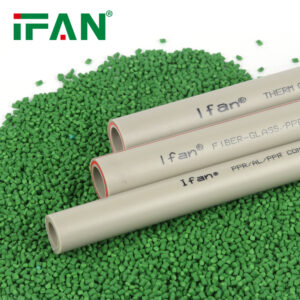
Material: Made from PPR or PPR-Aluminum-PPR composite for thermal stability (up to 95°C) and pressure resistance (up to 25 bar).
Connection Types:
Socket Fusion: Heated joints create a monolithic bond with PPR pipes, eliminating leaks.
Push-Fit: Quick-connect designs with EPDM O-rings for rapid installation without tools.
Design Standards: Compliant with ISO 15874 (PPR pipes) and EN 215 (thermostatic valves) for safety and reliability.
Types of PPR Tube Fitting Valves
Ball Valves
Function: Full-port design allows unrestricted flow when open, ideal for on/off control in water supply lines.
Applications: Residential plumbing, irrigation systems, and industrial process piping.
Advantage: Low torque operation (easy to open/close) and bubble-tight shutoff.
Gate Valves
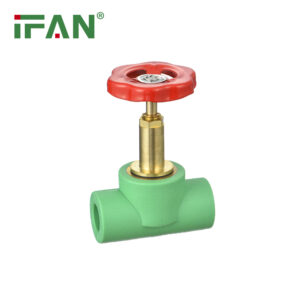
Function: Uses a wedge-shaped disc to block flow, suitable for infrequent operation (e.g., seasonal shutoffs).
Applications: Underground water mains, boiler feed lines, and fire protection systems.
Advantage: Minimal pressure drop when fully open.
Thermostatic Mixing Valves (TMVs)
Function: Blends hot and cold water to maintain a safe outlet temperature (e.g., 38°C for showers).
Applications: Hospitals, schools, and hotels to prevent scalding.
Advantage: Temperature-sensitive wax element ensures precise control even with pressure fluctuations.
Check Valves
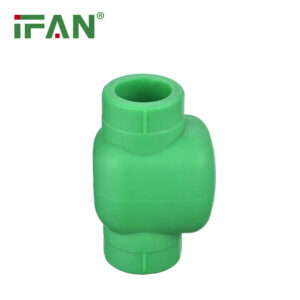
Function: Allows fluid to flow in one direction only, preventing backflow in pumps and heating systems.
Applications: Sump pumps, solar thermal loops, and boiler drain lines.
Advantage: Spring-loaded or gravity-assisted designs for reliable operation.
Needle Valves
Function: Fine-threads on the needle-shaped plunger enable precise flow adjustment (e.g., 0.1–10 L/min).
Applications: Laboratory equipment, gas chromatography, and calibration systems.
Advantage: High-resolution control for sensitive processes.
Advantages of PPR Tube Fitting Valves
Corrosion Resistance
Unlike brass or steel valves, PPR valves do not react with chlorine, hard water minerals, or acids, eliminating pitting corrosion and extending lifespan to 20+ years in residential use.
Leak-Proof Connections
Socket fusion welding creates joints stronger than the pipe itself, with <0.1% failure rate in hydrostatic tests (per TEPPFA 2023 data).
Thermal Stability
PPR’s low thermal expansion coefficient (0.14 mm/m·K) reduces stress on valves during temperature changes, preventing cracks in hot water systems.
Quiet Operation
Smooth interior surfaces minimize turbulence and water hammer, making PPR valves ideal for multi-story buildings and hospitals.
Eco-Friendly
PPR valves are 100% recyclable and produce 65% fewer CO₂ emissions during manufacturing than brass valves (per Life Cycle Assessment by GF Piping Systems).
Applications Across Industries
Residential Plumbing
Ball valves control water supply to sinks, toilets, and washing machines.
TMVs ensure safe shower temperatures in homes with elderly residents or children.
Commercial HVAC
Gate valves isolate boiler sections for maintenance without draining the entire system.
Check valves prevent condensate backflow in chilled water loops.
Industrial Chemical Transport
PPR-Al-PPR composite valves with PTFE seats handle 98% sulfuric acid and sodium hypochlorite without corrosion.
Agricultural Irrigation
UV-stabilized PPR ball valves withstand 10 years of sun exposure in outdoor fields, outlasting metal valves that rust.
Installation Guide for PPR Tube Fitting Valves
Pre-Installation Checks
Verify valve pressure rating (e.g., PN16 for residential, PN25 for industrial) matches the system.
Check valve orientation (e.g., TMVs require hot water inlet on the left, cold on the right).
Cutting and Deburring Pipes
Use a rotary cutter to make a square cut on PPR pipes.
Deburr edges with a reamer to ensure smooth insertion into valve sockets.
Heating and Joining (Socket Fusion)
Heat valve sockets and pipe ends to 260°C (500°F) for 6–8 seconds using a fusion welding machine.
Insert pipes into sockets up to the depth mark (typically 10–15mm) and hold for 20–30 seconds to cool.
Pressure Testing
Conduct a 2-hour hydrostatic test at 1.5x operating pressure (e.g., 24 bar for PN16 systems).
Inspect joints with a soap solution for bubbles indicating leaks.
Maintenance and Troubleshooting
Preventive Maintenance:
Lubricate ball valve stems annually with silicone grease to prevent seizure.
For TMVs, test outlet temperature monthly and recalibrate if needed.
Common Issues:
Stuck Valves: Apply penetrating oil and tap gently with a rubber mallet. Avoid excessive force to prevent stem breakage.
Leaking Joints: Reheat and rejoin within 10 seconds of initial assembly if the fusion was incomplete.
IFAN factory started in 1993. And IFAN has workshop 120000 square meter with 610 staff. IFAN can design and produce all plumbing pipe and fitting include PPR,PVC,CPVC PPSU HDPE PEXA PEXB PERT pipe and fitting ,brass fitting, brass ball valve ,heating system , gas system , sanitary faucets and hose, In the past 30 Years, IFAN has never forgotten his mission-To protect health and safety. And IFAN factory use best materials to produce high quality pipe and fittings with automatic production line and high tech quality control machines. The most important,IFA



 PPR
PPR