CPVC 45° Elbow Fittings: Precision Engineering for Efficient Piping Systems
CPVC (Chlorinated Polyvinyl Chloride) 45° elbow fittings are critical components in piping networks, designed to redirect fluid flow at a 45-degree angle while minimizing pressure loss and turbulence. These fittings are widely used in residential, commercial, and industrial applications due to their durability, chemical resistance, and high-temperature tolerance. Below is a comprehensive analysis of their features, benefits, and applications.
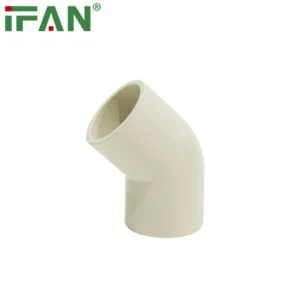
Key Features of CPVC 45° Elbow Fittings
- Material Composition
- CPVC Polymer: Enhanced with chlorine content (up to 67%), providing superior thermal stability (up to 200°F/93°C) and chemical resistance compared to standard PVC.
- Additives: UV stabilizers, impact modifiers, and lubricants improve durability, weatherability, and processing ease.
- Design Specifications
- Angle: Precisely engineered at 45 degrees to optimize fluid flow with minimal resistance.
- End Types:
- Socket x Socket (S x S): Designed for solvent cementing, ensuring leak-proof connections in CPVC piping systems.
- Threaded: Available for compatibility with threaded pipes or fittings in specific applications.
- Sizing Systems:
- Copper Tube Size (CTS): Aligns with copper pipe dimensions (e.g., 3/4″ CTS CPVC 45° elbow).
- Schedule 80: Thicker walls for higher pressure and temperature ratings (e.g., 1-1/2″ Schedule 80 CPVC 45° elbow).
- Pressure & Temperature Ratings
- Maximum Operating Temperature: Up to 200°F (93°C), making them suitable for hot water and chemical transport.
- Pressure Rating: Typically 100 PSI at 180°F (6.9 bar at 82°C) for Schedule 40 fittings, and higher for Schedule 80 variants.
- Chemical Resistance
- Resists a broad range of corrosive substances, including:
- Acids: Acetic acid (up to 10%), hydrochloric acid (diluted), and phosphoric acid.
- Alkalis: Sodium hydroxide and potassium hydroxide solutions.
- Salts: Seawater and brine.
- Other Chemicals: Alcohols, hydrogen peroxide, and many industrial solvents.
- Resists a broad range of corrosive substances, including:
Advantages Over Alternative Materials
| Feature | CPVC 45° Elbow Fittings | PVC 45° Elbow Fittings | Metal Fittings (Steel/Brass) |
|---|---|---|---|
| Chemical Resistance | Excellent (wide range) | Limited (mild chemicals only) | Poor (prone to corrosion) |
| Temperature Tolerance | High (up to 200°F) | Low (up to 140°F) | High (but requires insulation) |
| Weight | Lightweight | Lightweight | Heavy (requires support) |
| Cost | Moderate | Low | High (material + labor) |
| Installation Ease | Solvent cementing | Solvent cementing only | Welding/threading required |
| Corrosion Risk | None | None (but limited temp range) | High (rust, scaling) |
Primary Applications
- Residential Plumbing
- Used in hot and cold water distribution systems, particularly for directional changes under sinks, around corners, and at fixtures like faucets and showerheads.
- Commercial Buildings
- Integrated into HVAC systems, fire sprinkler networks, and hot water recirculation loops for efficient fluid routing.
- Industrial Processes
- Essential in chemical processing, metal finishing, and water treatment plants for transporting corrosive liquids and steam.
- Pool & Spa Systems
- Resists chlorine and other chemicals commonly found in pool and spa water, ensuring long-term reliability.
Installation Best Practices
- Pipe Preparation
- Cut CPVC pipes squarely using a fine-tooth saw or pipe cutter.
- Deburr the edges with a file or sandpaper to remove sharp protrusions and ensure a clean fit.
- Solvent Cementing Process
- Step 1: Dry Fit: Temporarily assemble the pipe and fitting without cement to verify alignment.
- Step 2: Apply Cement: Use a CPVC-specific solvent cement (e.g., IPS Weld-On 725 or Oatey 42039) and apply an even coat to both the pipe and socket interior.
- Step 3: Assemble: Insert the pipe fully into the socket while rotating ¼-turn to distribute the cement evenly.
- Step 4: Hold: Maintain pressure for 30 seconds to allow initial bonding, then wipe away excess cement with a cloth.
- Curing Time
- Allow 24 hours for full curing before pressure testing or commissioning the system.
- Support & Alignment
- Use pipe hangers or clamps every 1.5 meters to prevent sagging and stress on joints.
- Ensure the fitting is aligned correctly to avoid bending or kinking the pipe.
- Pressure Testing
- Conduct a hydrostatic test at 1.5x the working pressure for 30 minutes to check for leaks.
Maintenance & Longevity
- Regular Inspections: Check for cracks, leaks, or discoloration every 6–12 months, especially in high-stress areas.
- Avoid Chemical Overexposure: While CPVC resists most chemicals, prolonged contact with strong oxidizers (e.g., concentrated nitric acid) may cause degradation.
- Temperature Control: Prevent exposure to temperatures beyond the rated range to avoid material deformation or joint failure.
Conclusion
CPVC 45° elbow fittings offer a cost-effective, lightweight, and highly durable solution for redirecting fluid flow in corrosive and high-temperature environments. Their superior chemical resistance, thermal stability, and ease of installation make them an ideal choice for residential, commercial, and industrial piping systems.
IFAN factory started in 1993. And IFAN has workshop 120000 square meter with 610 staff. IFAN can design and produce all plumbing pipe and fitting include PPR,PVC,CPVC PPSU HDPE PEXA PEXB PERT pipe and fitting ,brass fitting, brass ball valve ,heating system , gas system , sanitary faucets and hose, In the past 30 Years, IFAN has never forgotten his mission-To protect health and safety. And IFAN factory use best materials to produce high quality pipe and fittings with automatic production line and high tech quality control machines. The most important,IFAN can guarantee that all pipes and fittings manufactured by IFAN are qualified. More information pls feel free contact us Whatsapp.
Related products
 CPVC ASTM2846
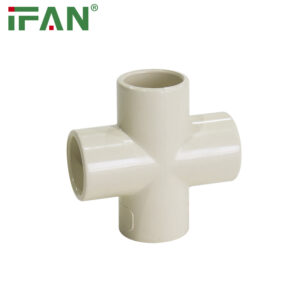
CPVC Cross Tee Fitting
- CPVC ASTM2846
CPVC FITTINGS
- CPVC ASTM2846
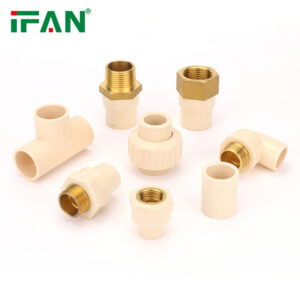
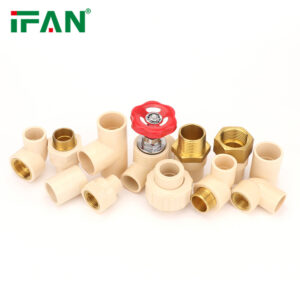
IFAN CPVC Fittings