PEX Pipe Fittings: Types, Installation, and Best Practices for Reliable Plumbing
Description
Introduction
PEX piping systems have transformed modern plumbing with their flexibility, durability, and cost efficiency. Central to these systems are PEX pipe fittings, which create secure, leak-proof connections without the need for traditional soldering or gluing. This guide explores the types of PEX fittings, installation best practices, and common pitfalls to avoid, ensuring your plumbing project succeeds.
Types of PEX Pipe Fittings
PEX fittings are designed to connect pipes mechanically, using compression, crimping, or push-to-connect technology. Below are the most common types:
1. Crimp Fittings
Crimp fittings use a brass or poly-alloy ring compressed around the PEX pipe with a specialized crimping tool.
Standards: ASTM F1807 (brass) and ASTM F2159 (poly-alloy).
Applications: Ideal for PEX-to-PEX connections, as well as transitions to copper or CPVC pipes.
Pros: Affordable, widely available, and suitable for both residential and commercial use.
Cons: Requires a dedicated crimping tool; not reusable.
2. Clamp (Cinch) Fittings
Clamp fittings use a stainless-steel ring tightened with a cinch tool.
Standards: ASTM F2080.
Applications: Popular for DIY projects due to their reusability.
Pros: Adjustable, reusable, and works with most PEX types.
Cons: Slightly less secure than crimp fittings under high pressure.
3. Push-to-Connect Fittings
Push-to-connect fittings (e.g., SharkBite, Viega) require no tools; pipes are inserted into a collet that locks in place.
Applications: Quick repairs, temporary connections, or retrofitting.
Pros: Easy to install and remove; no special tools needed.
Cons: More expensive; verify compatibility with your PEX brand.
4. Compression Fittings
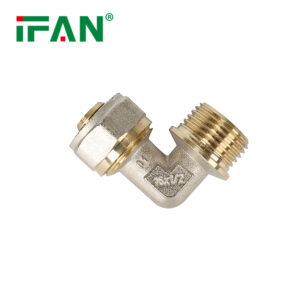
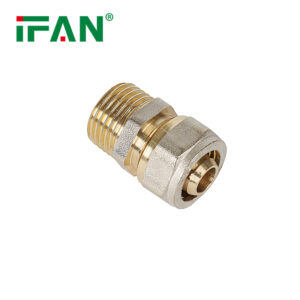
Compression fittings use a threaded nut and rubber gasket to seal joints.
Applications: Connecting PEX to metal pipes (e.g., copper, steel) or fixtures.
Pros: Versatile and reusable.
Cons: Bulkier than other fittings; may require additional space.
5. Expansion Fittings
Expansion fittings are used with PEX-A pipes, which stretch over a ribbed fitting and contract to form a seal.
Tools: Requires an expansion gun.
Pros: No metal components, reducing corrosion risk.
Cons: Limited to PEX-A pipes; higher initial cost.
Installation Best Practices
1. Preparation
Cutting: Use a PEX cutter to make clean, square cuts. Avoid saws, which can create debris.
Deburring: Smooth edges with a deburring tool to prevent damage to fittings.
2. Assembly
Crimp/Clamp: Slide the ring 1/8” from the pipe end, insert the fitting, and compress evenly.
Push-to-Connect: Insert the pipe fully until it clicks; avoid over-insertion.
Compression: Tighten the nut hand-tight, then use a wrench for a final quarter-turn.
3. Verification
Visual Inspection: Check for gaps, ridges, or uneven compression.
Pressure Testing: Test the system to 1.5x the operating pressure (per local codes).
Common Mistakes to Avoid
Using Incompatible Tools: Always use manufacturer-approved crimping or cinching tools.
Exposing PEX to Heat: Keep fittings 12” vertically and 6” horizontally from heat sources (e.g., water heaters, flues).
Chemical Exposure: Avoid contact with solvents, adhesives, or medical gases.
Improper Storage: Store PEX pipes and fittings away from sunlight and extreme temperatures.
Compatibility and Material Considerations
PEX Types: PEX-A, PEX-B, and PEX-C each require specific fittings.
Metal Integration: Use sweat (copper) fittings for PEX-to-copper transitions.
Firestopping: Isolate PEX from mechanical systems with approved materials.
IFAN factory started in 1993. And IFAN has workshop 120000 square meter with 610 staff. IFAN can design and produce all plumbing pipe and fitting include PPR,PVC,CPVC PPSU HDPE PEXA PEXB PERT pipe and fitting ,brass fitting, brass ball valve ,heating system , gas system , sanitary faucets and hose, In the past 30 Years, IFAN has never forgotten his mission-To protect health and safety. And IFAN factory use best materials to produce high quality pipe and fittings with automatic production line and high tech quality control machines. The most important,IFAN can guarantee that all pipes and fittings manufactured by IFAN are qualified. More information pls feel free contact us Whatsapp.



 Brass Fitting