PPR Tube: The Ultimate Guide to Polypropylene Random Copolymer Pipes
Description
Introduction
PPR tubes have revolutionized modern plumbing systems with their durability, cost-efficiency, and eco-friendly properties. Widely used in residential, commercial, and industrial projects, these pipes offer a leak-proof, corrosion-resistant alternative to traditional metal and PVC piping. This guide explores their composition, advantages, installation methods, and why they are becoming the industry standard.
What Is a PPR Tube?
PPR tubes are thermoplastic pipes made from polypropylene random copolymer, a material engineered by blending polypropylene with ethylene. This combination enhances flexibility, impact resistance, and thermal stability, making PPR tubes suitable for both hot and cold water applications.Key Characteristics:
Temperature Range: -20°C to 95°C (-4°F to 203°F).
Pressure Rating: Up to 25 bar (362 PSI) for standard grades.
Chemical Resistance: Withstands acids, alkalis, and salts without degradation.
Lifespan: Over 50 years when installed correctly.
Types of PPR Tubes
1. Standard PPR Tubes
Purpose: General plumbing for potable water, heating systems, and air conditioning.
Colors: Green (cold water), orange (hot water), white (neutral).
Sizes: 20mm to 160mm in diameter.
2. PPR-Aluminum-PPR (PPR-AL-PPR) Tubes
Purpose: Reduces thermal expansion in underfloor heating and solar water systems.
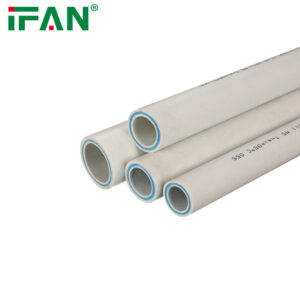
Structure: Aluminum layer sandwiched between two PPR layers.
Benefits: Maintains shape under temperature fluctuations.
3. Fiber-Reinforced PPR Tubes
Purpose: High-pressure industrial applications (e.g., compressed air, chemical transport).
Features: Glass or carbon fiber reinforcement for added strength.
4. UV-Resistant PPR Tubes
Purpose: Outdoor installations exposed to sunlight.
Additives: Carbon black or titanium dioxide to block UV rays.
Advantages of PPR Tubes
1. Corrosion Resistance
Unlike metal pipes, PPR tubes do not rust or scale, ensuring clean water flow and reducing maintenance costs.
2. Energy Efficiency
Smooth interior surfaces reduce friction, lowering pumping energy consumption by up to 30%.
High thermal insulation minimizes heat loss in hot water systems.
3. Eco-Friendly
100% recyclable and free from toxic additives like lead or phthalates.
Lower carbon footprint compared to PVC or copper production.
4. Cost-Effective
Material Cost: 20–40% cheaper than copper pipes.
Installation Cost: 50% faster to install than soldered metal systems.
5. Safety Certifications
Compliant with NSF/ANSI 61, WRAS, and DVGW standards for drinking water.
Non-toxic and odorless, even at high temperatures.
How to Install PPR Tubes
Step-by-Step Guide
Cutting the Pipe
Use a plastic pipe cutter for clean, square cuts.
Avoid saws to prevent debris inside the pipe.
Deburring
Remove burrs with sandpaper or a deburring tool to prevent gasket damage during fitting.
Heat Fusion Welding
Tools Needed: PPR welding machine, heating plate, and clamps.
Process:
a. Heat the pipe end and fitting socket to 260°C (500°F).
b. Insert the pipe into the socket within 4 seconds of heating.
c. Hold for 10–15 seconds to cool and solidify.
Pressure Testing
Fill the system with water and pressurize to 1.5x the operating pressure.
Inspect for leaks over 30 minutes.
Common Mistakes to Avoid
Overheating: Excessive heat can warp the pipe.
Underheating: Insufficient heat leads to weak joints.
Contamination: Dust or moisture on pipe ends causes bubbles in welds.
Applications of PPR Tubes
Residential Plumbing: Cold/hot water supply, radiant floor heating.
Commercial Buildings: Hotels, hospitals, and office water systems.
Industrial Uses: Chemical transport, compressed air lines, fire sprinklers.
Agriculture: Irrigation systems requiring durable, corrosion-free pipes.
Renewable Energy: Solar water heater piping for efficient heat transfer.
FAQs
Q1: Are PPR tubes safe for drinking water?
Yes. PPR tubes are certified by NSF/ANSI 61 and WRAS for potable water use, as they do not leach harmful chemicals.Q2: Can PPR tubes be used for outdoor installations?
Standard PPR tubes degrade under prolonged UV exposure. Use UV-resistant PPR or protect pipes with insulation or shading.Q3: What is the maximum pressure a PPR tube can handle?
Standard PPR tubes are rated for 25 bar (362 PSI) at 20°C (68°F). High-pressure variants (e.g., fiber-reinforced) can withstand up to 40 bar.Q4: How long do PPR tubes last?
With proper installation, PPR tubes have a lifespan of over 50 years, outlasting most metal and PVC alternatives.Q5: Can PPR tubes be connected to existing copper or PVC pipes?
Yes, using transition fittings such as PPR-to-copper compression joints or PPR-to-PVC threaded adaptors.
Conclusion
PPR tubes offer a sustainable, cost-effective, and reliable solution for modern plumbing needs. Their resistance to corrosion, ease of installation, and long lifespan make them ideal for residential, commercial, and industrial projects. Always verify compliance with local codes (e.g., ASTM D2846, DIN 8077) and consult manufacturers for project-specific recommendations.IFAN factory started in 1993. And IFAN has workshop 120000 square meter with 610 staff. IFAN can design and produce all plumbing pipe and fitting include PPR,PVC,CPVC PPSU HDPE PEXA PEXB PERT pipe and fitting ,brass fitting, brass ball valve ,heating system , gas system , sanitary faucets and hose, In the past 30 Years, IFAN has never forgotten his mission-To protect health and safety. And IFAN factory use best materials to produce high quality pipe and fittings with automatic production line and high tech quality control machines. The most important,IFAN can guarantee that all pipes and fittings manufactured by IFAN are qualified. More information pls feel free contact us Whatsapp.





 PPR
PPR PPR
PPR