PPR Tube: The Ultimate Guide to Polypropylene Random Copolymer Pipes
Description
Introduction
PPR tube have revolutionized plumbing systems worldwide, offering a lightweight, corrosion-resistant, and cost-effective alternative to traditional metal and PVC pipes. Designed for hot and cold water distribution, these pipes are widely used in residential buildings, commercial complexes, and industrial facilities. This guide delves into the composition, advantages, installation methods, and key applications of PPR tubes, helping you make informed decisions for your next plumbing project.
What Is a PPR Tube?
A PPR tube is a cylindrical pipe made from polypropylene random copolymer, a thermoplastic polymer engineered by copolymerizing propylene with ethylene. This process enhances the material’s flexibility, impact resistance, and thermal stability, making it ideal for plumbing systems.Key Characteristics:
Material: PPR Type 3 (contains 3–5% ethylene for improved durability).
Temperature Range: Operates from -10°C to 95°C (14°F to 203°F), suitable for both hot and cold water.
Pressure Rating: Withstands up to 25 bar (362 PSI) at 20°C (68°F), decreasing slightly at higher temperatures.
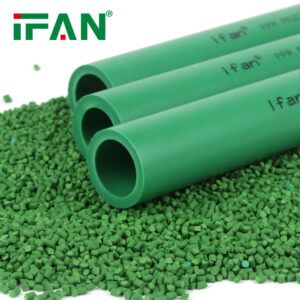
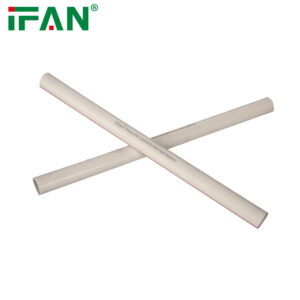
Color Coding: Typically available in green (cold water), orange (hot water), and white (general use) for easy identification.
Common Sizes:
Diameters range from 20mm to 160mm (¾ inch to 6 inches).
Wall thickness varies based on pressure requirements (e.g., PN10, PN16, PN20).
Types of PPR Tubes
1. Standard PPR Tubes
Purpose: General-purpose water supply lines in residential and commercial buildings.
Design: Single-layer construction with uniform wall thickness.
Advantages:
Affordable and easy to install.
Suitable for pressures up to PN16 (16 bar).
2. Fiber-Reinforced PPR Tubes (PPR-FR)
Purpose: High-pressure industrial applications (e.g., chemical transport, compressed air).
Design: Embedded glass or carbon fibers for enhanced strength.
Advantages:
Withstands pressures up to PN25 (25 bar).
Resists deformation under thermal stress.
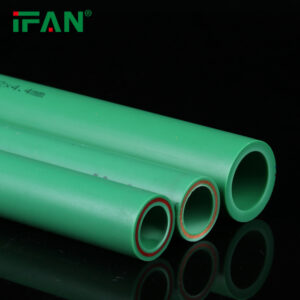
3. Aluminum-Barrier PPR Tubes (PPR-AL-PPR)
Purpose: Prevents oxygen permeation in closed-loop heating systems.
Design: A thin aluminum layer sandwiched between two PPR layers.
Advantages:
Eliminates corrosion in radiators and boilers.
Maintains water purity by blocking oxygen.
4. UV-Resistant PPR Tubes
Purpose: Outdoor plumbing or solar water heating systems.
Design: Added UV stabilizers to prevent degradation from sunlight.
Advantages:
Withstands prolonged sun exposure without cracking.
Available in black or dark colors for enhanced protection.
Advantages of PPR Tubes
1. Corrosion Resistance
Unlike metal pipes, PPR tubes do not rust or scale, ensuring clean water delivery and reducing maintenance costs.
2. Thermal Efficiency
Low thermal conductivity minimizes heat loss in hot water systems, improving energy efficiency.
3. Lightweight and Flexible
Weighs 70% less than steel pipes and can be bent to navigate corners without elbows, reducing installation time.
4. Leak-Proof Joints
Socket fusion welding creates homogeneous bonds between pipes and fittings, eliminating weak points.
5. Eco-Friendly
100% recyclable and produced with 30% less energy than metal pipes, aligning with sustainable building practices.
How to Install PPR Tubes
Step-by-Step Guide
Measure and Cut:
Use a PPR pipe cutter to create square, burr-free ends.
Avoid saws, which can leave debris inside the pipe.
Mark Insertion Depth:
Use the fitting’s depth gauge to ensure proper alignment during welding.
Heat the Pipe and Fitting:
Use a PPR welding machine to heat the pipe end and fitting socket to 260°C (500°F).
Fuse the Joint:
Insert the pipe into the socket within 5 seconds of heating.
Hold for 10–15 seconds without rotating to allow cooling.
Test for Leaks:
Pressurize the system to 1.5x the operating pressure and inspect joints for drips.
Common Mistakes to Avoid
Uneven Heating: Overheating can melt the pipe, while underheating leads to weak joints.
Insufficient Cooling Time: Moving the pipe before cooling causes misalignment.
Using Incompatible Fittings: Ensure fittings are made from the same PPR grade.
Applications of PPR Tubes
Residential Plumbing: Hot/cold water supply, underfloor heating, and rainwater harvesting.
Commercial Buildings: HVAC systems, fire sprinkler networks, and laboratory piping.
Industrial Systems: Transporting chemicals, compressed air, and cooling fluids.
Agriculture: Drip irrigation and greenhouse water distribution.
IFAN factory started in 1993. And IFAN has workshop 120000 square meter with 610 staff. IFAN can design and produce all plumbing pipe and fitting include PPR,PVC,CPVC PPSU HDPE PEXA PEXB PERT pipe and fitting ,brass fitting, brass ball valve ,heating system , gas system , sanitary faucets and hose, In the past 30 Years, IFAN has never forgotten his mission-To protect health and safety. And IFAN factory use best materials to produce high quality pipe and fittings with automatic production line and high tech quality control machines. The most important,IFAN can guarantee that all pipes and fittings manufactured by IFAN are qualified. More information pls feel free contact us Whatsapp.



 PPR
PPR PPR
PPR