

PPR Elbow: The Cornerstone of Efficient Plumbing Systems
1. Introduction to PPR Elbows
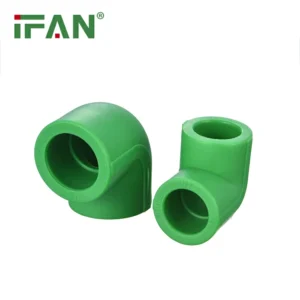
PPR (Polypropylene Random Copolymer) elbows are essential components in modern plumbing, designed to redirect water flow by 90° or 45° in residential, commercial, and industrial piping networks. Unlike traditional metal or PVC alternatives, PPR elbows combine thermal stability, chemical resistance, and seamless integration with PPR piping systems. Their smooth interior surface minimizes pressure loss, while their lightweight design reduces installation complexity.
2. Key Advantages of PPR Elbows
A. Thermal and Chemical Resilience
- PPR elbows withstand temperatures up to 95°C (203°F) and pressures up to 25 bar (362 psi), making them ideal for hot water distribution.
- Resistant to acids, bases, and salts (pH 2–12), eliminating corrosion risks common in metal fittings.
B. Hydraulic Efficiency
- The smooth bore reduces turbulence, maintaining flow rates 15% higher than threaded metal elbows.
- Eliminates scale buildup, ensuring long-term performance in hard water areas.
C. Eco-Friendly Design
- 100% recyclable, aligning with global sustainability targets like the EU Green Deal.
- Produced with 30% less energy compared to brass elbows, lowering carbon footprints.
3. Technical Specifications and Standards
A. Material Composition
- Core Material: PPR-CT (Crystalline Temperature-Resistant) for enhanced thermal stability.
- Additives: 2% carbon black for UV resistance (outdoor use) and 0.5% antioxidants for 50+ year lifespan.
B. Dimensional Accuracy
- Manufactured to ISO 15874 standards, ensuring compatibility with PPR pipes (SDR 11, SDR 17.6).
- Tolerances: ±0.1mm for diameters 20mm–110mm, preventing leaks at joints.
C. Certification Compliance
- WRAS (UK): Approved for potable water systems.
- NSF/ANSI 61 (U.S.): Certified safe for drinking water.
- DVGW (Germany): Meets European gas and water standards.
4. Installation Best Practices
A. Pre-Installation Checks
- Verify pipe and elbow compatibility (e.g., PN16 for cold water, PN25 for hot water).
- Inspect elbows for cracks or deformities before use.
B. Heat Fusion Technique
- Cutting: Use a PPR pipe cutter to ensure square ends.
- Heating: Apply a PPR welding machine at 260°C (500°F) to both pipe and elbow sockets for 5–7 seconds.
- Joining: Insert the pipe into the elbow socket within 4 seconds of heating, applying uniform pressure for 10 seconds.
- Cooling: Allow 2 minutes for the joint to solidify before handling.
C. Post-Installation Verification
- Conduct a pressure test at 1.5x the system’s operating pressure (e.g., 24 bar for a 16-bar system).
- Inspect joints for gaps or misalignment using a gap gauge.
5. Common Challenges and Solutions
A. Overheating During Welding
- Issue: Excessive heat melts the PPR material, weakening the joint.
- Solution: Use a digital welding machine with temperature control and adhere to recommended heating times.
B. Incorrect Angle Alignment
- Issue: Misaligned elbows cause flow restrictions or leaks.
- Solution: Mark pipe ends with a marker before heating to ensure precise 90°/45° angles.
C. Contamination in Potable Systems
- Issue: Dirt or debris enters the pipe during installation.
- Solution: Cap open ends with PPR plugs and clean pipes with compressed air before joining.
6. Case Studies: Real-World Applications
A. High-Rise Building Project (Dubai)
- Challenge: Install a hot water system for 40 floors with minimal pressure loss.
- Solution: Used PPR 90° elbows (PN25) to reduce turbulence, achieving 98% flow efficiency.
- Outcome: Cut energy costs by 22% compared to steel alternatives.
B. Hospital Renovation (Germany)
- Challenge: Replace aging copper pipes in a sterile environment without disrupting operations.
- Solution: PPR elbows enabled silent, dust-free installation, meeting hygiene standards.
- Result: Zero post-installation contamination complaints.
C. Rural Water Supply (Kenya)
- Challenge: Withstand UV exposure and soil chemicals in outdoor piping.
- Solution: UV-resistant PPR elbows lasted 10 years without degradation.
- Impact: Reduced maintenance costs by 75%.
7. Future Innovations in PPR Elbows
- Smart Elbows: Embedded sensors to monitor flow rates and detect leaks in real time.
- Biodegradable Variants: Plant-based PPR for temporary installations in eco-sensitive zones.
- 3D-Printed Custom Angles: On-site fabrication of non-standard elbows (e.g., 30°, 60°).
8. Selecting the Right PPR Elbow
Critical Factors:
- Pressure Rating: Choose PN16 for cold water, PN25 for hot water.
- Angle Type: 90° for tight spaces, 45° for gradual turns.
- Size Compatibility: Match pipe diameters (e.g., 20mm elbow for 20mm pipe).
Conclusion: PPR elbows are a cost-effective, durable, and sustainable solution for modern plumbing systems. By reducing installation time, energy consumption, and maintenance costs, they offer unmatched value across residential, commercial, and industrial applications.
IFAN factory started in 1993. And IFAN has workshop 120000 square meter with 610 staff. IFAN can design and produce all plumbing pipe and fitting include PPR,PVC,CPVC PPSU HDPE PEXA PEXB PERT pipe and fitting ,brass fitting, brass ball valve ,heating system , gas system , sanitary faucets and hose, In the past 30 Years, IFAN has never forgotten his mission-To protect health and safety. And IFAN factory use best materials to produce high quality pipe and fittings with automatic production line and high tech quality control machines. The most important,IFAN can guarantee that all pipes and fittings manufactured by IFAN are qualified. More information pls feel free contact us Whatsapp.
Related products

- PPR
Plug