HDPE Pipe Fitting Socket: A Complete Guide to Design, Installation
Description
Introduction
HDPE pipe fitting sockets are essential components in modern piping systems, designed to create secure, leak-proof connections between pipes. Unlike traditional threaded or flanged fittings, HDPE sockets rely on fusion or mechanical methods to join pipes, ensuring durability and resistance to environmental stressors. This guide explores the design, types, installation best practices, and applications of HDPE pipe fitting sockets, helping engineers and contractors optimize their projects.
What Is an HDPE Pipe Fitting Socket?
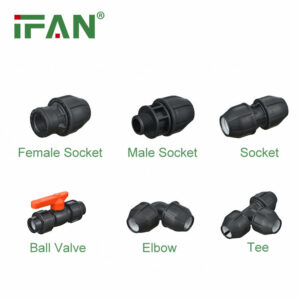
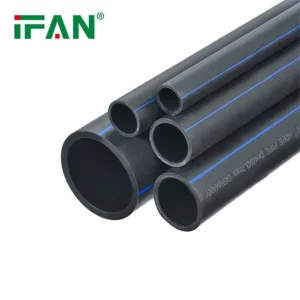
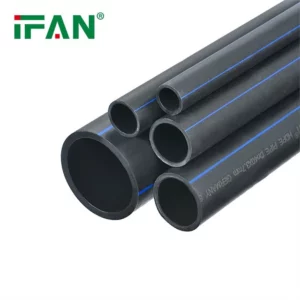
An HDPE pipe fitting socket is a specialized connector engineered to join two HDPE pipes end-to-end or to attach pipes to valves, pumps, or other fixtures. These sockets are manufactured using injection molding or extrusion processes, ensuring precise dimensions and compatibility with standard HDPE pipes.
Key Features:
Material Strength: Made from HDPE resin (PE4710 or PE100), which offers high tensile strength and chemical resistance.
Leak-Proof Design: Fusion-based sockets create monolithic joints, eliminating the risk of corrosion-related leaks.
Flexibility: Can be used in buried, above-ground, or submerged installations.
Types of HDPE Pipe Fitting Sockets
HDPE sockets are categorized based on their connection method and application:
1. Butt Fusion Sockets
Butt fusion sockets are joined to pipes by heating the pipe end and socket simultaneously, then pressing them together to form a seamless bond.
Advantages:
Highest joint strength (equivalent to the pipe itself).
Suitable for high-pressure applications like gas distribution and industrial fluid transport.
Standards: Compliant with ASTM D2657 and ISO 12176-1 for fusion procedures.
2. Electrofusion Sockets
Electrofusion sockets contain embedded heating coils that melt the HDPE material when an electric current passes through them, creating a permanent joint.
Benefits:
Quick installation in tight spaces.
Minimal skill required compared to butt fusion.
Applications: Repairs, small-scale projects, or connecting pipes to valves.
3. Mechanical Compression Sockets
Mechanical sockets use a rubber O-ring or gasket inside a threaded or clamp-based housing to create a seal.
Key Features:
Reusable and easy to disassemble.
Ideal for low-pressure systems like irrigation or drainage.
Limitation: Not suitable for high-temperature or high-pressure environments.
4. Socket Fusion Sockets
Socket fusion involves heating the inner wall of the socket and the outer surface of the pipe, then inserting the pipe into the socket to form a bond.
Use Cases: Small-diameter pipes (up to 4 inches) in residential plumbing or lab applications.
Applications of HDPE Pipe Fitting Sockets
HDPE sockets are versatile and used across industries:
1. Water Supply Systems
Municipal water distribution networks rely on HDPE sockets for their corrosion resistance and ability to withstand ground movement.
Example: A 2023 case study in California demonstrated a 30% reduction in leak rates after switching to HDPE fusion sockets.
2. Gas Distribution
Natural gas pipelines use electrofusion sockets to ensure safety and compliance with ASTM F1056 standards.
Benefit: HDPE’s resistance to stress cracking prevents gas leaks over decades of use.
3. Industrial Piping
Chemical processing plants and mining operations use HDPE sockets to transport corrosive slurries, acids, and wastewater.
Advantage: HDPE’s abrasion resistance extends pipeline lifespan in harsh environments.
4. Agricultural Irrigation
Mechanical compression sockets are popular in farming for their ease of installation and reusability.
Installation Best Practices
Proper installation ensures the longevity and performance of HDPE pipe fitting sockets:
1. Pipe Preparation
Cutting: Use a pipe saw or rotary cutter to create a square, debris-free end.
Beveling: Chamfer the pipe end at 15° to remove sharp edges that could damage the socket.
2. Cleaning
Remove dirt, moisture, or grease from the pipe and socket surfaces using a clean cloth or isopropyl alcohol.
Contamination can lead to weak fusion joints or leaks.
3. Fusion Parameters (For Butt/Electrofusion)
Temperature: Maintain fusion temperatures between 210°C–230°C (410°F–446°F) for butt fusion.
Time: Follow manufacturer guidelines for heating and cooling cycles to avoid voids or cold joints.
4. Mechanical Socket Assembly
Ensure the O-ring is lubricated with silicone-based grease for a tight seal.
Tighten clamps or bolts to the recommended torque specification.
Common Mistakes to Avoid
Using Damaged Sockets: Cracks or scratches on the socket interior compromise joint integrity.
Incorrect Fusion Temperature: Overheating can degrade the HDPE material, while underheating leads to weak bonds.
Ignoring Pipe Alignment: Misaligned pipes cause stress on the socket, leading to premature failure.
IFAN factory started in 1993. And IFAN has workshop 120000 square meter with 610 staff. IFAN can design and produce all plumbing pipe and fitting include PPR,PVC,CPVC PPSU HDPE PEXA PEXB PERT pipe and fitting ,brass fitting, brass ball valve ,heating system , gas system , sanitary faucets and hose, In the past 30 Years, IFAN has never forgotten his mission-To protect health and safety. And IFAN factory use best materials to produce high quality pipe and fittings with automatic production line and high tech quality control machines. The most important,IFAN can guarantee that all pipes and fittings manufactured byIFAN are qualified. More information pls feel free contact us Whatsapp.



 PP Fitting 601
 PP&PE
PP&PE