HDPE Pipe Fitting Tee: A Comprehensive Guide to Types

Description

Introduction

HDPE pipe fitting tees are critical components in piping networks, enabling fluid to split into multiple directions while maintaining flow efficiency. Renowned for their durability, chemical resistance, and flexibility, HDPE tees outperform traditional metal fittings in many applications. This guide explores their types, installation best practices, and common use cases to help professionals design robust piping systems.
HDPE Tee

What Is an HDPE Pipe Fitting Tee?

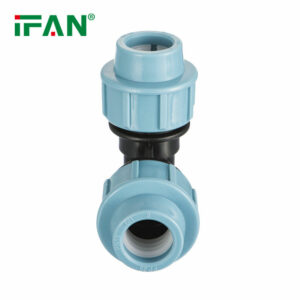
An HDPE pipe fitting tee is a T-shaped connector that splits a single pipeline into two branches at a 90° angle. Made from high-grade HDPE resin (PE4710 or PE100), these tees resist corrosion, abrasion, and UV degradation, making them ideal for underground and outdoor installations. Unlike metal tees, HDPE variants do not rust or scale, reducing long-term maintenance costs.

Key Features:

  • Leak-Proof Design: Fusion-welded joints create monolithic connections.
  • Lightweight: Easier to handle than steel or PVC tees.
  • Chemical Resistance: Safe for transporting acids, alkalis, and wastewater.

Types of HDPE Pipe Fitting Tees

HDPE tees are categorized by their design and manufacturing method:

1. Equal Tee (Straight Tee)

An equal tee has three outlets of the same diameter, ensuring uniform flow distribution.
  • Advantages:
    • Ideal for applications requiring balanced pressure in all branches.
    • Available in standard sizes (20mm to 1200mm).
  • Applications: Water distribution networks, irrigation systems, and HVAC pipelines.

2. Reducing Tee (Branched Tee)

A reducing tee has one main inlet and two outlets of different diameters, enabling flow splitting with varying flow rates.
  • Benefits:
    • Reduces costs by using smaller pipes for secondary branches.
    • Minimizes pressure drop in low-flow sections.
  • Example: Used in industrial cooling systems to direct water to multiple machines with different flow requirements.

3. Fabricated Tee

For non-standard sizes or custom angles, fabricated tees are created by welding HDPE pipe segments into a T-shape.
  • Use Case: Large-diameter pipelines (>1200mm) where injection-molded tees are unavailable.
  • Advantage: Stronger than molded tees due to seamless fusion.

4. Double-Branch Tee (Cross Tee)

A double-branch tee has four outlets, allowing fluid to split into three directions.
  • Applications: Complex industrial piping layouts, such as chemical processing plants.

5. Electrofusion Tee

Electrofusion tees use embedded heating coils to create a permanent, leak-proof joint when connected to HDPE pipes.
  • Pros:
    • Quick installation with minimal training.
    • Suitable for high-pressure gas systems.
  • Cons: Higher material cost compared to butt-fusion tees.

Manufacturing Methods

HDPE tees are produced using two primary techniques:

1. Injection Molding

  • Process: Molten HDPE is injected into a mold under high pressure.
  • Pros:
    • Consistent wall thickness and precise dimensions.
    • Cost-effective for mass production of standard tees.
  • Cons: Limited to sizes ≤1200mm and standard angles.

2. Fabrication (Butt Welding)

  • Process: HDPE pipe segments are heated and fused to form a custom tee.
  • Pros:
    • Suitable for large diameters and non-standard designs.
    • Stronger than injection-molded tees.
  • Cons: Requires skilled labor and longer lead time.

Applications of HDPE Pipe Fitting Tees

HDPE tees are used across industries due to their versatility:

1. Municipal Water Supply

HDPE equal tees are widely used in water distribution networks to split flow into residential or commercial zones.
  • Example: A 2023 study in Germany showed a 25% reduction in leakage rates after replacing metal tees with HDPE in urban water mains.

2. Natural Gas Distribution

Reducing tees help balance gas pressure in pipelines feeding multiple appliances or buildings.
  • Benefit: HDPE’s resistance to stress cracking ensures safety in high-pressure gas systems.

3. Industrial Piping

Chemical plants and mining operations use fabricated tees to transport corrosive slurries, acids, and wastewater.
  • Advantage: Abrasion-resistant design extends pipeline lifespan.

4. Agricultural Irrigation

Farmers rely on reducing tees to distribute water efficiently across drip irrigation zones with varying flow needs.

5. Stormwater Management

HDPE tees are used in drainage systems to split stormwater into multiple collection points, preventing overflow.

Installation Best Practices

Proper installation ensures the longevity and performance of HDPE pipe fitting tees:

1. Pipe Preparation

  • Cutting: Use a pipe saw or rotary cutter to create a square, debris-free end.
  • Beveling: Chamfer the pipe at 15° to avoid damaging the tee’s inner wall.

2. Cleaning

  • Remove dirt, moisture, or grease from the pipe and tee surfaces using a clean cloth or isopropyl alcohol.
  • Contamination can lead to weak fusion joints.

3. Fusion Parameters (For Butt/Electrofusion Tees)

  • Temperature: Maintain 210°C–230°C (410°F–446°F) for butt fusion.
  • Time: Follow manufacturer guidelines for heating and cooling cycles.

4. Mechanical Tee Assembly

  • Ensure the gasket is lubricated with silicone-based grease for a tight seal.
  • Tighten bolts to the recommended torque specification.

Common Mistakes to Avoid

  1. Using Damaged Tees: Cracks or scratches compromise joint integrity.
  2. Incorrect Fusion Temperature: Overheating degrades HDPE, while underheating causes leaks.
  3. Ignoring Alignment: Misaligned pipes stress the tee, leading to premature failure.
IFAN factory started in 1993. And IFAN has workshop 120000 square meter with 610 staff. IFAN can design and produce all plumbing pipe and fitting include PPR,PVC,CPVC PPSU HDPE PEXA PEXB PERT pipe and fitting ,brass fitting, brass ball valve ,heating system , gas system , sanitary faucets and hose, In the past 30 Years, IFAN has never forgotten his mission-To protect health and safety. And IFAN factory use best materials to produce high quality pipe and fittings with automatic production line and high tech quality control machines. The most important,IFAN can guarantee that all pipes and fittings manufactured byIFAN are qualified. More information pls feel free contact us Whatsapp.

Product Catalog

Product Catalog

Contact Us