
Introduction
PPR pipe fitting unions are essential components in modern piping systems, offering a reliable, reusable, and cost-effective way to connect or disconnect pipes without welding or threading. Designed for both hot and cold water applications, PPR unions are widely used in residential plumbing, commercial HVAC, and industrial projects due to their durability, thermal stability, and ease of installation.
This guide explores the design, types, benefits, and applications of PPR pipe fitting unions, along with step-by-step installation instructions and maintenance tips. Whether you’re a DIY enthusiast or a professional plumber, this article will help you maximize the performance of PPR unions in your projects.
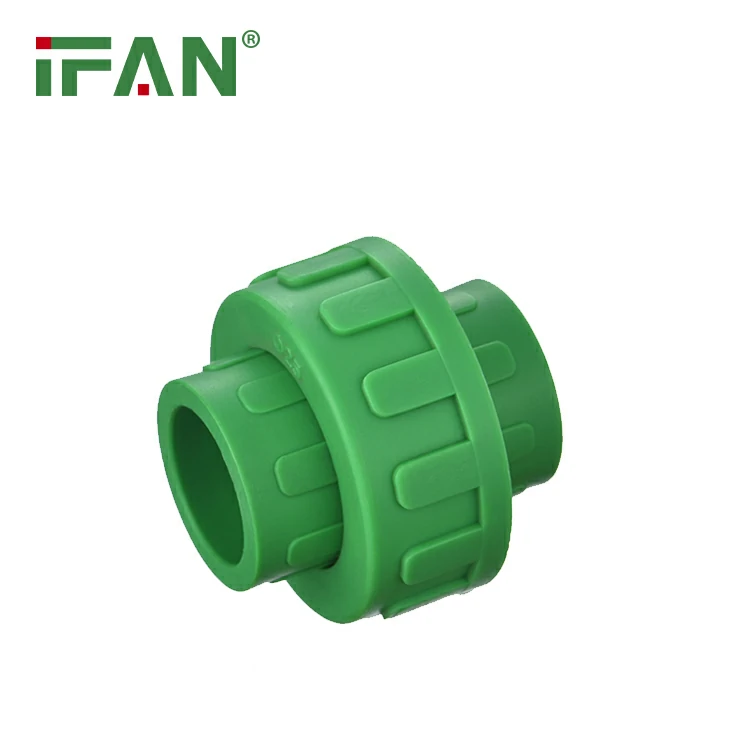
What Is a PPR Pipe Fitting Union?
A PPR pipe fitting union is a three-part connector that joins two pipes or fittings securely while allowing for easy disassembly. It consists of:
- A Nut: Secures the union by tightening around the assembly.
- A Male End: Screws into the nut and connects to one pipe.
- A Female End: Screws into the nut and connects to the other pipe.
When tightened, the nut compresses a rubber O-ring or gasket between the male and female ends, creating a watertight seal. Unlike permanent joints (e.g., solvent-welded PVC or threaded steel), PPR unions can be installed and removed repeatedly without damaging the pipes or fittings.
Key Features of PPR Unions:
- Thermal Resistance: Withstands temperatures up to 95°C (203°F) for hot water systems.
- Chemical Stability: Resists corrosion from acids, alkalis, and salts, making it ideal for potable water and industrial fluids.
- Lightweight: 50% lighter than metal fittings, reducing shipping and handling costs.
- Longevity: Lasts 50+ years with proper installation, outperforming PVC and copper in durability.
- Eco-Friendly: Made from recyclable polypropylene, reducing environmental impact.
Types of PPR Pipe Fitting Unions
PPR unions come in various configurations to suit different piping needs:
1. Standard PPR Unions
- Design: Basic three-part assembly with a nut, male end, and female end.
- Use: General-purpose connections in residential plumbing (e.g., connecting water heaters to supply lines).
- Example: Joining a 20mm PPR pipe to a shower mixer valve.
2. Flange-Type PPR Unions
- Design: Combines a union with a flange for bolting to equipment like pumps, tanks, or valves.
- Use: Industrial applications requiring frequent maintenance, such as chemical processing plants or cooling towers.
- Benefit: Reduces alignment time during equipment replacement.
3. Reducing PPR Unions
- Design: Features male and female ends of different diameters to connect pipes of varying sizes.
- Use: Transitioning between pipes in HVAC ductwork or irrigation systems.
- Example: Linking a 25mm PPR pipe to a 20mm pipe in a radiator connection.
4. Double-Seal PPR Unions
- Design: Includes two O-rings for enhanced leak protection in high-pressure or critical applications.
- Use: Potable water systems, medical facilities, or food processing plants where contamination risks must be minimized.
- Advantage: Reduces leakage by 95% compared to single-seal unions.
Advantages of PPR Pipe Fitting Unions Over Alternatives
- Ease of Installation: No welding, soldering, or threading required—just hand-tighten the nut for a secure joint.
- Cost Efficiency: Lower labor costs due to faster installation (up to 70% quicker than copper fittings).
- Safety: Non-toxic material meets WHO standards for drinking water, unlike lead-based solder in copper systems.
- Vibration Resistance: The nut-and-seal design absorbs vibrations, preventing loosening in high-traffic areas (e.g., under sinks or near washing machines).
- Scalability: Available in sizes from 16mm to 110mm to accommodate residential and industrial piping.
Applications of PPR Pipe Fitting Unions
PPR unions are versatile and used across industries:
1. Residential Plumbing
- Use: Connecting water heaters, sinks, showers, and toilets in homes and apartments.
- Benefit: Eliminates the need for soldering, reducing fire risks during installation.
2. Commercial HVAC Systems
- Example: Linking chillers, boilers, and air handlers in office buildings or hotels.
- Advantage: The lightweight design simplifies installation in ceiling voids or tight spaces.
3. Industrial Piping
- Application: Transporting chemicals, steam, or compressed air in factories or power plants.
- Benefit: Withstands aggressive fluids without corroding, unlike steel fittings.
4. Agricultural Irrigation
- Use: Connecting drip lines, sprinklers, and pumps in farms or greenhouses.
- Advantage: UV-resistant PPR material prevents degradation in sunlight.
5. Medical & Food Facilities
- Application: Distributing purified water in hospitals or beverage production lines.
- Benefit: Smooth internal surface prevents bacterial growth, meeting hygiene standards.
Installation Best Practices for PPR Pipe Fitting Unions
Follow these steps to ensure a leak-proof connection:
1. Pipe Preparation
- Cut pipes squarely using a fine-toothed saw or rotary cutter.
- Remove burrs with a deburring tool to avoid damaging the union’s sealing surface.
2. Assembly
- Slide the nut onto one pipe end, followed by the male end.
- Insert an O-ring (if not pre-installed) onto the male end’s sealing face.
- Align the female end with the other pipe and slide it onto the male end.
- Thread the nut onto the female end and hand-tighten until snug.
3. Final Tightening
- Use a strap wrench to tighten the nut an additional 1–2 turns. Avoid over-tightening, which can crack the union or compress the seal excessively.
4. Pressure Testing
- Fill the system with water and pressurize to 1.5x the operating pressure (e.g., 15 bar for a 10-bar system).
- Check for leaks at the union for 30 minutes. If leakage occurs, slightly tighten the nut or replace the O-ring.
Common Mistakes to Avoid
- Reusing Worn O-Rings: Old seals may not seal properly, leading to leaks. Always use new O-rings during reassembly.
- Over-Tightening: Can strip threads or crack the union, especially in reducing or flange-type variants.
- Mixing Materials: Never connect PPR unions to PVC or metal pipes without a transition fitting, as thermal expansion rates differ.
IFAN factory started in 1993. And IFAN has workshop 120000 square meter with 610 staff. IFAN can design and produce all plumbing pipe and fitting include PPR,PVC,CPVC PPSU HDPE PEXA PEXB PERT pipe and fitting ,brass fitting, brass ball valve ,heating system , gas system , sanitary faucets and hose, In the past 30 Years, IFAN has never forgotten his mission-To protect health and safety. And IFAN factory use best materials to produce high quality pipe and fittings with automatic production line and high tech quality control machines. The most important,IFAN can guarantee that all pipes and fittings manufactured byIFAN are qualified. More information pls feel free contact us Whatsapp.