
Introduction
PPR pipe fitting female sockets are critical components in modern piping networks, designed to create secure connections between PPR pipes and male-threaded or male-socket fittings. Unlike male sockets, which rely on socket-fusion welding for direct pipe attachment, female sockets feature internal threads or recesses to accommodate external male components, such as valves, elbows, or adapters. This versatility makes them indispensable for integrating PPR systems with metal, threaded, or multi-material piping setups.
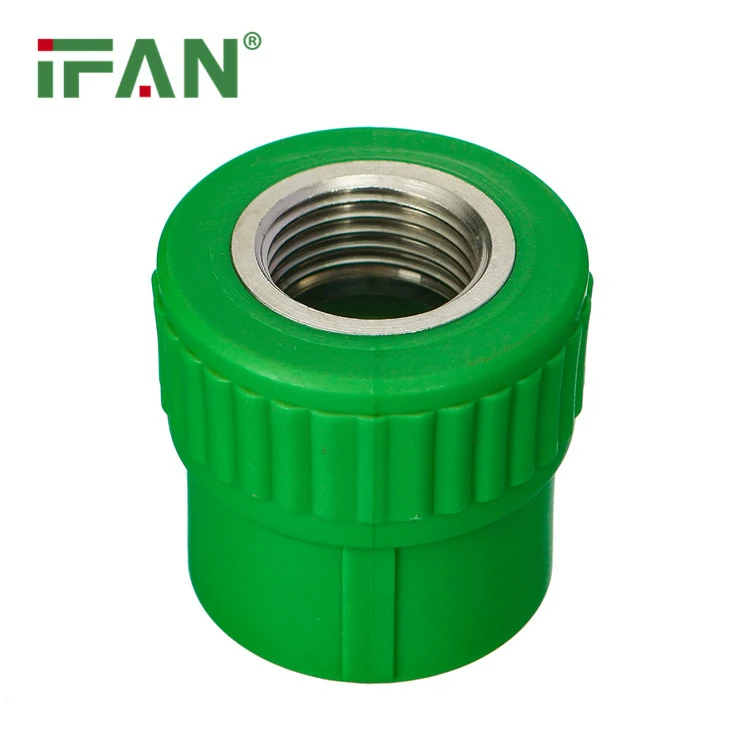
This guide delves into the design, types, advantages, and applications of PPR female sockets, along with installation best practices and maintenance tips. Whether you’re a plumber, engineer, or DIY enthusiast, mastering PPR female sockets will help you build adaptable, leak-proof systems for residential, commercial, and industrial use.
What Is a PPR Pipe Fitting Female Socket?
A PPR pipe fitting female socket is a connector with a socket-fusion end (for welding to a PPR pipe) and an internally threaded or recessed outlet for attaching male-threaded fittings or pipes. Its dual functionality—combining fusion welding with threaded compatibility—enables seamless transitions between PPR and other materials (e.g., copper, steel, or PEX) without compromising system integrity.
Key Features:
- Socket-Fusion Compatibility: The base end welds to PPR pipes of the same diameter (e.g., a 32mm female socket fits a 32mm pipe).
- Threaded or Recessed Outlet: Accepts male-threaded fittings (e.g., valves, tees) or male-socket pipes for flexible assembly.
- Material: Made from high-grade PPR for chemical resistance, UV stability, and thermal durability.
- Temperature Rating: Withstands temperatures up to 95°C (203°F), suitable for hot and cold water lines.
- Pressure Rating: Rated for 16 bar (232 psi) at 20°C (68°F), ideal for most residential and industrial systems.
Types of PPR Pipe Fitting Female Sockets
PPR female sockets come in several configurations to suit diverse needs:
1. Standard Female Socket (Socket-Fusion + Threaded)
- Design: A socket-fusion end for PPR pipes and an internally threaded outlet (e.g., ½” or ¾” NPT/BSP threads) for attaching male-threaded valves or adapters.
- Use: Connecting PPR pipes to threaded components in residential plumbing (e.g., under-sink valves) or HVAC systems.
- Example: A 25mm female socket welded to a PPR pipe, with a ½” threaded outlet for attaching a shut-off valve.
2. Female Socket with Integrated Elbow/Tee
- Design: Combines a female socket with a built-in 90° elbow or tee port, reducing the need for separate fittings.
- Use: Creating compact piping assemblies in confined spaces, such as behind walls or under floors.
- Benefit: Minimizes joints, lowering the risk of leaks and simplifying installation.
3. Reducing Female Socket
- Design: Features a socket-fusion end of one diameter (e.g., 40mm) and a threaded outlet of a smaller size (e.g., 32mm) for diameter transitions.
- Use: Linking PPR pipes of different sizes without requiring separate reducers, such as in industrial chemical transport lines.
4. Hybrid Female Socket (PPR-to-Metal Transition)
- Design: Integrates a PPR socket-fusion base with a metal-threaded insert (e.g., brass or stainless steel) for high-pressure applications.
- Use: Connecting PPR pipes to metal components in factories, boilers, or fire sprinkler systems.
- Advantage: Combines PPR’s corrosion resistance with metal’s strength for durability under extreme conditions.
Advantages of PPR Pipe Fitting Female Sockets
- Versatile Connections: Seamlessly integrates PPR pipes with threaded, metal, or multi-material fittings, reducing the need for adapters.
- Leak-Proof Design: Socket-fusion welding creates a monolithic bond at the pipe end, while threaded connections (when properly sealed) prevent leaks at the outlet.
- Corrosion Resistance: PPR material is immune to rust, scaling, and chemical degradation, ensuring long-term reliability in aggressive environments.
- Thermal Stability: Withstands extreme temperatures without warping, making it suitable for both cold and hot water applications.
- Cost-Effective: Fewer components and faster installation reduce labor and material costs compared to all-metal or multi-material systems.
Applications of PPR Pipe Fitting Female Sockets
PPR female sockets are used across industries for their adaptability and durability:
1. Residential Plumbing
- Use: Connecting PPR water supply lines to threaded faucets, valves, or water meters.
- Benefit: Smooth interior reduces noise from water flow, while threaded outlets allow easy maintenance.
2. Commercial HVAC Systems
- Example: Linking chilled water pipes to threaded flow meters or pressure gauges in office buildings.
- Advantage: Lightweight PPR reduces load on ceiling supports, while threaded outlets enable quick sensor installation.
3. Industrial Piping
- Application: Transporting chemicals, steam, or compressed air in factories with mixed-material piping (e.g., PPR to stainless steel).
- Benefit: PPR’s chemical inertness prevents reactions with aggressive substances, while threaded outlets accommodate metal valves.
4. Agricultural Irrigation
- Use: Connecting PPR irrigation lines to threaded sprinkler heads or filters in fields or greenhouses.
- Advantage: PPR’s UV resistance ensures longevity in outdoor settings, while threaded outlets simplify component replacement.
5. Medical & Lab Facilities
- Application: Linking purified water lines to threaded sterile connectors or sampling ports in hospitals.
- Benefit: Smooth, non-porous PPR surface prevents bacterial growth, meeting strict hygiene standards.
Installation Best Practices for PPR Pipe Fitting Female Sockets
Follow these steps for a secure, leak-proof connection:
1. Pipe Preparation
- Cut PPR pipes squarely using a fine-toothed saw or rotary cutter.
- Deburr the cut ends to remove sharp edges that could damage the socket’s sealing surface.
2. Socket-Fusion Welding
- Heat the pipe end and female socket’s base using a PPR fusion tool at 260°C (500°F).
- Insert the pipe into the socket’s base within 5 seconds of heating and hold for 10 seconds to cool and solidify the joint.
- Avoid twisting or moving the pipes during cooling to prevent weak spots.
3. Threaded Connection Assembly
- Wrap the male-threaded component (e.g., valve) with PTFE tape (3–5 wraps clockwise) to create a leak-proof seal.
- Hand-tighten the component into the female socket’s threaded outlet, then use a wrench to tighten an additional 1–2 turns (avoid over-tightening).
4. Pressure Testing
- Fill the system with water and pressurize to 1.5x the operating pressure (e.g., 15 bar for a 10-bar system).
- Check for leaks at all joints for 30 minutes. If leakage occurs at the threaded outlet, reapply PTFE tape and retighten.
Common Mistakes to Avoid
- Overheating: Excessive heat can deform the socket’s base or pipe, leading to poor fusion and leaks.
- Insufficient PTFE Tape: Using too little tape on threaded connections causes leaks; use at least 3 wraps.
- Cross-Threading: Forcing a male fitting into a misaligned female socket damages threads and creates gaps.
- Ignoring Temperature Limits: Exposing PPR female sockets to temperatures above 95°C can degrade the material over time.
IFAN factory started in 1993. And IFAN has workshop 120000 square meter with 610 staff. IFAN can design and produce all plumbing pipe and fitting include PPR,PVC,CPVC PPSU HDPE PEXA PEXB PERT pipe and fitting ,brass fitting, brass ball valve ,heating system , gas system , sanitary faucets and hose, In the past 30 Years, IFAN has never forgotten his mission-To protect health and safety. And IFAN factory use best materials to produce high quality pipe and fittings with automatic production line and high tech quality control machines. The most important,IFAN can guarantee that all pipes and fittings manufactured byIFAN are qualified. More information pls feel free contact us Whatsapp.