PE Pipe Fittings: Your Guide to Types, Applications, and Advantages
Introduction
When you design or maintain a modern fluid transport system, you must choose every component carefully. Professionals widely recognize PE pipes (Polyethylene pipes) for their flexibility and durability, but the PE pipe fittings that connect them are equally vital. These fittings ensure your network remains leak-proof, efficient, and long-lasting. Whether your project involves municipal water supply, gas distribution, agricultural irrigation, or industrial processes, you need the right fittings. This comprehensive guide covers everything you need to know about PE pipe fittings. We will explore their types, material benefits, and key selection criteria to help you make an informed decision.
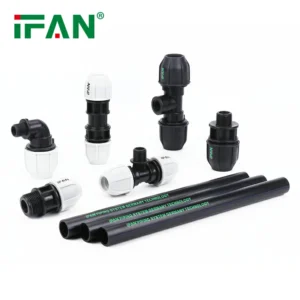
What Are PE Pipe Fittings?
PE pipe fittings are components that connect sections of polyethylene piping. Manufacturers make them from the same high-quality polyethylene resins as the pipes, which ensures uniform material properties and enables secure, monolithic joints. Engineers use these fittings to change direction, branch off, reduce size, or terminate pipelines. Unlike traditional metal fittings, installers typically join PE fittings using heat fusion (butt or socket) or electrofusion methods. These techniques create a connection as strong as the pipe itself.
Key Types of PE Pipe Fittings
You must understand the different fitting types to design an effective system. Here are the most common HDPE and MDPE fittings:
Electrofusion Fittings: These fittings contain built-in heating wires. When a technician connects an electrofusion welder, the heat melts and fuses the fitting with the pipe, creating an incredibly strong joint. This method is ideal for repairs, tie-ins, and work in confined spaces.
Common Types: EF Couplers, EF Elbows, EF Tees, EF Saddle Clamps.
Butt Fusion Fittings: Workers use a butt fusion welding machine to connect these fittings. The machine heats the pipe end and the fitting face, then presses them together to form a continuous, homogeneous joint. This method works best for long, straight runs and large-diameter pipes.
Common Types: Butt Fusion Couplers, Reducers, Elbows (45°/90°), Tees, End Caps.
Socket Fusion Fittings: This method involves inserting the pipe into a pre-heated socket on the fitting. It is common for smaller diameter pipes.
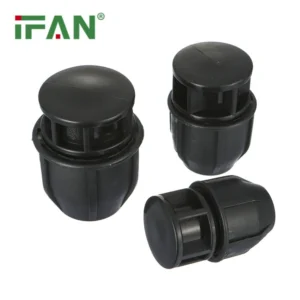
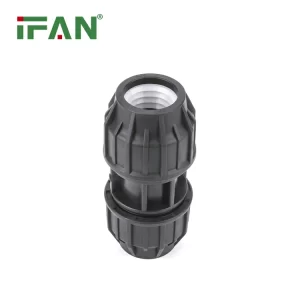
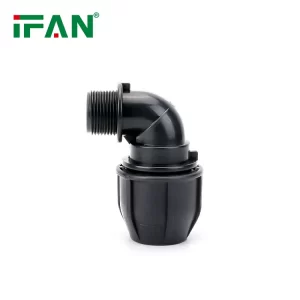
Mechanical Fittings: When fusion welding is not practical, mechanical fittings provide a strong, seal-tight connection without heat. They often use stainless steel grips and EPDM gaskets.
Common Types: Flange Adapters, Compression Couplers, Repair Clamps, Ball Valves.
Top 5 Advantages of PE Pipe Fittings
Why should you choose polyethylene fittings over metal or PVC alternatives? Consider these significant benefits:
They Resist Corrosion and Chemicals Exceptionally Well: PE is inert. It does not rust or corrode, which makes it perfect for aggressive soils, water, and many chemicals. This feature drastically reduces your maintenance costs.
They Offer High Flexibility and Impact Resistance: PE fittings can withstand ground movement, pressure surges, and low temperatures without cracking. This flexibility provides superior resilience.
They Enable Leak-Free Joints: Fusion welding creates a seamless, monolithic joint. This process eliminates the primary source of leaks that often plague threaded or gasketed systems.
They Promise a Long Service Life: With a proven lifespan of 50-100 years, PE pipe and fittings deliver superior lifetime value.
They Are Lightweight and Easy to Install: PE fittings weigh much less than metal fittings, which reduces transport and handling costs. Fusion welding is also faster and requires fewer tools than threading or welding steel.
Where to Use PE Pipe Fittings: Primary Applications
The versatility of PE fittings suits them for a wide range of industries:
Potable Water Systems: They are safe and compliant for drinking water networks.
Gas Distribution: MDPE fittings are the standard for natural gas mains and service lines.
Mining & Industrial Slurry Lines: Their excellent abrasion resistance handles demanding mixtures.
Agricultural & Irrigation Systems: They resist fertilizers, and manufacturers often UV-stabilize them for above-ground use.
Marine & Outfall Lines: They offer superior resistance to saltwater corrosion.
Telecommunication Ducting: They protect fiber optic and cable lines.
How to Choose the Right PE Fittings for Your Project
Follow these five key factors to select the correct fitting:
Identify the Material Grade: Determine the required PE grade (e.g., PE 80, PE 100, PE 100 RC). PE 100 RC provides enhanced crack resistance.
Check the Pressure Rating (PN): Ensure the fitting’s Pressure Nominal rating (e.g., PN10, PN16) matches or exceeds your system’s maximum operating pressure.
Match the Size and Standard: Confirm the Outside Diameter (OD) and Standard Dimension Ratio (SDR) match your pipe. Common standards are ISO, DIN, and ASTM.
Select the Connection Method: Choose based on your available tools, site conditions, and project specifications (Electrofusion vs. Butt Fusion vs. Mechanical).
Verify Certifications: Always select fittings that meet relevant international standards (e.g., ISO 4427, ASTM) and carry necessary certifications for potable water or gas applications.
Conclusion and Summary
In summary, PE pipe fittings are engineered components critical to a piping system’s performance and longevity—they are far more than simple connectors. Their corrosion resistance, flexibility, and leak-free fused joints give them a decisive advantage over traditional materials like ductile iron or PVC. By understanding the different types—such as electrofusion, butt fusion, and mechanical fittings—and following key selection criteria like material grade and pressure rating, you can design more reliable and durable infrastructure. From municipal networks to industrial applications, investing in the right HDPE and MDPE fittings ensures your system will deliver decades of trouble-free service.
IFAN factory started in 1993. And IFAN has workshop 120000 square meter with 610 staff. IFAN can design and produce all plumbing pipe and fitting include PPR,PVC,CPVC PPSU HDPE PEXA PEXB PERT pipe and fitting ,brass fitting, brass ball valve ,heating system , gas system , sanitary faucets and hose, In the past 30 Years, IFAN has never forgotten his mission-To protect health and safety. And IFAN factory use best materials to produce high quality pipe and fittings with automatic production line and high tech quality control machines. The most important,IFAN can guarantee that all pipes and fittings manufactured byIFAN are qualified. More information pls feel free contact us Whatsapp.
Related products
 PP Fitting 603
IFAN ASTM D3035 HDPE Plug HDPE Pipe Fittings
- PP Fitting 603
HDPE Fitting Sockets: A Comprehensive Guide ISO 4427
- PP Fitting 603
IFAN EN 12201 Versatile HDPE Male Elbow
- PP Fitting 601
HDPE Pipe Fitting For Irrigation