

HDPE Compression Fittings: A Reliable, No-Weld Connection Solution
Introduction
Sometimes, you need a strong, reliable pipe connection without welding equipment or specialized fusion tools. That’s where HDPE compression fittings come in. As a key category of mechanical fittings, they offer a versatile, heat-free method for joining HDPE pipes in repairs, tie-ins, and modifications. Whether you’re a contractor on a tight deadline, a utility worker performing a field repair, or a project manager specifying connections for hard-to-access areas, understanding HDPE compression fittings is essential. This guide explains how they work, their standout advantages, and the correct steps for a leak-proof installation.
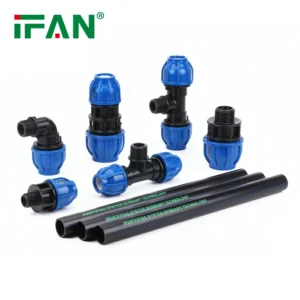
What Are HDPE Compression Fittings?
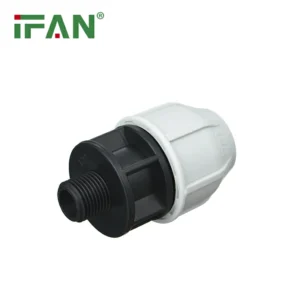
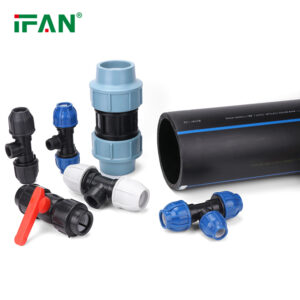
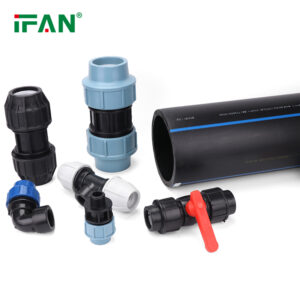
HDPE compression fittings are mechanical connectors that join HDPE pipes using physical compression rather than heat fusion. These fittings work by tightening a series of components—typically a compression nut, a gripping ring (often made of stainless steel), and a sealing gasket (usually EPDM)—around the pipe’s outer diameter. As you tighten the nut, the mechanism compresses the gasket to create a watertight seal while the gripper bites into the HDPE pipe to prevent pull-out under pressure. People commonly use them for temporary bypasses, permanent service connections, or in confined spaces where fusion welding is impractical or unsafe.
Key Advantages of Choosing Compression Fittings
Why specify HDPE mechanical fittings over fusion methods? They offer unique benefits for specific scenarios:
They Enable Fast, Tool-Light Installation. You only need standard wrenches and no electricity or heavy fusion equipment. This allows for rapid deployment and repairs, significantly reducing downtime.
They Permit Easy Disassembly and Reuse. Unlike fused joints, you can loosen, adjust, and often reuse many compression fittings, providing excellent flexibility during system modifications or maintenance.
They Work in Tight and Wet Conditions. Installers can use them in trenches, underwater, or in poorly ventilated areas where fusion (which requires dry, clean, and spacious conditions) is not feasible.
They Simplify Connections to Different Materials. HDPE compression couplings often come in transition styles (e.g., HDPE to metal thread or HDPE to PVC), making them the go-to solution for connecting HDPE to existing infrastructure made of other materials.
They Provide a Reliable, Pressure-Rated Seal. High-quality fittings with corrosion-resistant grippers and robust gaskets deliver a leak-free connection that meets standard pressure ratings for water, slurry, and other non-gas media.
Common Applications and Use Cases
HDPE compression fittings serve critical roles across multiple industries:
Water & Wastewater Repair: Quickly fix mainline breaks or connect service laterals without shutdowns.
Irrigation & Agricultural Systems: Make above-ground modifications and add sprinkler lines quickly.
Industrial Process Lines: Connect instruments, valves, or equipment that may require future removal.
Mining & Slurry Applications: Facilitate easy replacement of worn pipe sections in abrasive service.
Telecom & Conduit Projects: Join HDPE ducting for fiber optic cables where fusion is unnecessary.
Step-by-Step Installation Guide
For a secure, leak-proof connection, follow these best practices:
Prepare the Pipe End: Cut the HDPE pipe squarely using a pipe cutter. Thoroughly clean and deburr the pipe end, and clearly mark the proper insertion depth on the pipe.
Disassemble and Inspect the Fitting: Loosen the compression nut and disassemble the fitting to understand its components (nut, gripper, gasket). Check that all parts are clean and undamaged.
Assemble on the Pipe: Slide the compression nut onto the pipe first, followed by the gripper ring and sealing gasket. Ensure the gasket and gripper face the correct direction (usually with the tapered edge facing the fitting body).
Insert and Tighten: Push the pipe fully into the fitting body until it hits the internal stop. Hand-tighten the compression nut onto the fitting body, then use two wrenches—one to hold the fitting body steady and the other to tighten the nut—to make the final specified number of turns (usually 1.5 to 2 full rotations). Avoid over-tightening, as this can damage the pipe or gasket.
Pressure Test: Always conduct a pressure test according to system specifications before putting the line into full service.
Important Limitations and Considerations
While highly useful, HDPE compression fittings are not the universal solution. Keep these points in mind:
They Are Generally Not for Gas Services. Most industry standards restrict permanent gas piping connections to fusion methods. Always check local codes and manufacturer certifications.
They Have Temperature and Pressure Limits. Respect the manufacturer’s stated pressure (PN) and temperature ratings, which may be lower than those for fused joints.
Soil Movement and Thrust Restraint May Require Additional Support. In applications with potential for pipe movement or significant thrust forces (like at bends), you may need to install concrete thrust blocks or locking-style restraint fittings.
Conclusion and Summary
In summary, HDPE compression fittings provide an indispensable, no-weld method for creating strong, sealed connections in HDPE piping systems. Their ease of installation, reusability, and ability to work in challenging conditions make them perfect for repairs, transitions, and specific project needs where fusion welding is not optimal. By understanding their working principle, key advantages, and proper installation technique, you can effectively leverage these mechanical fittings to save time and increase job-site flexibility. Remember to account for their limitations regarding gas service and thrust restraint, and always select high-quality, certified fittings for the media in your system.
IFAN factory started in 1993. And IFAN has workshop 120000 square meter with 610 staff. IFAN can design and produce all plumbing pipe and fitting include PPR,PVC,CPVC PPSU HDPE PEXA PEXB PERT pipe and fitting ,brass fitting, brass ball valve ,heating system , gas system , sanitary faucets and hose, In the past 30 Years, IFAN has never forgotten his mission-To protect health and safety. And IFAN factory use best materials to produce high quality pipe and fittings with automatic production line and high tech quality control machines. The most important,IFAN can guarantee that all pipes and fittings manufactured byIFAN are qualified. More information pls feel free contact us Whatsapp.
Related products
 PP Fitting 604
HDPE Tube Fitting Male Socket: The Ultimate Guide
- PP Fitting 601
HDPE Pipe Fitting For Irrigation