
1. Product Overview
HDPE (High-Density Polyethylene) pipe fittings are specialized components designed for joining HDPE piping systems through thermal fusion methods. Manufactured from the same high-molecular-weight polyethylene as the pipes themselves, these fittings create monolithic, leak-free joints that match or exceed the strength of the base pipe material. HDPE systems excel in applications requiring chemical resistance, flexibility, and long-term durability.
2. Key Advantages
- Exceptional Durability: 50-100 year service life with proper installation
- Chemical Resistance: Inert to most acids, bases, and corrosive substances
- Leak-Free Joints: Fusion welding creates homogeneous, permanent connections
- Flexibility: Withstands ground movement and seismic activity
- Corrosion Resistance: Immune to rust, electrolysis, and microbiological attack
- Lightweight: Easy to handle and install with minimal equipment
3. Material Specifications
- Base Material: PE100 or PE100RC (high-density polyethylene)
- Density: 0.941-0.965 g/cm³
- Melt Flow Index: 0.1-0.5 g/10 min (190°C/5 kg)
- Pressure Ratings: PN6, PN10, PN16, PN20, SDR series
- Temperature Range: -40°C to 60°C (-40°F to 140°F) continuous
- Standards Compliance: ISO 4427, ASTM D3350, EN 12201, AWWA C901/C906
4. Fitting Types & Configurations
Fusion Fittings:
- Electrofusion Fittings: Incorporate integrated heating elements for controlled fusion
- Butt Fusion Fittings: Designed for end-to-end joining with heated plates
- Socket Fusion Fittings: For smaller diameters using heated tooling
Mechanical Fittings:
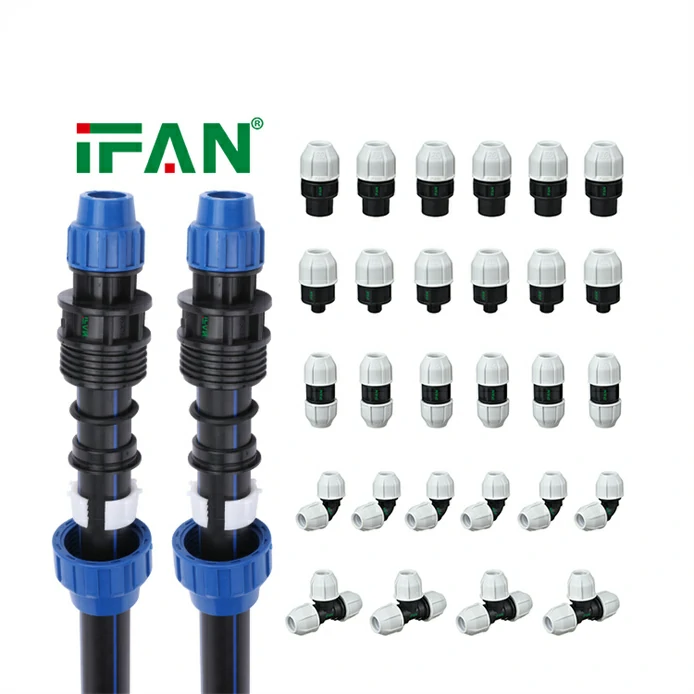
- Flange Adaptors: Convert fusion ends to flanged connections
- Compression Fittings: For temporary or transition connections
- Stab Fittings: Quick-connect systems for specific applications
Geometric Configurations:
- Elbows: 45°, 90°, and custom angles
- Tees: Equal and reducing configurations
- Reducers: Concentric and eccentric designs
- End Caps: For system termination
- Repair Clamps: For emergency maintenance
5. Fusion Methods & Installation
Butt Fusion Process:
- Preparation: Clean and square pipe ends using facing tools
- Heating: Apply heated plate (200-230°C) between pipe and fitting
- Joining: Remove plate and apply pressure to create molecular bond
- Cooling: Maintain pressure during specified cooling period
Electrofusion Installation:
- Clean and prepare pipe surfaces
- Position fitting and apply clamping pressure
- Apply voltage to integrated heating coil
- Allow controlled cooling without disturbance
Quality Control Measures:
- Visual inspection of fusion bead formation
- Non-destructive testing (ultrasonic or X-ray)
- Pressure testing at 1.5x operating pressure
- Documentation of fusion parameters
6. Application Areas
Water Distribution:
- Potable water mains and service connections
- Irrigation and agricultural water systems
- Fire protection water lines
- Desalination and water treatment plants
Gas Distribution:
- Natural gas distribution networks
- LP gas transmission lines
- Landfill gas collection systems
Industrial Applications:
- Chemical processing lines
- Mining slurry transport
- Geothermal fluid transfer
- Marine and offshore installations
Environmental Systems:
- Landfill leachate collection
- Stormwater management
- Wastewater collection and treatment
- Remediation system piping
7. Technical Standards
International Standards:
- ISO 4427: Polyethylene pipes for water supply
- ASTM F714: Polyethylene plastic pipe (SDR-PR)
- EN 12201: Plastics piping systems for water supply
- AS/NZS 4130: Polyethylene (PE) pipes for pressure applications
Industry Specifications:
- AWWA C901: Polyethylene pressure pipe, tubing, and fittings
- DOT Part 192: Transportation of natural gas
- API 15LE: Polyethylene line pipe
8. Design Considerations
Pressure Rating Selection:
- Consider working pressure, surge pressure, and safety factors
- Account for temperature derating (pressure decreases with temperature increase)
- Include allowances for water hammer and transient conditions
Joint Design Philosophy:
- Fusion joints become the strongest part of the system
- Mechanical joints require proper restraint for pressure applications
- Transition fittings require consideration of differential expansion
Installation Environment Factors:
- Soil conditions and loading requirements
- Thermal expansion and contraction
- UV protection for above-ground installations
- Cathodic protection not required
9. Material Performance Characteristics
Chemical Resistance:
- Excellent resistance to acids, bases, and salts
- Limited resistance to strong oxidizing agents
- Good performance with hydrocarbons (check specific compatibility)
- No corrosion or pitting from electrochemical processes
Physical Properties:
- High impact resistance even at low temperatures
- Good abrasion resistance for slurry applications
- Low coefficient of friction reduces pumping costs
- Flexible design accommodates ground movement
Long-Term Performance:
- Slow crack growth resistance (PE100RC enhanced)
- Resistance to environmental stress cracking
- Maintains properties over decades of service
- Recyclable at end of service life
10. Installation Equipment
Fusion Machines:
- Hydraulic butt fusion machines with microprocessor control
- Electrofusion power supplies with barcode scanning
- Socket fusion tools for smaller diameters
- Pipe handling and support equipment
Support Tools:
- Pipe cutters and facing tools
- Clamping and alignment fixtures
- Surface preparation tools
- Temperature monitoring equipment
Quality Assurance Equipment:
- Bead profile gauges
- Non-destructive testing devices
- Pressure testing equipment
- Documentation systems
11. Economic Analysis
Initial Costs:
- Material costs competitive with alternative materials
- Equipment investment required for fusion joining
- Training and certification expenses
- Engineering and design services
Lifecycle Costs:
- Minimal maintenance requirements
- Low operational energy costs
- No corrosion-related replacements
- Extended service life reduces replacement frequency
Value Considerations:
- Reduced installation time with experienced crews
- Lower failure rates and associated costs
- Environmental benefits from leak prevention
- Sustainability advantages of recyclable materials
12. Industry Trends
Technological Developments:
- Advanced PE materials with enhanced properties
- Automated fusion equipment with digital controls
- Smart fittings with integrated monitoring capabilities
- Improved joining techniques for faster installation
Market Expansion:
- Growing acceptance in gas distribution
- Increased use in mining and industrial applications
- Expansion of large diameter applications
- Global standardization of specifications
Sustainability Initiatives:
- Reduced carbon footprint compared to traditional materials
- Energy efficiency in manufacturing and installation
- Recyclability and circular economy considerations
- Contribution to water conservation through leak reduction
Summary: HDPE pipe fittings represent a technologically advanced solution for modern piping systems, offering exceptional durability, chemical resistance, and installation efficiency. Their fusion joining methods create permanent, leak-free connections that withstand demanding environmental and operational conditions. While requiring specialized equipment and trained personnel, HDPE systems provide outstanding long-term value through reduced maintenance, extended service life, and reliable performance across water distribution, gas transmission, industrial processing, and environmental applications. Proper material selection, system design, and installation quality assurance ensure optimal performance of these versatile and durable piping components.
IFAN factory started in 1993. And IFAN has workshop 120000 square meter with 610 staff. IFAN can design and produce all plumbing pipe and fitting include PPR,PVC,CPVC PPSU HDPE PEXA PEXB PERT pipe and fitting ,brass fitting, brass ball valve ,heating system , gas system , sanitary faucets and hose, In the past 30 Years, IFAN has never forgotten his mission-To protect health and safety. And IFAN factory use best materials to produce high quality pipe and fittings with automatic production line and high tech quality control machines. The most important,IFAN can guarantee that all pipes and fittings manufactured byIFAN are qualified. More information pls feel free contact us Whatsapp.