
Whether you’re installing a new water supply line, upgrading a heating system, or constructing a high-pressure industrial pipeline, brass pipe fittings offer a combination of durability and functionality that few other materials can match.
This comprehensive guide explores the benefits, types, applications, and selection criteria for brass pipe fittings, helping you make informed decisions for your next project.
1. Why Choose Brass Pipe Fittings?
Brass is an alloy of copper and zinc, with small additions of other elements like lead (in traditional formulations), aluminum, or tin to enhance specific properties. This combination results in a material that is:
1.1 Corrosion-Resistant
Brass pipe fittings are highly resistant to rust, oxidation, and chemical corrosion, making them ideal for potable water systems, saltwater environments, and industrial applications involving corrosive fluids.
1.2 Durable and Long-Lasting
Brass can withstand high pressures and temperatures without cracking or deforming, ensuring reliable performance in demanding conditions.
1.3 Thermally Conductive
Brass has excellent heat transfer properties, making it suitable for heating systems, radiators, and underfloor heating installations.
1.4 Malleable and Easy to Machine
Brass is relatively soft and easy to shape, allowing manufacturers to produce precise fittings with consistent quality. This also makes custom fittings more accessible.
1.5 Low Friction Loss
The smooth interior surface of brass pipe fittings reduces turbulence and pressure drop, improving fluid flow efficiency.
2. Common Types of Brass Pipe Fittings
Brass pipe fittings come in various shapes and sizes to accommodate different piping configurations. The most common types include:
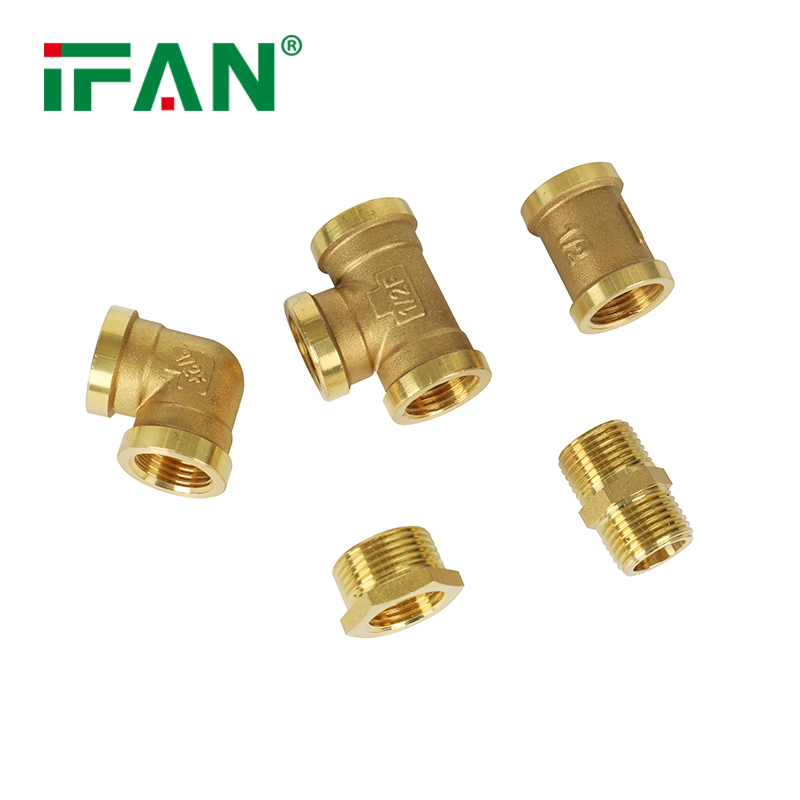
2.1 Brass Elbows
Used to change the direction of flow by 90° or 45°, brass elbows are available in standard, street (one male and one female end), and long-radius (LR) designs.
Applications:
- Residential plumbing
- HVAC ductwork
- Industrial piping bends
2.2 Brass Tees
Brass tees split fluid flow into two or more directions, forming a T-shaped junction. They are essential for branching off from a main pipeline.
Applications:
- Water distribution systems
- Fire sprinkler networks
- Chemical processing plants
2.3 Brass Couplings
Brass couplings connect two pipes of the same diameter end-to-end. They come in threaded, compression, and soldered varieties.
Applications:
- Extending pipe runs
- Repairing damaged sections
- Joining threaded or smooth pipes
2.4 Brass Adapters
Brass adapters convert between different thread types (e.g., NPT to BSP) or connection styles (e.g., male to female).
Applications:
- International plumbing projects
- Mixed-material systems
- Custom piping setups
2.5 Brass Nipples
Short threaded brass pipes used to extend or space out fittings, nipples are available in close (short) and regular (long) lengths.
Applications:
- Connecting valves to pipes
- Spacing fittings in tight areas
- Creating access points for maintenance
2.6 Brass Caps and Plugs
Brass caps seal the end of a pipe, while plugs close off an open fitting. Both prevent debris entry and control fluid flow when needed.
Applications:
- Temporary pipe closures
- Pressure testing systems
- Winterizing outdoor plumbing
2.7 Brass Unions
Brass unions allow for easy disconnection of pipes without cutting or unscrewing multiple components. They consist of a nut, a female end, and a male end.
Applications:
- Modular piping systems
- Equipment maintenance
- Industrial machinery
2.8 Brass Valves
While not strictly fittings, brass valves (e.g., ball valves, gate valves, and check valves) are often integrated into piping systems to control flow. Their brass construction ensures durability in high-pressure applications.
Applications:
- Water supply lines
- Gas distribution
- Hydraulic systems
3. Key Applications of Brass Pipe Fittings
Brass pipe fittings are used across a wide range of industries and settings, including:
3.1 Residential Plumbing
Brass fittings are commonly found in household water supply lines, sinks, showers, toilets, and water heaters due to their corrosion resistance and reliability.
3.2 Commercial HVAC Systems
In heating, ventilation, and air conditioning (HVAC) systems, brass fittings connect refrigerant lines, condensate drains, and heating coils, ensuring efficient operation in commercial buildings.
3.3 Industrial Piping
Brass fittings are used in chemical processing, oil and gas, and manufacturing plants where resistance to corrosion and high temperatures is critical.
3.4 Marine and Coastal Applications
Due to their resistance to saltwater corrosion, brass fittings are ideal for marine plumbing, boat engines, and coastal infrastructure.
3.5 Fire Protection Systems
Brass fittings are approved for use in fire sprinkler systems because they can withstand high pressures and temperatures without failing.
3.6 Gas Supply Lines
Brass fittings are suitable for natural gas and propane lines due to their leak-resistant properties and ability to handle high-pressure gas flow.
3.7 Hydraulic Systems
Brass fittings are used in hydraulic machinery for their strength and resistance to hydraulic fluids.
4. How to Select the Right Brass Pipe Fittings
Choosing the appropriate brass pipe fittings involves considering several factors:
4.1 Material Grade
Select a brass grade that matches your application:
- CZ121 (DWV) – For drainage, waste, and vent systems
- CZ132 – General-purpose plumbing
- CZ108 (Lead-Free) – For potable water systems (compliant with NSF/ANSI 61)
4.2 Thread Type
Ensure compatibility with your pipes and other components:
- NPT (National Pipe Taper) – Common in North America
- BSP (British Standard Pipe) – Used in Europe and Asia
- Metric Thread – For international applications
4.3 Pressure and Temperature Ratings
Choose fittings rated for the maximum pressure and temperature your system will encounter to prevent failure.
4.4 Connection Method
Select between threaded, compression, soldered, or flare fittings based on your installation needs and skill level.
4.5 Certification and Compliance
Look for fittings that meet industry standards, such as ASTM, NSF, UL, or ISO, especially for potable water or fire protection applications.
4.6 Supplier Reputation
Purchase from reputable suppliers to ensure quality and reliability.
5. Installation and Maintenance Tips
5.1 Proper Installation Techniques
- For threaded fittings: Clean threads with a wire brush and apply Teflon tape or thread sealant.
- For soldered fittings: Use flux and sandpaper to prepare surfaces before heating.
- For compression fittings: Cut pipes squarely and deburr edges for a secure seal.
5.2 Regular Inspections
Check for signs of corrosion, leaks, or damage, especially in humid or coastal environments.
5.3 Avoid Harsh Chemicals
When cleaning brass fittings, use mild soap and water instead of abrasive cleaners that could scratch the surface.
5.4 Lubricate Threads (If Needed)
Apply a small amount of thread lubricant to frequently disconnected fittings to prevent galling.
6. Conclusion
Brass pipe fittings are a durable, versatile, and reliable choice for plumbing, HVAC, industrial, and marine applications. Their corrosion resistance, strength, and ease of installation make them a preferred option over other materials. By selecting the right type of brass fitting, following proper installation techniques, and performing regular maintenance, you can ensure a leak-free, efficient, and long-lasting piping system.
IFAN factory started in 1993. And IFAN has workshop 120000 square meter with 610 staff. IFAN can design and produce all plumbing pipe and fitting include PPR,PVC,CPVC PPSU HDPE PEXA PEXB PERT pipe and fitting ,brass fitting, brass ball valve ,heating system , gas system , sanitary faucets and hose, In the past 30 Years, IFAN has never forgotten his mission-To protect health and safety. And IFAN factory use best materials to produce high quality pipe and fittings with automatic production line and high tech quality control machines. The most important,IFAN can guarantee that all pipes and fittings manufactured byIFAN are qualified. More information pls feel free contact us Whatsapp.