
General Comparison Overview
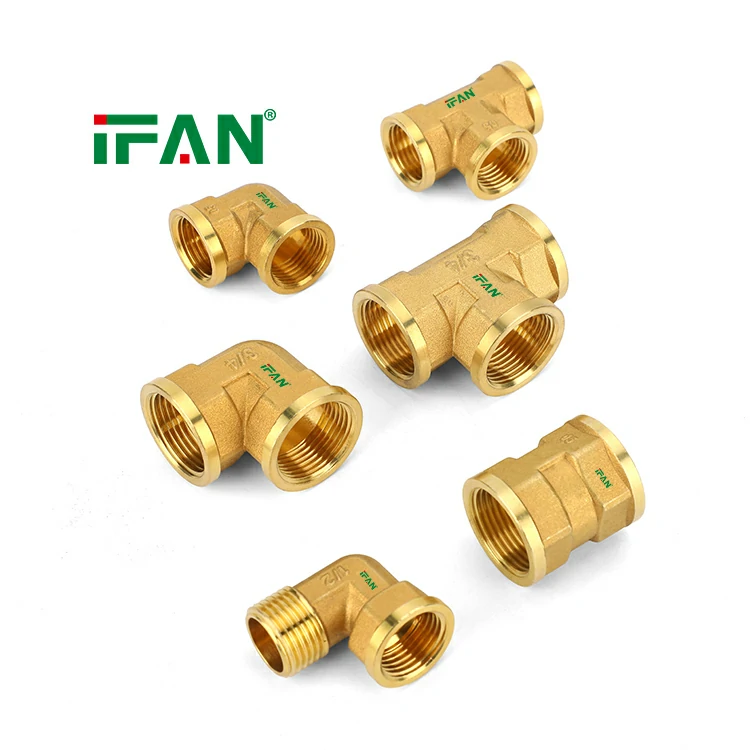
Brass pipe fittings offer a balance of properties. Strength-wise, they are stronger than plastic but less strong than stainless steel. Corrosion-wise, they resist corrosion better than carbon steel. Cost-wise, they are lower than stainless steel. Each material has its ideal application. The choice depends on the specific need.
Corrosion Resistance Comparison
Brass pipe fittings resist corrosion well in most water applications. However, they are vulnerable to dezincification in aggressive water. DZR brass solves this problem. Stainless steel (316 grade) offers superior corrosion resistance, especially in saltwater. Plastic (PVC, CPVC, PPR) is completely immune to electrochemical corrosion. It does not rust or dezincify.
Strength and Pressure Handling
Stainless steel has the highest strength of the three. It handles very high pressures and temperatures. Brass pipe fittings have medium strength. They handle typical residential and commercial pressures well. Plastic fittings have the lowest strength. Their pressure rating drops significantly with temperature. PVC is not suitable for hot water.
Temperature Tolerance
Stainless steel handles the highest temperatures, up to 800°C or more. Brass pipe fittings handle hot water up to 200°F (93°C) but lose strength above that. They are not for steam. CPVC handles up to 200°F, PPR up to 180°F. PVC fails at 140°F. For hot water, brass, CPVC, and PPR are all suitable.
Cost Comparison
Plastic fittings are the least expensive option. Brass pipe fittings are moderately priced. Stainless steel is the most expensive. However, total installed cost includes labor. Plastic installation (gluing or fusion) is fast. Brass threading takes moderate time. Stainless steel threading or welding takes more skill and time.
Installation Methods
Brass pipe fittings use threaded or soldered connections. Threading requires skill and sealant. Plastic fittings use solvent cement (PVC/CPVC) or heat fusion (PPR). These methods are fast. Stainless steel can be threaded (requires heavy tools) or welded (TIG welding). Each method has different skill requirements.
Dezincification Risk in Brass
Standard brass pipe fittings can suffer dezincification. This is corrosion where zinc leaches out. It leaves weak, spongy copper. This occurs in hot or aggressive water. Stainless steel and plastic do not have this failure mode. DZR brass solves the problem. Always use DZR for hot water applications.
Weight and Handling
Plastic fittings are the lightest. Brass pipe fittings are heavier than plastic but lighter than stainless steel. Stainless steel is the heaviest. For large installations, weight affects shipping and handling. Plastic is easiest to lift and carry. Brass is manageable. Stainless steel requires more effort.
Applications for Each Material
Use brass pipe fittings for general plumbing, hot water, and gas lines. They are ideal for residential and commercial water distribution. Use stainless steel for saltwater, high-purity, or high-temperature applications. Use plastic for drainage, irrigation, cold water, and chemical resistance. Each material has its niche.
Lead Content and Drinking Water
Modern brass pipe fittings are available lead-free (less than 0.25% lead). Stainless steel contains no lead. Plastic also contains no lead. For drinking water, all three can be safe. Brass requires NSF/ANSI 61 certification. Stainless steel and plastic also need appropriate certifications.
Fire Safety Considerations
Brass pipe fittings are non-combustible. They do not burn or support flame. Stainless steel is also non-combustible. Plastic fittings will burn and may drip burning material. In fire-rated assemblies, metal fittings are preferred. For concealed spaces, building codes may restrict plastic.
Summary of Selection Guidelines
Choose brass pipe fittings for general water, gas, and heating applications. They offer good strength, moderate cost, and easy installation. Choose stainless steel for saltwater, high pressure, or high-purity systems. Choose plastic for drainage, irrigation, cold water, and chemical resistance. Each material has advantages and limitations.
Brass pipe fittings occupy a middle ground between stainless steel and plastic. They are stronger and more heat-resistant than plastic. They are less expensive and easier to install than stainless steel. Brass is an excellent choice for most residential and commercial water systems. Stainless steel is superior for demanding environments. Plastic works well for low-cost cold water. Select the material that matches your specific application requirements.
IFAN factory started in 1993. And IFAN has workshop 120000 square meter with 610 staff. IFAN can design and produce all plumbing pipe and fitting include PPR,PVC,CPVC PPSU HDPE PEXA PEXB PERT pipe and fitting ,brass fitting, brass ball valve ,heating system , gas system , sanitary faucets and hose, In the past 30 Years, IFAN has never forgotten his mission-To protect health and safety. And IFAN factory use best materials to produce high quality pipe and fittings with automatic production line and high tech quality control machines. The most important,IFAN can guarantee that all pipes and fittings manufactured by IFAN are qualified. More information pls feel free contact us Whatsapp.