PPR pipe fittings are components made from a specialized thermoplastic polymer—polypropylene random copolymer. This material is synthesized by integrating ethylene (PE) molecules into the polypropylene (PP) chain, creating a structure with enhanced flexibility and impact resistance.Key features of PPR pipe fittings include:
High-Temperature Resistance: Withstands temperatures up to 95°C, making them ideal for hot water systems.
Smooth Interior Surfaces: Minimizes friction loss and prevents biofilm formation, reducing maintenance costs.
Longevity: Service life exceeding 50 years under proper conditions.
Eco-Friendly: Recyclable and free from toxic substances, aligning with global sustainability goals.
2. Types of PPR Pipe Fittings
PPR fittings are designed to meet diverse piping needs, including:
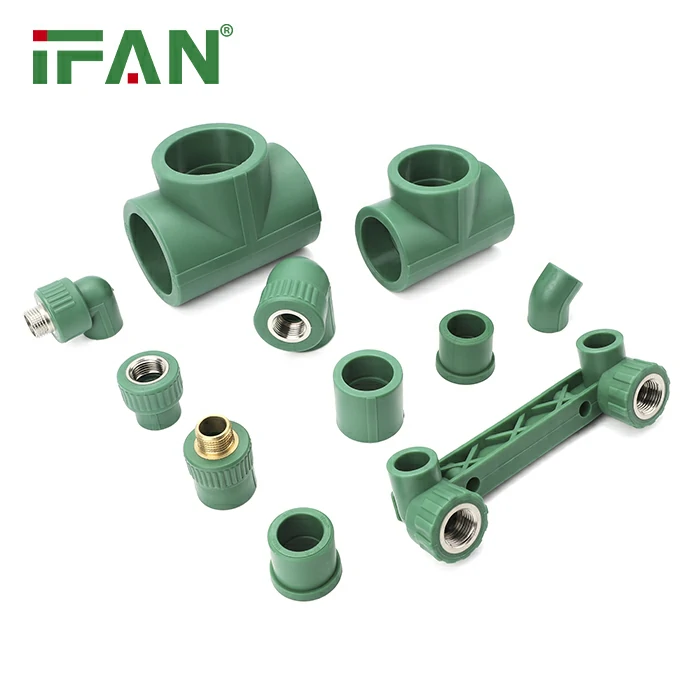
Elbows: Redirect fluid flow at 90° or 45° angles.
Tees: Split a single pipe into two or more branches.
Reducers: Connect pipes of different diameters.
Couplings: Join two pipes end-to-end.
End Caps: Seal pipe ends to prevent contamination.
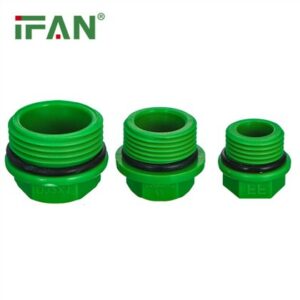
Threaded Adapters: Integrate PPR systems with metal components using stainless steel inserts.
3. Applications of PPR Pipe Fittings
3.1 Residential Plumbing
They are used for:
Hot and cold water supply lines.
Underfloor heating systems.
Radiator connections.
Waste drainage pipes.
3.2 Industrial and Commercial Use
In industrial settings, PPR fittings are employed in:
Chemical processing plants (resistant to acids and alkalis).
Food and beverage production (compliant with hygiene standards).
HVAC systems (for chilled water circulation).
Agricultural irrigation (durable against UV exposure and soil chemicals).
3.3 Municipal Infrastructure
PPR pipes are increasingly used in:
Urban water supply networks (replacing aging cast iron pipes).
District heating systems (efficient thermal insulation reduces energy loss).
Fire sprinkler systems (withstanding high-pressure requirements).
4. Market Trends and Industry Insights
4.1 Global Market Dynamics
As of 2022, the global PPR pipe market was valued at $10.36 billion, with a compound annual growth rate (CAGR) of 4.6%. However, growth has slowed in developed regions like Europe and North America, where PEX (cross-linked polyethylene) and stainless steel pipes are gaining traction. Conversely, emerging economies in Asia-Pacific and Latin America are driving demand due to rapid urbanization and infrastructure investments.
4.2 China’s Dominance
China remains the largest producer and consumer of PPR pipes, accounting for 38% of global output in 2022. The domestic market size reached $25.58 billion, with key players like Weixing New Material (11.4% market share) and Yonggao Co., Ltd. leading the charge. The government’s push for green building materials and “sponge city” initiatives further fuels adoption.
4.3 Innovation and Sustainability
Manufacturers are focusing on:
High-Performance Variants: Developing PPR-aluminum composite pipes for enhanced rigidity and oxygen barrier properties.
Smart Fittings: Incorporating IoT sensors for real-time leak detection and pressure monitoring.
Circular Economy: Recycling post-consumer PPR waste into new fittings.
5. Challenges and Future Outlook
5.1 Key Challenges
Material Limitations: PPR pipes may deform under prolonged exposure to temperatures above 95°C.
Competition: Alternatives like PEX and CPVC (chlorinated polyvinyl chloride) offer better flexibility or chemical resistance in specific applications.
Rising Demand in Developing Nations: India, Southeast Asia, and Africa will adopt PPR systems for affordable housing and water conservation projects.
Technological Advancements: 3D printing and AI-driven design optimization will reduce production costs and improve customization.
Policy Support: Governments worldwide are mandating eco-friendly construction materials, favoring PPR’s recyclability.
6. Conclusion
PPR pipe fittings represent a paradigm shift in fluid transportation, offering unmatched durability, safety, and environmental benefits. While facing competition from emerging materials, their cost-effectiveness and versatility ensure continued relevance across residential, industrial, and municipal sectors.IFAN factory started in 1993. And IFAN has workshop 120000 square meter with 610 staff. IFAN can design and produce all plumbing pipe and fitting include PPR,PVC,CPVC PPSU HDPE PEXA PEXB PERT pipe and fitting ,brass fitting, brass ball valve ,heating system , gas system , sanitary faucets and hose, In the past 30 Years, IFAN has never forgotten his mission-To protect health and safety. And IFAN factory use best materials to produce high quality pipe and fittings with automatic production line and high tech quality control machines. The most important,IFAN can guarantee that all pipes and fittings manufactured byIFAN are qualified. More information pls feel free contact us Whatsapp.