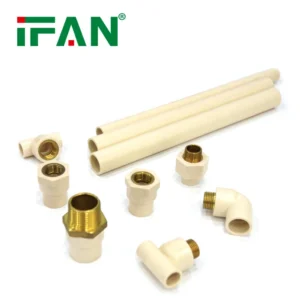
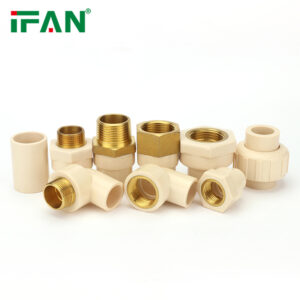
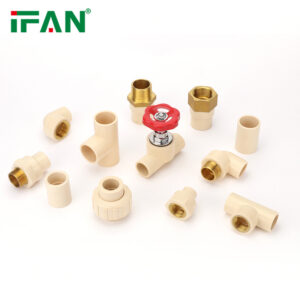
Introduction to CPVC Pipe Fittings
CPVC pipe fittings are used to connect, redirect, or terminate CPVC pipes in plumbing, chemical processing, and HVAC systems. They are solvent-welded to pipes, creating a permanent, leak-proof bond. CPVC’s chlorinated structure enhances its heat resistance, making it suitable for hot water and chemical applications where standard PVC would fail.

Key Features and Advantages
- High Temperature Resistance: CPVC can withstand temperatures up to 200°F (93°C), unlike PVC, which is limited to 140°F (60°C).
- Corrosion and Scale Resistance: Unlike metal fittings, CPVC does not rust or scale, ensuring consistent flow and water quality.
- Chemical Compatibility: Ideal for systems carrying aggressive chemicals, such as acids, alkalis, and industrial solvents.
- Lightweight and Easy to Install: CPVC fittings are lighter than metal, reducing shipping costs and simplifying installation.
- Cost-Effective: Lower material and labor costs compared to copper or stainless steel alternatives.
- Low Maintenance: Resistant to microbial growth and UV degradation (when painted or protected).
3. Types of CPVC Pipe Fittings
- Elbows: Used to change pipe direction (90° or 45° angles). Available in standard, reducing, and street (one male thread) variants.
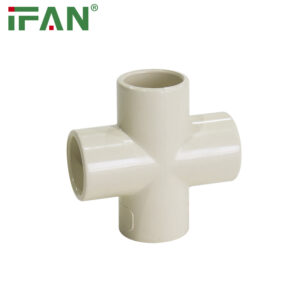
- Tees: Split a single pipe into two branches or combine two pipes into one. Reducing tees adjust pipe diameters.
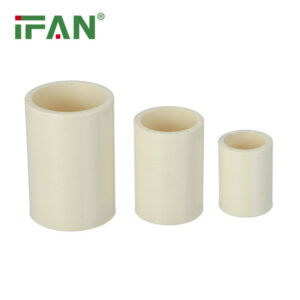
- Couplings: Connect two pipes of the same diameter. Reducing couplings adjust sizes.
- Unions: Allow pipes to be disconnected for maintenance (unlike solvent-welded couplings).
- Adapters: Convert between CPVC and other materials (e.g., threaded pipes or valves).
- Caps and Plugs: Seal pipe ends temporarily or permanently.
- Valves: Include ball valves, check valves, and gate valves for flow control.
4. Applications of CPVC Pipe Fittings
- Residential Plumbing: Hot and cold water supply lines, shower installations, and under-sink connections.
- Commercial Buildings: Office buildings, hotels, and schools for scalable, low-maintenance plumbing.
- Industrial Systems: Chemical processing plants, laboratories, and food manufacturing facilities due to chemical resistance.
- Pool and Spa Plumbing: Resistant to chlorine and other pool chemicals.
- Fire Sprinkler Systems: CPVC is approved for certain fire suppression applications (check local codes).
- Irrigation Systems: Durable and corrosion-resistant for agricultural or landscaping use.
5. Installation Process for CPVC Pipe Fittings
- Preparation:
- Cut the CPVC pipe squarely using a fine-toothed saw or CPVC cutter.
- Deburr the pipe end with a reaming tool to ensure a smooth fit.
- Clean the pipe and fitting interior with CPVC primer to remove oils and contaminants.
- Assembly:
- Apply a thin, even layer of CPVC solvent cement to the pipe and fitting socket.
- Quickly insert the pipe into the fitting, twisting it ¼ turn to spread the cement evenly.
- Hold the joint in place for 15–30 seconds to prevent slippage.
- Curing:
- Allow the joint to cure for at least 2 hours (or as per the cement manufacturer’s instructions) before pressure testing.
- Avoid disturbing the joint during curing.
- Testing:
- Perform a pressure test to verify no leaks.
- Label the system for future reference.
6. Maintenance and Troubleshooting
- Regular Inspections: Check for loose fittings, cracks, or signs of chemical degradation.
- Avoid UV Exposure: If used outdoors, paint CPVC pipes or cover them with UV-resistant tape to prevent brittleness.
- Prevent Freezing Risks: Insulate pipes in cold climates to avoid cracking from ice expansion.
- Handle with Care: Avoid dropping or mishandling CPVC fittings, as impacts can cause hairline cracks.
- Address Chemical Compatibility: Ensure CPVC is compatible with the chemicals in your system (e.g., some solvents or fuels may degrade it).
7. Comparison with Alternative Fitting Materials
- CPVC vs. PVC: CPVC is rated for higher temperatures and pressures, making it suitable for hot water systems.
- CPVC vs. Copper: Copper is more durable but requires soldering and is prone to corrosion in aggressive environments. CPVC is cheaper and easier to install.
- CPVC vs. Brass/Stainless Steel: Metal fittings are more durable but heavier and more expensive. CPVC is ideal for lightweight, cost-sensitive applications.
8. Future Innovations in CPVC Fitting Technology
Manufacturers are developing CPVC fittings with antimicrobial coatings, quick-disconnect mechanisms, and eco-friendly formulations with recycled content. These advancements aim to enhance safety, convenience, and sustainability in plumbing systems.
Conclusion
CPVC pipe fittings offer a reliable, cost-effective solution for connecting CPVC pipes in plumbing and industrial applications. By following proper installation techniques and regular maintenance, users can enjoy leak-free, long-lasting performance.
IFAN factory started in 1993. And
IFAN has workshop 120000 square meter with 610 staff.
IFAN can design and produce all plumbing pipe and fitting include PPR,PVC,CPVC PPSU HDPE PEXA PEXB PERT pipe and fitting ,brass fitting, brass ball valve ,heating system , gas system , sanitary faucets and hose, In the past 30 Years,
IFAN has never forgotten his mission-To protect health and safety. And
IFAN factory use best materials to produce high quality pipe and fittings with automatic production line and high tech quality control machines. The most important,
IFAN can guarantee that all pipes and fittings manufactured by
IFAN are qualified. More information pls feel free contact us
Whatsapp.