Introduction
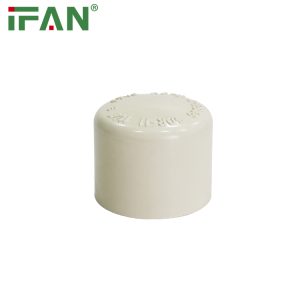
A CPVC Tube Fitting Socket is a permanent, solvent-welded connector designed to join two CPVC pipes end-to-end with a leak-proof seal. Made from chlorinated polyvinyl chloride (CPVC), these sockets are heat-resistant (up to 200°F/93°C) and chemically inert, making them ideal for industrial piping, potable water systems, and corrosive environments. This guide covers design features, installation methods, and best practices for optimal performance.What Is a CPVC Tube Fitting Socket?
A CPVC Tube Fitting Socket (also called a CPVC coupling socket) is a cylindrical sleeve with a smooth interior bore and solvent-weld ends for permanent pipe connections.Key Features:- Material: CPVC resin (ASTM D1784, Cell Class 23447-B) for thermal and chemical resistance.
- Pressure Rating: Up to 400 PSI at 73°F (23°C), decreasing with temperature (e.g., 100 PSI at 180°F/82°C).
- Temperature Range: -4°F to 200°F (-20°C to 93°C) (ASTM D2846).
- Certifications: NSF/ANSI 61 (potable water), ASTM F441 (industrial piping), UL 1821 (fire sprinkler systems).
Why Use a CPVC Tube Fitting Socket?
- Permanent, Leak-Proof Connection Unlike threaded or mechanical fittings, sockets create a homogeneous joint via solvent welding, eliminating thread leakage risks.
- Chemical Resistance CPVC’s chlorine content makes it inert to acids, alkalis, and salts, unlike metal sockets that corrode in hydrochloric acid (HCl) or sodium hypochlorite (bleach).
- Thermal Stability Withstands hot water (up to 200°F) and steam-adjacent systems, outperforming PVC sockets (limited to 140°F).
- Smooth Flow Path The full-bore design minimizes pressure drops, making it suitable for high-flow applications like water treatment plants.
- Cost Efficiency CPVC sockets cost 30–50% less than stainless steel or brass alternatives and require no specialized tools beyond basic solvent-welding equipment.
Types of CPVC Tube Fitting Sockets
- Standard CPVC Sockets
- Design: Plain-end sockets for solvent welding to Schedule 80 CPVC pipes.
- Use Case: Ideal for potable water lines, lab plumbing, and light industrial systems.
- Flanged CPVC Sockets
- Design: Combines a socket end with a flange for bolting to tanks or pumps.
- Use Case: Used in large-diameter wastewater systems (e.g., 8″ CPVC flange sockets).
- Reducing CPVC Sockets
- Design: Connects two pipes of different diameters (e.g., 2″ to 1½”).
- Use Case: Common in chemical processing plants where flow rate adjustments are needed.
- Heat-Resistant CPVC Sockets
- Design: Reinforced with fiberglass for temperatures up to 220°F (104°C).
- Use Case: Suitable for hot oil pipelines and industrial boilers.
Applications of CPVC Tube Fitting Sockets
- Chemical Processing Plants
- Transport sulfuric acid (H₂SO₄), sodium hydroxide (NaOH), and ferric chloride through reactor vessels and storage tanks.
- Potable Water Systems
- Connect municipal water mains and residential plumbing with NSF/ANSI 61-certified sockets.
- Fire Sprinkler Systems
- UL-listed CPVC sockets (e.g., BlazeMaster® CPVC) provide reliable connections in commercial buildings.
- Electroplating & Metal Finishing
- Resist electrolytic corrosion when handling acidic or alkaline plating solutions (e.g., nickel, chrome, or zinc baths).
- HVAC & Chilled Water Systems
- Withstand glycol-based coolants without degradation or scaling.
Installation Guide for CPVC Tube Fitting Sockets
Select the Right Socket- Choose ASTM F441-compliant sockets for industrial use or NSF/ANSI 61-certified for potable water.
- Verify pressure and temperature ratings match system requirements.
- Use a CPVC pipe cutter or fine-tooth saw to make a square, deburred cut.
- Remove burrs with a reaming tool to ensure a smooth fit.
- Slide the socket onto one pipe end and the adjacent pipe into the other end.
- Check for proper alignment (no gaps or misalignment).
- Clean the pipe ends and socket interior with CPVC primer (e.g., Oatey Orange) to soften the surface for bonding.
- Use a medium-duty dauber to apply CPVC solvent cement (e.g., Weld-On 725) evenly on both pipe and socket surfaces.
- Insert the pipe into the socket with a ¼-turn motion to distribute cement evenly.
- Hold the joint for 30 seconds to prevent push-out during curing.
- Allow 2 hours for light pressure and 24 hours for full curing before pressure testing.
- Avoid disturbing the joint during curing to prevent weak bonds.
- Conduct a 2-hour hydrostatic test at 1.5x operating pressure (e.g., 150 PSI for a 100 PSI system).
- Inspect for leaks with a soap solution or ultrasonic leak detector.
Maintenance & Troubleshooting
- Preventive Maintenance:
- Inspect joints annually for cracks or discoloration (signs of chemical attack or UV degradation).
- For chemical systems, verify socket material compatibility (e.g., CPVC resists most acids but not strong oxidizers like nitric acid).
- Common Issues:
- Leaking Joint: Recut the pipe and reinstall the socket (solvent-welded joints cannot be repaired).
- Cracked Socket: Replace immediately if exposed to UV light (CPVC degrades under sunlight without protection).
Related products