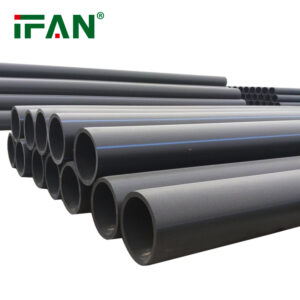
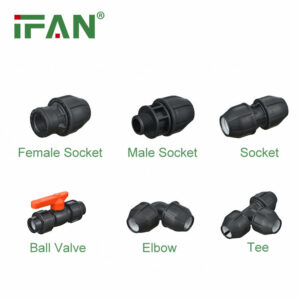
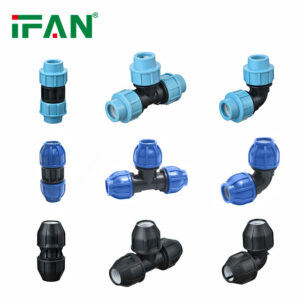
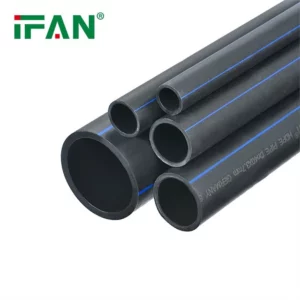
HDPE tube fittings are revolutionizing pipeline systems with their unmatched durability, chemical resistance, and ease of installation. Made from high-density polyethylene (HDPE), these fittings eliminate corrosion, leaks, and maintenance headaches in water, gas, and industrial applications. Whether you’re designing a municipal water network or a chemical processing plant, HDPE fittings offer a cost-effective, long-lasting solution. This guide explores types, advantages, installation steps, and troubleshooting to help you maximize performance.
What Are HDPE Tube Fittings?
HDPE tube fittings are mechanical or fusion-welded components used to connect HDPE pipes in fluid transport systems. Unlike metal fittings that rust or PVC fittings that crack, HDPE fittings resist corrosion, impact, and UV degradation, ensuring 50+ years of reliable service in harsh environments.Key Features:
Material: Virgin HDPE resin (PE100 grade) with density ≥0.941 g/cm³ for high strength.
Temperature Range: Operates from -40°C to 60°C (up to 95°C for short-term use with PE-RT variants).
Pressure Rating: Withstands PN6 to PN25 (6–25 bar) for residential, commercial, and industrial systems.
Certifications: Meets ISO 4427, ASTM D3350, and EN 12201 for potable water safety.
Types of HDPE Tube Fittings
Electrofusion Fittings
Function: Use embedded heating coils activated by an electrofusion machine to melt HDPE surfaces, creating homogeneous, leak-proof joints.
Applications: Underground gas pipelines, potable water mains, and wastewater systems.
Advantage: Zero joint movement after welding, ideal for high-pressure systems.
Butt Fusion Fittings
Function: Heat both pipe ends and fitting using a butt fusion machine, then press together to form a monolithic bond.
Applications: Large-diameter pipelines (e.g., 110mm–1200mm) in irrigation, mining, and industrial slurry transport.
Advantage: Stronger than the pipe itself, with tensile strength >35 MPa.
Mechanical Compression Fittings
Function: Use rubber O-rings and stainless steel clamps to seal connections without welding.
Applications: Temporary installations, emergency repairs, or systems requiring frequent reconfiguration.
Advantage: Reusable and tool-free, saving time during maintenance.
Push-Fit Fittings
Function: Feature barbed inserts and locking rings for quick, secure connections by hand.
Applications: Low-pressure agricultural irrigation, aquaculture, and DIY plumbing projects.
Advantage: No specialized tools required, reducing labor costs.
Advantages of HDPE Tube Fittings
Corrosion Resistance
HDPE fittings are immune to rust from hard water and chemical attack from acids, alkalis, and salts. This makes them ideal for coastal areas and chemical plants.
Impact Strength
With a Charpy impact resistance of >20 kJ/m², HDPE fittings survive accidental impacts during installation or operation, unlike brittle PVC fittings.
Flexibility
HDPE’s elongation at break (500–800%) allows fittings to absorb ground movement without cracking, critical for earthquake-prone regions.
Leak-Proof Joints
Electrofusion and butt fusion create joints stronger than the pipe itself, exceeding AWWA C906 standards for municipal water systems.
Low Maintenance
Unlike metal fittings that require repainting or seal replacement, HDPE fittings operate trouble-free for decades with minimal upkeep.
Applications Across Industries
Municipal Water Supply
Electrofusion fittings connect HDPE water mains in cities, reducing leakage rates by 70% compared to metal pipes.
Push-fit fittings simplify residential plumbing repairs without soldering or gluing.
Gas Distribution
Butt fusion fittings with PE100 material handle natural gas and propane at pressures up to 4 bar, meeting DOT 49 CFR safety standards.
Agricultural Irrigation
UV-stabilized HDPE fittings withstand 10+ years of sun exposure in outdoor fields, outlasting metal fittings that corrode.
Industrial Chemical Transport
Mechanical compression fittings with PTFE seals transport 98% sulfuric acid and sodium hydroxide without degradation.
Mining and Slurry Handling
Butt fusion elbows and tees resist abrasion from sand, gravel, and ore slurries, reducing downtime.
Installation Guide for HDPE Tube Fittings
Pre-Installation Checks
Verify fitting pressure rating matches the pipeline (e.g., PN16 for municipal water).
Inspect pipes for scratches or debris that could weaken joints.
Cutting and Chamfering HDPE Pipes
Use a rotary cutter to make a square cut on HDPE pipes.
Chamfer edges at 15° to avoid damaging fitting sockets during insertion.
Clean pipe ends and fitting sockets with isopropyl alcohol to remove dirt and moisture.
Clamp pipes and fitting in alignment using a fusion machine.
Insert electrofusion couplers into sockets and apply 40V–60V DC current for 5–60 seconds (per manufacturer specs).
Allow 30 minutes for cooling before pressurizing.
Butt Fusion Welding (For Butt Fusion Fittings)
Heat pipe ends and fitting to 210°C–230°C using a butt fusion machine.
Press together with 1.5 bar pressure for 10–30 seconds to form a bond.
Cool for 15 minutes under pressure to prevent voids.
Step 5: Pressure Testing
Conduct a 2-hour hydrostatic test at 1.5x operating pressure (e.g., 24 bar for PN16 systems).
Inspect joints with a soap solution for bubbles indicating leaks.
Maintenance and Troubleshooting
Preventive Maintenance:
For mechanical fittings, tighten clamps annually to compensate for thermal expansion.
For push-fit fittings, check O-rings for cracks every 2 years and replace if needed.
Common Issues:
Leaking Joints: Re-weld using electrofusion if the initial bond was incomplete.
Stuck Fittings: Apply silicone-based lubricant to compression rings; avoid excessive force to prevent breakage.
IFAN factory started in 1993. And IFAN has workshop 120000 square meter with 610 staff. IFAN can design and produce all plumbing pipe and fitting include PPR,PVC,CPVC PPSU HDPE PEXA PEXB PERT pipe and fitting ,brass fitting, brass ball valve ,heating system , gas system , sanitary faucets and hose, In the past 30 Years, IFAN has never forgotten his mission-To protect health and safety. And IFAN factory use best materials to produce high quality pipe and fittings with automatic production line and high tech quality control machines. The most important,IFAN can guarantee that all pipes and fittings manufactured by IFAN are qualified. More information pls feel free contact us Whatsapp.



 HDPE pipe