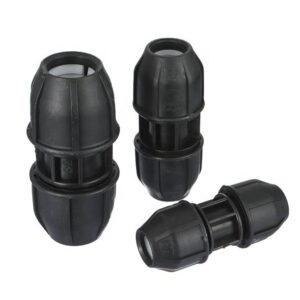
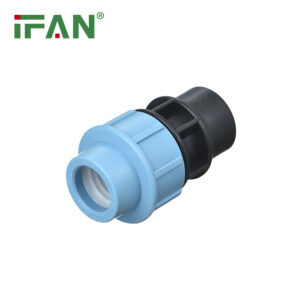
HDPE tube fitting valves are engineered for long-lasting, leak-proof fluid control in pipelines carrying water, gas, chemicals, and wastewater. Made from high-density polyethylene (HDPE), these valves resist corrosion, impact, and UV degradation, making them ideal for outdoor, underground, and industrial environments. This guide covers types, advantages, installation steps, and troubleshooting to help you choose the right valve for your project.
What Is an HDPE Tube Fitting Valve?
An HDPE tube fitting valve is a manual or automated shut-off device designed to connect seamlessly with HDPE pipes using fusion welding (electrofusion or butt fusion) or mechanical compression fittings. Unlike metal valves, HDPE valves eliminate rust, scaling, and chemical reactions, ensuring maintenance-free operation for decades.Key Features:
Material: 100% virgin HDPE resin (PE100 grade) for high tensile strength (25–35 MPa) and chemical resistance.
Temperature Range: Operates from -40°C to 60°C (up to 80°C for short-term use).
Pressure Rating: Withstands PN10 to PN16 (10–16 bar) for municipal water systems and PN25 for industrial applications.
Certifications: Complies with ISO 4427, ASTM D3350, and EN 12201 for potable water safety.
Types of HDPE Tube Fitting Valves
Ball Valves
Function: Uses a rotating ball with a bore to control flow. When open, the ball aligns with the pipe; when closed, it blocks flow.
Applications: Residential water supply, irrigation systems, and gas distribution networks.
Function: Features a circular disc that rotates 90° to open/close. Best for large-diameter pipelines (e.g., 110mm–1200mm).
Applications: Wastewater treatment plants, slurry transport, and fire protection systems.
Advantage: Lightweight and compact, reducing installation costs compared to gate valves.
Diaphragm Valves
Function: Uses a flexible diaphragm to regulate flow, ideal for abrasive or corrosive fluids like acids and slurries.
Applications: Chemical processing, mining, and aquaculture systems.
Advantage: No metal components in contact with fluids, preventing contamination.
Check Valves
Function: Allows flow in one direction only, preventing backflow in sump pumps, sewage systems, and HVAC loops.
Applications: Flood control, industrial cooling towers, and drainage pipelines.
Advantage: Spring-loaded design ensures automatic closure even at low pressures.
Advantages of HDPE Tube Fitting Valves
Corrosion Resistance
HDPE valves are immune to rust from hard water and chemical attack from acids, alkalis, and salts. This makes them ideal for coastal areas and chemical plants.
Impact Strength
With a Charpy impact resistance of >20 kJ/m², HDPE valves survive accidental impacts during installation or operation, unlike brittle PVC valves.
Flexibility
HDPE’s elongation at break (500–800%) allows valves to absorb ground movement without cracking, critical for earthquake-prone regions.
Leak-Proof Joints
Electrofusion welding creates homogeneous joints with zero leakage, exceeding EN 805 standards for gas pipelines.
Low Maintenance
Unlike metal valves that require lubrication and replacement of seals, HDPE valves operate trouble-free for 20+ years with minimal upkeep.
Applications Across Industries
Municipal Water Supply
Ball valves isolate sections of HDPE water mains for repairs without draining the entire system.
Check valves prevent contamination from backflow in potable water networks.
Gas Distribution
PE100 ball valves with metal-to-metal seats handle natural gas and propane at pressures up to 4 bar.
Agricultural Irrigation
UV-stabilized HDPE valves withstand 10+ years of sun exposure in outdoor fields, outlasting metal valves that corrode.
Industrial Chemical Transport
Diaphragm valves with PTFE linings transport 98% sulfuric acid and sodium hydroxide without degradation.
Mining and Slurry Handling
Butterfly valves with rubber-lined discs resist abrasion from sand, gravel, and ore slurries.
Installation Guide for HDPE Tube Fitting Valves
Pre-Installation Checks
Verify valve pressure rating matches the pipeline (e.g., PN16 for municipal water).
Ensure valve orientation aligns with flow direction (marked with an arrow on the body).
Cutting and Chamfering HDPE Pipes
Use a rotary cutter to make a square cut on HDPE pipes.
Chamfer edges at 15° to avoid damaging valve sockets during insertion.
Electrofusion Welding (Recommended Method)
Clean pipe ends and valve sockets with isopropyl alcohol to remove dirt and moisture.
Clamp pipes and valve in alignment using a fusion machine.
Insert electrofusion fittings into sockets and apply 40V–60V DC current for 5–60 seconds (per manufacturer specs).
Allow 30 minutes for cooling before pressurizing.
Pressure Testing
Conduct a 2-hour hydrostatic test at 1.5x operating pressure (e.g., 24 bar for PN16 systems).
Inspect joints with a soap solution for bubbles indicating leaks.
Maintenance and Troubleshooting
Preventive Maintenance:
For ball valves, cycle handles quarter-turn weekly to prevent seat sticking.
For diaphragm valves, check elasticity every 2 years and replace if cracked.
Common Issues:
Leaking Joints: Re-weld using electrofusion if the initial bond was incomplete.
Stuck Valves: Apply silicone-based lubricant to stems; avoid excessive force to prevent breakage.
IFAN factory started in 1993. And IFAN has workshop 120000 square meter with 610 staff. IFAN can design and produce all plumbing pipe and fitting include PPR,PVC,CPVC PPSU HDPE PEXA PEXB PERT pipe and fitting ,brass fitting, brass ball valve ,heating system , gas system , sanitary faucets and hose, In the past 30 Years, IFAN has never forgotten his mission-To protect health and safety. And IFAN factory use best materials to produce high quality pipe and fittings with automatic production line and high tech quality control machines. The most important,IFAN can guarantee that all pipes and fittings manufactured by IFAN are qualified. More information pls feel free contact us Whatsapp.



 PP Fitting 603
 PP Fitting 602
 PP&PE
PP&PE