Plastic UPVC Tee Fittings: Lightweight, Corrosion-Resistant Solutions for Modern Piping Systems
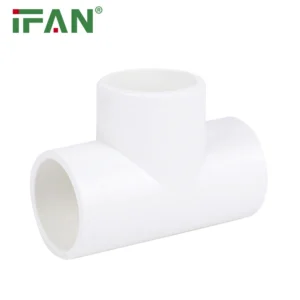
Plastic UPVC (Unplasticized Polyvinyl Chloride) tee fittings are essential components in plumbing, irrigation, and industrial piping systems. Designed to connect three pipes at a 90° angle, these fittings combine the durability of UPVC with ease of installation, making them a cost-effective alternative to metal or traditional PVC fittings. Below is a detailed analysis of their features, applications, and advantages:
Key Features of UPVC Tee Fittings
- Material Properties
- UPVC Composition: Made from rigid, unplasticized PVC, ensuring high tensile strength and resistance to deformation under pressure.
- Chemical Resistance: Withstands acids, alkalis, salts, and most organic solvents, making it ideal for corrosive environments.
- UV Stability: Contains UV additives to prevent degradation when used outdoors, extending service life in agricultural or construction settings.
- Design Variants
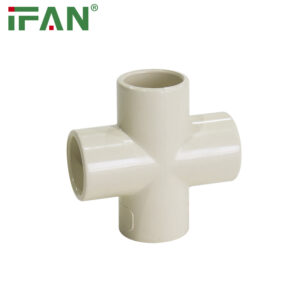
- Equal Tee: All three ports are of the same diameter (e.g., DN50 × DN50 × DN50).
- Reducing Tee: Features ports of different diameters (e.g., DN63 × DN50 × DN63) for diameter transitions.
- Threaded vs. Socket Ends:
- Threaded Tees: Compatible with metal pipes or threaded accessories (e.g., valves, pumps).
- Socket/Plain Ends: Designed for solvent cementing with UPVC pipes, ensuring a leak-proof seal.
- Pressure & Temperature Ratings
- Pressure Class: Typically rated for PN10 (1.0 MPa) or PN16 (1.6 MPa), suitable for medium-pressure applications.
- Temperature Range: Safe for use between 0°C to 60°C (short-term exposure up to 80°C in some variants).
- Color Options
- Standard colors include grey, white, or blue, with custom colors available upon request for identification purposes (e.g., blue for potable water).
Primary Applications
- Water Supply Systems
- Residential plumbing: Branching pipes for sinks, showers, and toilets.
- Municipal networks: Distributing water in underground pipelines with minimal corrosion risk.
- Agricultural Irrigation
- Connecting drip lines or sprinkler branches in large-scale farming.
- Resistant to soil chemicals and UV exposure, ensuring long-term reliability.
- Industrial Piping
- Transporting chemicals, saltwater, or wastewater in factories, electroplating plants, and food processing units.
- Alternative to stainless steel in non-critical applications due to lower costs.
- Electrical Conduit Systems
- Some UPVC tees are engineered for electrical installations, providing thermal insulation and protection against electrical leakage.
Advantages Over Alternative Materials
| Feature | UPVC Tee Fittings | Metal Tees (Steel/Brass) | PVC Tees (Plasticized) |
|---|---|---|---|
| Corrosion Resistance | Excellent (no rusting) | Poor (prone to rust) | Moderate (may degrade over time) |
| Weight | Lightweight (easy handling) | Heavy (requires machinery) | Light but less rigid |
| Cost | Low (affordable) | High (material + labor) | Moderate |
| Installation Ease | Solvent cementing/threading | Welding/threading required | Solvent cementing only |
| Chemical Resistance | High (wide range) | Limited (depends on metal) | Low (plasticizers may react) |
Installation Guidelines
- For Solvent Cementing (Socket Ends)
- Cut pipes squarely and deburr edges to ensure a clean fit.
- Apply UPVC-specific solvent cement evenly to both the fitting and pipe.
- Insert the pipe fully into the tee and hold for 30 seconds to set.
- For Threaded Connections
- Wrap PTFE tape around male threads to prevent leaks.
- Hand-tighten first, then use a wrench for a final ¼-turn to avoid over-tightening.
- Support & Alignment
- Use pipe clamps every 1.5 meters to prevent sagging.
- Ensure the tee is aligned correctly to avoid stress on joints.
- Pressure Testing
- Conduct a hydrostatic test at 1.5x the working pressure to check for leaks before commissioning.
Maintenance Tips
- Regular Inspections: Check for cracks, leaks, or loose threads every 6–12 months.
- Avoid Chemical Exposure: While UPVC resists most chemicals, prolonged contact with strong oxidizers (e.g., concentrated acids) may damage the fitting.
- Temperature Control: Prevent exposure to temperatures beyond the rated range to avoid material deformation.
Conclusion
Plastic UPVC tee fittings offer a durable, cost-effective, and easy-to-install solution for branching pipes in diverse applications. Their resistance to corrosion, chemicals, and UV radiation, coupled with lightweight design, makes them a preferred choice for plumbers, farmers, and industrial operators worldwide.
IFAN factory started in 1993. And IFAN has workshop 120000 square meter with 610 staff. IFAN can design and produce all plumbing pipe and fitting include PPR,PVC,CPVC PPSU HDPE PEXA PEXB PERT pipe and fitting ,brass fitting, brass ball valve ,heating system , gas system , sanitary faucets and hose, In the past 30 Years, IFAN has never forgotten his mission-To protect health and safety. And IFAN factory use best materials to produce high quality pipe and fittings with automatic production line and high tech quality control machines. The most important,IFAN can guarantee that all pipes and fittings manufactured by IFAN are qualified. More information pls feel free contact us Whatsapp.
Related products
 CPVC ASTM2846
CPVC Cross Tee Fitting
- PVC
IFAN PVC Glue
- CPVC ASTM2846
IFANPLUS CPVC Pipe Fitting