High-Pressure Applications: Can HDPE Thread Elbows Handle the Stress?
Introduction
HDPE (High-Density Polyethylene) thread elbows are commonly used in plumbing and industrial piping systems due to their flexibility, chemical resistance, and ease of installation. However, when subjected to high-pressure applications, concerns arise about their strength and long-term performance. This article explores whether HDPE thread elbows can handle high-pressure environments and how to optimize their usage.
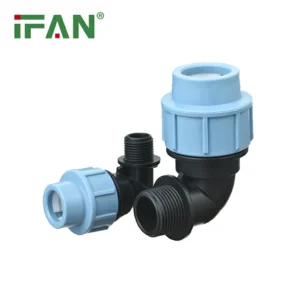
Understanding HDPE Thread Elbows
HDPE thread elbows are designed to change the direction of flow in a piping system while providing a secure threaded connection. They offer several advantages:
- Corrosion Resistance: Unlike metal fittings, HDPE does not rust or corrode.
- Flexibility: It can absorb pressure fluctuations better than rigid materials.
- Lightweight: Easier to transport and install compared to metal alternatives.
Pressure Resistance of HDPE Material
HDPE has excellent strength-to-weight properties, but its pressure resistance depends on factors such as:
- Material Grade: PE100 HDPE provides higher pressure tolerance than PE80.
- Wall Thickness: A thicker wall improves the fitting’s ability to withstand high pressures.
- Operating Temperature: HDPE’s pressure resistance decreases at elevated temperatures.
Typically, HDPE pipes and fittings are rated for pressures ranging from 4 bar (58 psi) to 16 bar (232 psi), depending on their specifications.
Can HDPE Thread Elbows Handle High-Pressure Applications?
While HDPE is suitable for many applications, threaded connections introduce weak points, especially under high pressure. Key considerations include:
- Thread Integrity: Over-tightening or cross-threading can weaken the joint and cause leaks.
- Reinforcement Needs: Using metal inserts or transition fittings can improve thread durability.
- Application-Specific Limits: For extremely high-pressure needs, fusion-welded HDPE joints may be preferable over threaded connections.
Best Practices for Using HDPE Thread Elbows in High-Pressure Systems
To enhance the performance and longevity of HDPE thread elbows in high-pressure applications:
- Use Reinforced Fittings: Consider brass or stainless-steel inserts for added strength.
- Ensure Proper Installation: Avoid over-tightening and apply PTFE tape to prevent leaks.
- Monitor Temperature and Pressure: Do not exceed the manufacturer’s rated pressure and temperature limits.
- Regular Inspection: Check for signs of stress, leaks, or deformation.
- Consider Alternative Jointing Methods: If pressure requirements exceed threaded joint capabilities, opt for electrofusion or butt-fusion connections.
Conclusion
HDPE thread elbows can handle moderate pressure applications effectively, but their performance in high-pressure environments depends on proper selection, installation, and reinforcement. For extreme pressure conditions, alternative connection methods like fusion welding may be a more reliable choice. Ensuring compliance with manufacturer guidelines and industry best practices will maximize durability and safety in high-pressure systems.
IFAN factory started in 1993. And IFAN has workshop 120000 square meter with 610 staff. IFAN can design and produce all plumbing pipe and fitting include PPR,PVC,CPVC PPSU HDPE PEXA PEXB PERT pipe and fitting ,brass fitting, brass ball valve ,heating system , gas system , sanitary faucets and hose, In the past 30 Years, IFAN has never forgotten his mission-To protect health and safety. And IFAN factory use best materials to produce high quality pipe and fittings with automatic production line and high tech quality control machines. The most important,IFAN can guarantee that all pipes and fittings manufactured by IFAN are qualified. More information pls feel free contact us Whatsapp.
Related products
 Uncategorized
Male Threaded UPVC Tee
- Uncategorized
IFAN PEX Floor Heating Pipes

- Uncategorized
Brass Tap