HDPE Socket Fittings: Complete Technical Guide
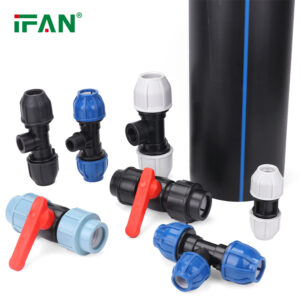
HDPE socket fittings are essential components in high-density polyethylene piping systems, designed to create strong, reliable connections between pipes and other system elements. These fittings feature a socket end that accepts the pipe through thermal fusion, forming a joint that matches the strength of the pipe itself. Available in various configurations including elbows, tees, reducers, and end caps, socket fittings provide comprehensive solutions for building complete HDPE piping networks.
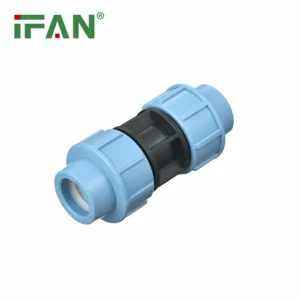
The primary advantage of HDPE socket fittings lies in their ability to establish permanent, leak-proof connections without requiring additional sealing materials. The fusion process creates a homogeneous joint that maintains the excellent chemical resistance and flexibility of HDPE material. These fittings feature smooth interior surfaces that ensure minimal flow resistance and prevent sediment buildup. Their lightweight nature facilitates easy handling and installation while offering superior resistance to corrosion, chemical degradation, and environmental stress cracking.
Product Specifications
HDPE socket fittings meet international standards including ISO 4427 and ASTM D3261. Standard sizes range from 20mm to 1200mm, accommodating various HDPE pipe dimensions. Pressure ratings typically include PN6, PN10, and PN16 classifications, supporting working pressures up to 16 bar at 20°C. Temperature tolerance spans from -40°C to 60°C, suitable for diverse environmental conditions. Available configurations include straight couplings, 90-degree and 45-degree elbows, equal and reducing tees, reducers, and end caps. Materials include PE80 and PE100 compounds, with PE100 providing enhanced pressure resistance and long-term performance.
Installation Guidelines
Proper installation requires precise execution of the socket fusion process. Begin by cutting the pipe end square and removing any burrs or irregularities. Mark the insertion depth on the pipe according to manufacturer specifications. Use a calibrated socket fusion tool to heat both the fitting socket and pipe end simultaneously, maintaining the recommended temperature between 210°C and 230°C. After the appropriate heating time, immediately join the components without twisting and maintain firm pressure during the cooling period. Allow complete cooling before handling or pressurizing the system. Always follow manufacturer’s instructions for heating times, fusion pressures, and cooling durations to ensure optimal joint integrity.
Applications and Industry Uses
HDPE socket fittings serve critical functions across multiple industrial sectors. Water distribution systems utilize them for mainline construction, service connections, and system repairs. Gas distribution networks employ these fittings for pipeline installations and maintenance operations. Mining and industrial operations use socket fittings for slurry transport systems and process piping. Agricultural irrigation systems incorporate these components for water distribution networks and field installations. Marine and offshore applications utilize HDPE socket fittings for water intake and outfall systems.
Maintenance and System Integrity
Regular inspection should focus on the external condition of fusion joints and overall system support. Monitor for signs of stress, deformation, or damage at connection points. Ensure proper pipeline support to prevent mechanical stress on the fused joints. While socket fusion creates permanent connections, periodic visual inspection helps maintain system integrity and identify potential issues early. Maintain appropriate spare fittings and fusion equipment for system modifications, repairs, or emergency situations.
Conclusion
HDPE socket fittings provide reliable and permanent connection solutions for high-density polyethylene piping systems. Their fusion joint technology ensures leak-proof performance while maintaining the excellent chemical resistance and flexibility of HDPE material. Proper selection based on size, pressure rating, and material compatibility ensures optimal system performance. Following correct fusion procedures and installation practices guarantees long-term reliability and system integrity. These fittings form the foundation of modern HDPE piping networks across various industrial and municipal applications.
IFAN factory started in 1993. And IFAN has workshop 120000 square meter with 610 staff. IFAN can design and produce all plumbing pipe and fitting include PPR,PVC,CPVC PPSU HDPE PEXA PEXB PERT pipe and fitting ,brass fitting, brass ball valve ,heating system , gas system , sanitary faucets and hose, In the past 30 Years, IFAN has never forgotten his mission-To protect health and safety. And IFAN factory use best materials to produce high quality pipe and fittings with automatic production line and high tech quality control machines. The most important,IFAN can guarantee that all pipes and fittings manufactured by IFAN are qualified. More information pls feel free contact us Whatsapp.
Related products
 PP Fitting 603
IFAN Customization HDPE Fittings
- HDPE pipe
IFAN HDPE Pipe
- PP Fitting 601
PP Fittings
- PP Fitting 601
PP female socket