

Understanding Pressure Ratings for HDPE Pipe Fittings
Introduction
HDPE (High-Density Polyethylene) pipe fittings are widely used in various applications, from water supply to industrial fluid transport. One of the most critical factors when selecting HDPE fittings is their pressure rating. Understanding pressure ratings ensures that the system can handle the expected operating pressure without failure, leakage, or excessive wear. This article explores HDPE pipe fitting pressure ratings, factors affecting them, and how to select the right fittings for different applications.
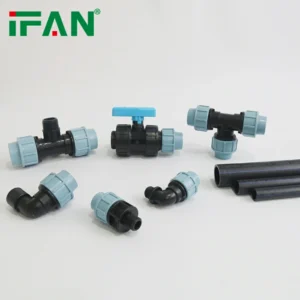
What Are Pressure Ratings for HDPE Pipe Fittings?
Pressure ratings define the maximum operating pressure that an HDPE fitting can withstand under normal conditions. These ratings are usually expressed in pounds per square inch (PSI) or bar, with common classifications such as:
PN 6 (6 bar / 87 PSI) – Low-pressure applications
PN 10 (10 bar / 145 PSI) – Medium-pressure systems
PN 16 (16 bar / 232 PSI) – High-pressure use
PN 25 (25 bar / 363 PSI) – Industrial high-pressure systems
The pressure rating of an HDPE fitting depends on various factors, including material grade, pipe wall thickness, and temperature conditions.
Factors That Affect HDPE Fitting Pressure Ratings
1. Material Grade
Different grades of HDPE offer varying strength and durability. The most common grades include:
PE 63 – Lower pressure capacity, suitable for small water supply systems
PE 80 – Medium-strength, used in water and gas distribution
PE 100 – High-strength, ideal for high-pressure and industrial applications
HDPE PE 100 fittings, for example, can handle much higher pressure than PE 63 due to their superior molecular structure and density.
2. Pipe Wall Thickness and SDR Rating
The Standard Dimension Ratio (SDR) is crucial in determining an HDPE fitting’s pressure rating. SDR is the ratio of the pipe’s outer diameter to its wall thickness.
Formula:
SDR=Outer DiameterWall ThicknessSDR = \frac{\text{Outer Diameter}}{\text{Wall Thickness}}
A lower SDR means a thicker wall and higher pressure resistance. Common SDR values include:
SDR 26 – Low pressure
SDR 17 – Medium pressure
SDR 11 – High pressure
SDR 9 – Extra high pressure
For example, an HDPE pipe with SDR 11 can handle higher pressures than an SDR 17 pipe of the same diameter.
3. Temperature Variations
HDPE fittings’ pressure ratings decrease as temperature increases. HDPE maintains its strength in cold environments but becomes softer at higher temperatures.
At 20°C (68°F) – The pressure rating is at 100% capacity
At 40°C (104°F) – The pressure rating drops to 50-60% of its original value
At 60°C (140°F) – Pressure resistance decreases significantly
When installing HDPE pipes in high-temperature environments, choosing thicker-walled fittings or lower SDR ratings ensures long-term reliability.
4. Jointing Method and Fusion Welding
HDPE fittings are often connected using methods like butt fusion, electrofusion, or compression fittings. Poor welding or incorrect fusion parameters can weaken the system, reducing pressure tolerance.
Butt Fusion – Provides a seamless, strong joint with a pressure rating equal to the pipe itself.
Electrofusion – Ideal for high-pressure applications but requires precise temperature control.
Mechanical Joints – Suitable for low to medium pressure but may leak if improperly installed.
Using the correct fusion technique and following manufacturer guidelines ensures the fittings maintain their full pressure rating.
5. External Factors: Soil Load and Buried Installations
For underground HDPE pipe systems, external pressure from soil, traffic, and water table fluctuations can impact the overall pressure rating. Choosing reinforced fittings and conducting a proper stress analysis helps prevent deformation or collapse.
Selecting the Right Pressure-Rated HDPE Fittings
When choosing HDPE fittings, consider the following:
Determine System Pressure Requirements
Municipal water systems may need PN 10 or PN 16 fittings.
Industrial and mining applications may require PN 25 fittings.
Check Temperature Conditions
For environments above 40°C (104°F), adjust pressure ratings accordingly.
Choose the Right SDR Rating
Lower SDR (thicker walls) for high-pressure applications.
Higher SDR (thinner walls) for low-pressure systems.
Ensure Proper Jointing Methods
Use butt fusion or electrofusion for high-pressure installations.
Ensure leak-proof connections to prevent pressure loss.
Consider External Loads for Buried Pipes
Use protective coatings or casing where external loads are high.
Conclusion
Understanding pressure ratings for HDPE pipe fittings is crucial for designing reliable piping systems. Factors such as material grade, SDR rating, temperature effects, and jointing methods influence pressure capacity. By selecting the right pressure-rated fittings and ensuring proper installation, you can maximize performance, safety, and durability in both residential and industrial applications.
IFAN factory started in 1993. And IFAN has workshop 120000 square meter with 610 staff. IFAN can design and produce all plumbing pipe and fitting include PPR,PVC,CPVC PPSU HDPE PEXA PEXB PERT pipe and fitting ,brass fitting, brass ball valve ,heating system , gas system , sanitary faucets and hose, In the past 30 Years, IFAN has never forgotten his mission-To protect health and safety. And IFAN factory use best materials to produce high quality pipe and fittings with automatic production line and high tech quality control machines. The most important,IFAN can guarantee that all pipes and fittings manufactured by IFAN are qualified. More information pls feel free contact us Whatsapp.
Related products
 PP Fitting 601
HDPE Pipe Fitting For Irrigation
- PP Fitting 601
IFAN HDPE Pipe Fittings
- HDPE pipe
HDPE
- PP Fitting 601
IFAN PP Fitting PP601