

PPR Ball Valve: The Ultimate Guide to Performance, Durability, and Versatility
1. Introduction to PPR Ball Valves
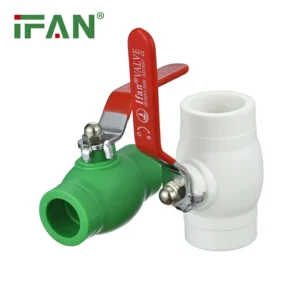
PPR (Polypropylene Random Copolymer) ball valves are engineered for precision fluid control in residential, commercial, and industrial plumbing systems. Combining the durability of polypropylene with the efficiency of a ball valve design, these valves regulate the flow of water, chemicals, and gases with minimal pressure loss. Their lightweight construction, corrosion resistance, and ease of installation make them a preferred choice for modern piping networks.
2. Key Features of PPR Ball Valves
- Material Excellence:
- Made from PPR, a thermoplastic polymer known for its high impact strength, chemical resistance, and thermal stability.
- Resistant to acids, alkalis, and UV degradation, ensuring longevity in harsh environments.
- Corrosion-Free Performance:
- Unlike metal valves, PPR does not rust or corrode, making it ideal for potable water systems and chemical transport.
- High Temperature & Pressure Tolerance:
- Operates in temperatures ranging from -20°C to +95°C and pressures up to 25 bar, suitable for hot water applications and industrial processes.
- Smooth Flow Design:
- The spherical disc allows unrestricted fluid passage, reducing turbulence and energy consumption.
- Minimizes scaling and sediment buildup, maintaining consistent performance over time.
- Easy Installation & Maintenance:
- Lightweight and ergonomic, simplifying handling and installation.
- Socket fusion welding creates leak-proof joints without adhesives or threading.
- Requires minimal maintenance due to its non-corrosive nature.
- Eco-Friendly & Sustainable:
- PPR is 100% recyclable, reducing environmental impact.
- Low thermal conductivity minimizes energy loss in heating systems.
3. Technical Specifications
- Material: PPR (Random Copolymer) with optional brass or stainless steel components for enhanced durability.
- Nominal Diameter (DN): DN15, DN20, DN25, DN32, DN40, DN50, DN63.
- Pressure Rating: PN16-25 (16-25 bar).
- Temperature Range: -20°C to +95°C (standard); specialized variants withstand up to +110°C.
- Connection Type: Socket welding for secure, permanent joints.
- Certifications: SGS, CE, ISO, DIN 8077-8078, ensuring compliance with global standards.
4. Applications Across Industries
- Residential Plumbing:
- Controls hot/cold water supply in homes, apartments, and hospitals.
- Used in underfloor heating, radiator systems, and solar water heaters.
- Commercial Buildings:
- Manages water distribution in hotels, schools, and office complexes.
- Integral to HVAC systems, fire sprinklers, and irrigation networks.
- Industrial Processes:
- Transports chemicals, acids, and compressed gases in factories.
- Ideal for water treatment plants, cooling towers, and process piping.
- Agriculture & Horticulture:
- Optimizes irrigation by delivering water and fertilizers precisely to crops.
- Withstands outdoor UV exposure and fertilizer corrosion.
- Renewable Energy:
- Regulates fluid flow in geothermal heating systems and solar thermal loops.
5. Advantages Over Traditional Valves
| Feature | PPR Ball Valve | Metal Ball Valve | PVC Ball Valve |
|---|---|---|---|
| Corrosion Resistance | Excellent | Poor (rusts) | Fair (degrades in UV) |
| Weight | Lightweight | Heavy | Lightweight |
| Thermal Stability | -20°C to +95°C | -20°C to +300°C | 0°C to +60°C |
| Installation Ease | Easy (fusion welding) | Moderate (threading) | Easy (gluing) |
| Lifespan | 50+ years | 20–30 years | 10–20 years |
| Cost Efficiency | High (long-term savings) | Low (initial cost) | Moderate |
6. Case Study: Industrial Chemical Transport
Project: Chemical Plant Piping System
- Challenge: Frequent valve failures due to corrosion from acidic chemicals.
- Solution: Replaced metal valves with PPR ball valves (DN40, PN25) for chemical transport lines.
- Results:
- Eliminated corrosion-related leaks, reducing downtime by 70%.
- Lowered maintenance costs by 50% over two years.
- Improved safety by preventing chemical spills.
7. Installation & Maintenance Tips
- Proper Welding: Use a PPR fusion welder to create airtight joints. Avoid overheating to prevent material degradation.
- Pressure Testing: Conduct a hydrostatic test (1.5x working pressure) before commissioning.
- Regular Inspection: Check for cracks, leaks, or debris buildup annually.
- Avoid Impact: Protect valves from physical damage during installation or operation.
8. Conclusion
PPR ball valves offer a winning combination of durability, efficiency, and sustainability. Their resistance to corrosion, high temperature tolerance, and eco-friendly design make them indispensable in modern plumbing systems. Whether for residential, commercial, or industrial use, PPR ball valves provide reliable performance with minimal maintenance.
IFAN factory started in 1993. And IFAN has workshop 120000 square meter with 610 staff. IFAN can design and produce all plumbing pipe and fitting include PPR,PVC,CPVC PPSU HDPE PEXA PEXB PERT pipe and fitting ,brass fitting, brass ball valve ,heating system , gas system , sanitary faucets and hose, In the past 30 Years, IFAN has never forgotten his mission-To protect health and safety. And IFAN factory use best materials to produce high quality pipe and fittings with automatic production line and high tech quality control machines. The most important,IFAN can guarantee that all pipes and fittings manufactured by IFAN are qualified. More information pls feel free contact us Whatsapp.
Related products

- PPR
PPR Pipe
 PPR
PPRPPR Fittings
- PPR
IFAN PPR Pipe