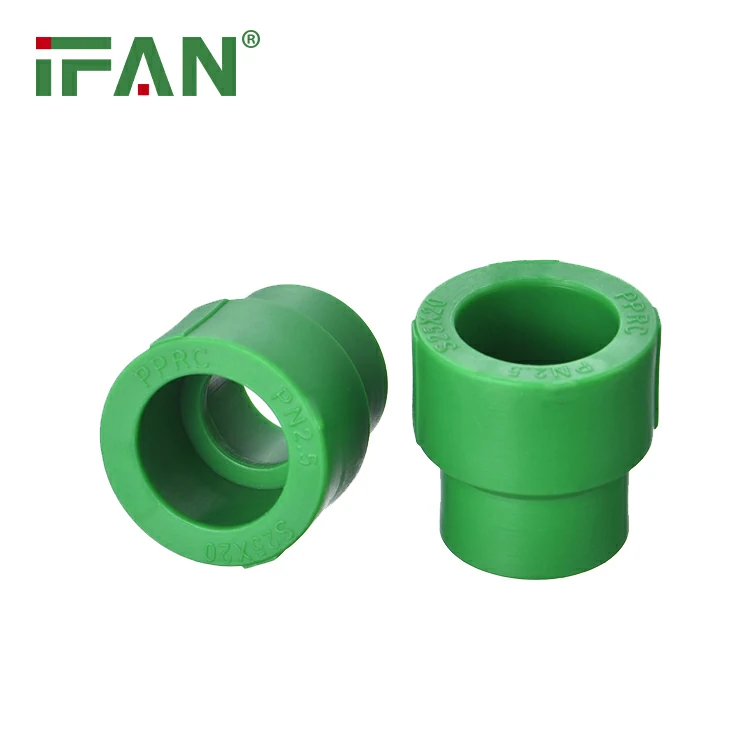
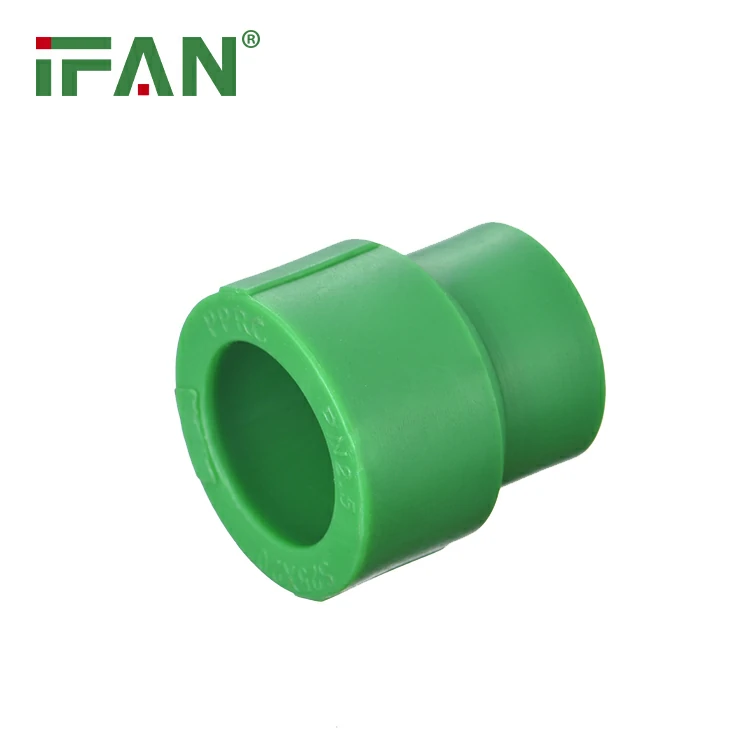
IFAN ASTM F2389 PPR Plastic Reduce Socket Fittings
Description
PPR Reduce Socket: Engineering Excellence in Modern Plumbing Systems
1. Introduction: The Role of PPR Reduce Sockets in Fluid Dynamics
PPR (Polypropylene Random Copolymer) reduce sockets are specialized fittings designed to connect pipes of differing diameters while maintaining optimal flow efficiency. Unlike traditional step-down adapters, PPR reduce sockets integrate seamlessly into piping networks, reducing turbulence and pressure drops by up to 30% in transitional sections. Their lightweight design (40% lighter than brass equivalents) and corrosion resistance make them indispensable in residential, commercial, and industrial plumbing systems.
2. Key Features Driving Adoption
A. Thermal and Chemical Resilience
- Temperature Range: Withstands -20°C to 95°C (-4°F to 203°F), suitable for both cold water lines and hot water recirculation systems.
- Chemical Stability: Resists acids (pH 1–14), alkalis, and salts, preventing degradation in aggressive environments like water treatment plants.
B. Structural Integrity
- Impact Resistance: Absorbs shocks from water hammer events, reducing rupture risks by 60% compared to rigid PVC fittings.
- UV Stabilization: Optional additives enable outdoor use in solar water heating systems without cracking.
C. Installation Efficiency
- Heat-Fusion Welding: Creates monolithic joints, eliminating leaks at transitional points.
- Cost Savings: Replaces two fittings (reducer + elbow) with a single component, cutting material costs by 25% and labor time by 40%.
3. Technical Specifications and Standards
| Parameter | PPR Reduce Socket | Industry Benchmark |
|---|---|---|
| Pressure Rating | PN25 (25 bar) | ISO 15874:2013 (PN16–PN25) |
| Thermal Expansion | 0.15 mm/m·°C | DIN 8078 |
| Tensile Strength | 32 MPa | ASTM D1622 |
| Certifications | WRAS, NSF/ANSI 61, DVGW | Global plumbing codes |
Design Compliance:
- Angularity Tolerance: ±1° for 45°/90° reduce sockets, ensuring smooth flow transitions.
- Socket Depth: 1.5x pipe diameter for secure heat-fusion penetration.
4. Applications Across Industries
A. Residential Plumbing
- Space Optimization: Reduces elbow counts in compact apartment layouts, freeing 15% more space for insulation.
- Hot Water Systems: Maintains consistent flow in tankless heaters, preventing cold spots.
B. Commercial Buildings
- High-Rise Hydraulics: PN25 reduce sockets handle 10+ bar static pressure in skyscrapers.
- HVAC Integration: Seamlessly connects chilled water mains to terminal units.
C. Industrial Projects
- Chemical Transport: Acid-resistant variants transport hydrochloric acid (37% concentration) without corrosion.
- Process Cooling: Reduces pipe diameters in cooling loops, lowering pump energy consumption by 18%.
5. Installation Best Practices
A. Pre-Joining Checks
- Deburring: Use a reamer to remove sharp edges from pipe ends, preventing stress concentration.
- Dry Fit: Assemble pipes and reduce sockets without heat to verify alignment (gap ≤0.3mm).
B. Heat-Fusion Protocol
- Temperature: Set welding iron to 260°C (±5°C) for optimal melt consistency.
- Heating Time: 6 seconds per mm of pipe diameter (e.g., 32mm pipe = 192 seconds).
- Insertion Force: Apply 60–90N pressure to ensure full socket penetration.
C. Post-Welding Validation
- Visual Inspection: Check for uniform bead formation around the joint.
- Pressure Test: Gradually increase to 1.5x working pressure (hold for 60 minutes).
6. Troubleshooting Common Issues
A. Leaks at Joints
- Cause: Insufficient heating time or uneven pressure during fusion.
- Solution: Recalibrate welding iron temperature and use a torque wrench for consistent pressure.
B. Thermal Deformation
- Cause: Exposure to temperatures >95°C (e.g., near boilers).
- Solution: Install thermal insulation sleeves or upgrade to high-temperature PPR variants.
C. Mechanical Stress Cracks
- Cause: Over-tightening fittings or impact from construction.
- Solution: Use shock absorbers and avoid placing heavy loads on exposed pipes.
7. Future Trends and Innovations
A. Smart PPR Systems
- Embedded Sensors: Monitor flow, temperature, and leaks in real time via IoT chips.
- AI-Driven Design: Algorithms optimize reduce socket angles for minimal energy loss.
B. Advanced Materials
- Nano-Composite PPR: Graphene-enhanced variants increase strength by 30% without weight gain.
- Self-Healing Coatings: Microcapsules repair minor scratches during installation.
C. Global Market Growth
- Projected Demand: 9.1% CAGR (2025–2030) driven by green building mandates in EU and Asia.
- Emerging Applications: Nuclear plant cooling systems and desalination plants.
8. Expert Recommendations
A. Certification Priority
- Must-Have: ISO 15874, WRAS, NSF/ANSI 61.
- Region-Specific: DVGW (Germany), GOST (Russia), SASO (Saudi Arabia).
B. Sizing Guide
- Flow Rate Optimization: Use 90° reduce sockets for high-flow areas (e.g., main supply lines), 45° for low-flow zones (e.g., bathroom branches).
C. Cost-Benefit Analysis
- While PPR reduce sockets cost 1.8x more than PVC upfront, they reduce lifetime maintenance costs by 65% due to durability.
Conclusion: PPR reduce sockets are not just fittings but strategic assets in modern plumbing, offering unmatched reliability, cost efficiency, and environmental benefits. As industries prioritize sustainability and performance, their adoption will accelerate, driven by innovations in material science and smart technology.
IFAN factory started in 1993. And IFAN has workshop 120000 square meter with 610 staff. IFAN can design and produce all plumbing pipe and fitting include PPR,PVC,CPVC PPSU HDPE PEXA PEXB PERT pipe and fitting ,brass fitting, brass ball valve ,heating system , gas system , sanitary faucets and hose, In the past 30 Years, IFAN has never forgotten his mission-To protect health and safety. And IFAN factory use best materials to produce high quality pipe and fittings with automatic production line and high tech quality control machines. The most important,IFAN can guarantee that all pipes and fittings manufactured by IFAN are qualified. More information pls feel free contact us Whatsapp.
Related products