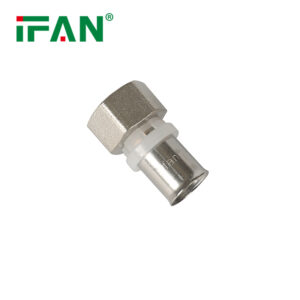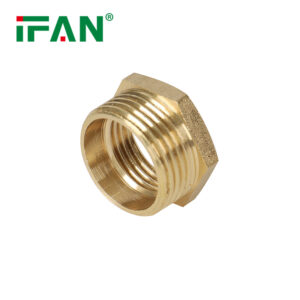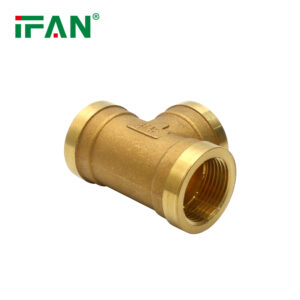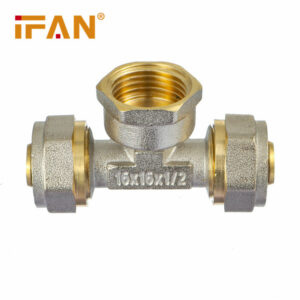

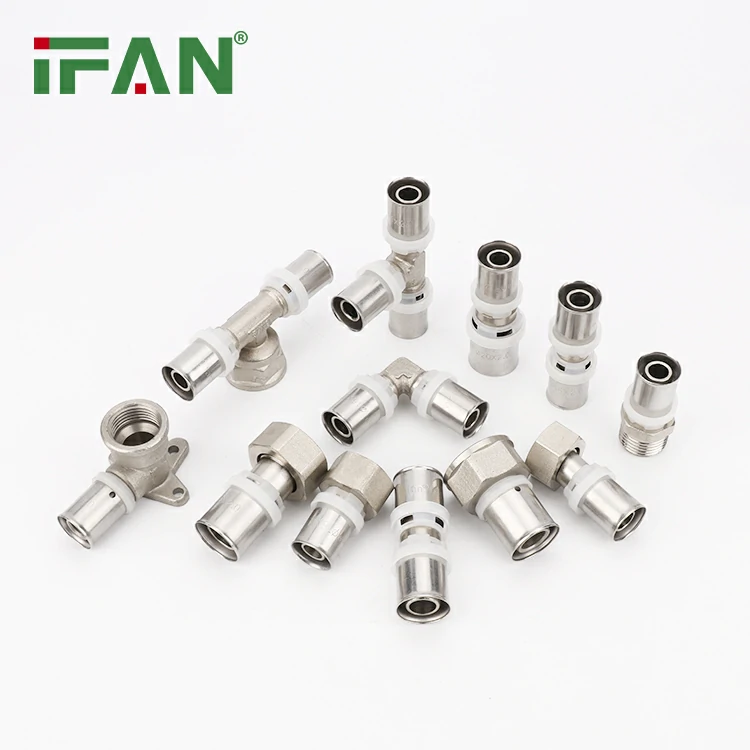

Brass Press Fittings: The Pinnacle of Reliability in Modern Pipe Systems
1. Introduction: Redefining Plumbing Efficiency
Brass press fittings have emerged as the cornerstone of modern plumbing, offering a seamless blend of durability, speed, and versatility. Unlike traditional soldered or threaded joints, which require skilled labor and time-consuming processes, brass press fittings utilize mechanical pressing technology to create permanent, leak-proof connections in seconds. This innovation addresses critical challenges in construction, industrial maintenance, and residential upgrades, making it a preferred choice for engineers and contractors worldwide.
2. Composition and Design: The Science Behind Strength
Material Excellence:
- Brass Alloy: Composed of 60–70% copper and 30–40% zinc, brass provides exceptional resistance to corrosion, dezincification, and thermal stress. Its malleability allows for precise machining, while its hardness ensures longevity.
- Stainless-Steel Sleeve: Typically 304 or 316L grade, the sleeve resists abrasion, chemicals, and high-pressure environments. Its non-magnetic properties make it suitable for medical and food-grade applications.
- O-Ring Seal: Made from EPDM (ethylene propylene diene monomer) or FKM (fluorocarbon rubber), the O-ring compensates for pipe irregularities, ensuring a hermetic seal even under vibration or temperature fluctuations.
Structural Features:
- Color-Coded Identification: Fittings are marked with colors (e.g., blue for cold water, red for hot water) to prevent misapplication.
- Beveled Edges: Reduce friction during pipe insertion, minimizing damage to the pipe’s surface.
- Internal Stop: Ensures consistent insertion depth, preventing over- or under-insertion.
Pressing Mechanism:
- The pipe is inserted into the fitting until it contacts the internal stop.
- A hydraulic or manual press tool compresses the stainless-steel sleeve around the pipe, creating a mechanical interlock.
- The O-ring is simultaneously compressed, forming a secondary seal against the pipe’s outer surface.
This dual-action design eliminates the need for adhesives, fluxes, or heat, reducing installation errors and material waste.
3. Performance Advantages: Why Brass Press Fittings Outperform
Speed and Labor Efficiency:
- A single joint can be pressed in 5–10 seconds, compared to 2–5 minutes for soldering. This efficiency cuts labor costs by up to 40% in large-scale projects.
- No pre-heating, cooling, or cleaning steps are required, enabling continuous workflow.
Reliability Under Pressure:
- The mechanical interlock between the stainless-steel sleeve and pipe withstands pressures up to 200 PSI (13.8 bar), exceeding standard plumbing requirements.
- Vibration resistance makes them ideal for seismic zones or industrial machinery applications.
Corrosion Resistance:
- Brass’s passive oxide layer protects against tarnishing, while stainless steel resists pitting and crevice corrosion in chlorinated water or acidic environments.
- FKM O-rings tolerate temperatures up to 400°F (204°C), making them suitable for steam applications.
Safety and Compliance:
- No open flames or toxic fumes are produced, reducing fire risks and the need for ventilation.
- Certifications such as NSF/ANSI 61 (potable water), ASTM B280 (air conditioning), and UL 207 (gas) ensure compliance with global standards.
4. Diverse Applications: From Homes to High-Tech Industries
Residential Plumbing:
- Used in potable water systems, radiant floor heating, and snowmelt installations. Their quiet operation and resistance to water hammer make them ideal for luxury homes.
- Compatibility with PEX, copper, and multilayer pipes simplifies retrofitting in older buildings.
Commercial Construction:
- High-rise buildings leverage press fittings for their speed, reducing construction timelines by 30% or more.
- Hospitals and laboratories use them for sterile water networks, where leaks could compromise patient safety.
Industrial Systems:
- Chemical plants employ brass press fittings for transporting acids, solvents, and alkalis, withstanding pH levels from 2 to 12.
- Data centers use them in cooling loops, where downtime due to leaks is unacceptable.
- Wastewater treatment plants benefit from their resistance to scaling and biofouling.
Emerging Markets:
- Geothermal energy systems use press fittings for their ability to handle high temperatures (up to 250°F/121°C) and corrosive fluids.
- Hydrogen fuel pipelines are exploring brass press fittings for their leak-proof performance under high pressure (up to 1,000 PSI/69 bar).
5. Market Dynamics: Growth, Trends, and Regional Insights
Global Expansion:
- The brass press fitting market is projected to reach $4.2 billion by 2032, growing at a 6.5% CAGR from 2024 to 2032.
- North America dominates with a 38% market share, driven by residential renovations and smart home integrations.
- Asia-Pacific is the fastest-growing region, with governments promoting PEX systems in affordable housing projects.
Technological Innovations:
- Smart Press Tools: IoT-enabled devices verify press quality in real time, providing instant feedback to installers.
- Eco-Friendly Materials: Recycled brass and biodegradable O-rings reduce environmental impact.
- Multi-Layer Fittings: Integrate oxygen barriers (EVOH layers) for closed-loop heating systems, preventing corrosion in metal pipes.
- Universal Compatibility: Fittings designed to work with PEX, PPR, and CPVC pipes simplify inventory management for contractors.
Challenges and Mitigation Strategies:
- Cost Sensitivity: Press fittings are 20–30% pricier than crimp rings, but lifetime savings from reduced labor and maintenance offset this.
- Regulatory Hurdles: Some regions require additional certifications (e.g., California’s UPC listing). Manufacturers are addressing this by obtaining global approvals.
- Skill Gaps: Misconceptions about mechanical joints persist. Training programs and third-party testing reports are being used to build trust.
6. Conclusion: The Future of Secure, Sustainable Plumbing
Brass press fittings represent a paradigm shift in pipe connections, offering unmatched efficiency, reliability, and adaptability. As innovations in smart technology and sustainable materials accelerate, these fittings are expanding into new markets, from renewable energy grids to aerospace applications. By addressing cost and regulatory challenges, the industry can ensure brass press fittings remain the gold standard for secure, efficient piping systems worldwide. Their ability to reduce installation time, eliminate leaks, and withstand harsh environments positions them as a critical component of modern infrastructure, shaping the future of plumbing for decades to come.
IFAN factory started in 1993. And IFAN has workshop 120000 square meter with 610 staff. IFAN can design and produce all plumbing pipe and fitting include PPR,PVC,CPVC PPSU HDPE PEXA PEXB PERT pipe and fitting ,brass fitting, brass ball valve ,heating system , gas system , sanitary faucets and hose, In the past 30 Years, IFAN has never forgotten his mission-To protect health and safety. And IFAN factory use best materials to produce high quality pipe and fittings with automatic production line and high tech quality control machines. The most important,IFAN can guarantee that all pipes and fittings manufactured by IFAN are qualified. More information pls feel free contact us Whatsapp.
Related products

- Brass Fitting
IFAN High Quality Brass Fitting
- Brass Fitting
IFAN Brass Fitting
- Compression Fitting
IFAN PEX Compression Fitting