PPR Manifolds: Revolutionizing Fluid Distribution in Modern Systems
1. Introduction to PPR Manifolds
PPR (Polypropylene Random Copolymer) manifolds are advanced plumbing components designed to efficiently distribute water, chemicals, or gases across multiple outlets. Made from high-performance PPR material, these manifolds are engineered for durability, corrosion resistance, and long-term reliability. Their versatility makes them indispensable in residential, commercial, industrial, and agricultural applications, offering precise control over fluid flow while minimizing maintenance and environmental impact.
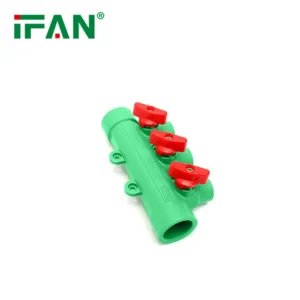
2. Key Features & Benefits
- Corrosion Resistance:
- PPR material is inherently resistant to rust, chemicals, and scaling, ensuring clean water distribution and extending system lifespan.
- Ideal for potable water systems, as PPR is non-toxic and meets international hygiene standards (e.g., ISO 15874).
- Thermal & Pressure Durability:
- Withstands temperatures from -40°C to +130°C and pressures up to 100 bar, making it suitable for hot water, heating, and industrial processes.
- Maintains structural integrity under thermal cycling, reducing leaks and failures.
- Efficient Fluid Distribution:
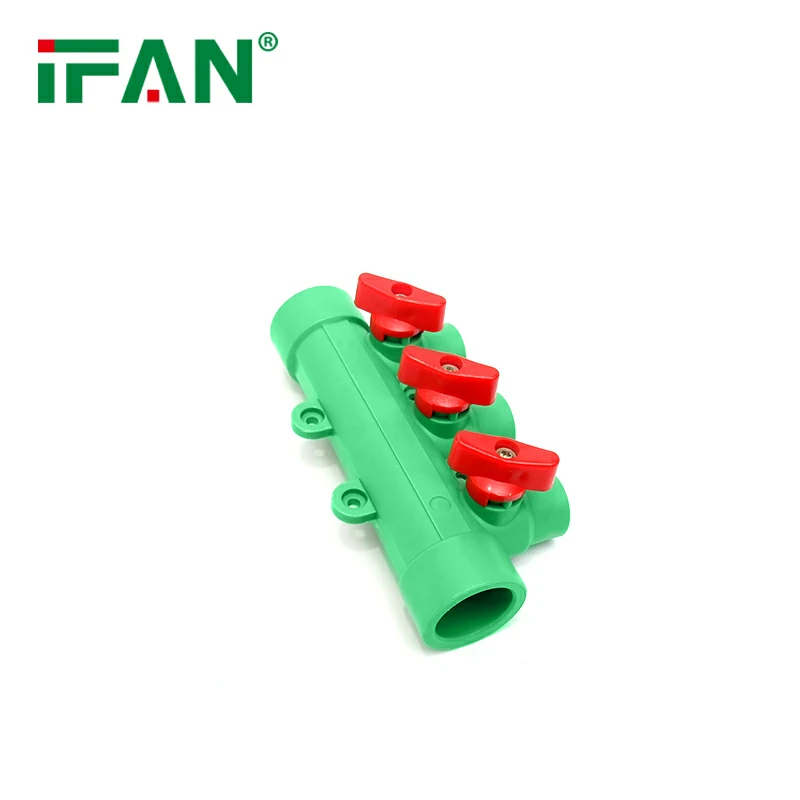
- Designed with multiple outlets (typically 2–12 ports) and integrated valves for precise flow control to individual zones.
- Ensures consistent pressure and flow rates, optimizing system performance.
- Lightweight & Space-Saving:
- PPR manifolds are up to 50% lighter than metal alternatives, simplifying installation and reducing structural load.
- Compact designs allow wall or floor mounting, saving space in tight environments.
- Easy Installation & Maintenance:
- PPR’s thermal fusion welding creates seamless, leak-proof joints, eliminating the need for toxic adhesives.
- Modular design enables quick repairs or expansions without system shutdown.
- Sustainability:
- PPR is 100% recyclable, reducing plastic waste and aligning with eco-conscious practices.
- Low thermal conductivity minimizes energy loss in heating systems.
3. Types of PPR Manifolds
- Residential PPR Manifolds:
- Used in homes for underfloor heating, radiator systems, and domestic water distribution.
- Features 2–6 outlets with adjustable valves for zone control.
- Commercial PPR Manifolds:
- Designed for hotels, hospitals, and schools to manage large-scale water or HVAC systems.
- Supports 8–12 outlets with flow meters and pressure gauges for monitoring.
- Industrial PPR Manifolds:
- Handles chemical transport, gas distribution, and process fluids in factories.
- Built with reinforced PPR for higher pressure and temperature ratings.
- Agricultural PPR Manifolds:
- Optimizes irrigation by delivering water precisely to crops, conserving resources.
- Resistant to fertilizers and UV exposure for outdoor use.
4. Technical Specifications
- Material: PPR (Random Copolymer) with additives for UV resistance and impact strength.
- Thread Standards: BSPT (British Standard Pipe Taper) or NPT (National Pipe Taper) for global compatibility.
- Size Range:
- Pipe Diameter: 20mm to 63mm (¾” to 2½”).
- Outlet Ports: 2 to 12, customizable per project.
- Pressure Ratings:
- Standard: 16 bar (232 PSI) for residential systems.
- Industrial: Up to 100 bar (1,450 PSI) for high-pressure applications.
- Temperature Range: -40°C to +130°C (-40°F to +266°F).
5. Applications Across Industries
- Residential & Commercial Plumbing:
- Distributes hot/cold water to faucets, showers, and appliances in homes, hotels, and offices.
- Enables zone control for energy-efficient heating.
- Industrial Processes:
- Transports chemicals, acids, and gases in manufacturing plants without corrosion.
- Reduces downtime due to leaks or maintenance.
- Agriculture & Irrigation:
- Delivers water and nutrients to crops with precision, improving yield and water conservation.
- Withstands harsh outdoor conditions.
- HVAC & Heating Systems:
- Manages fluid flow in radiant floor heating, snow melting, and chiller systems.
- Ensures even temperature distribution for comfort and efficiency.
- Healthcare Facilities:
- Maintains hygienic environments by supplying clean water to medical equipment and sanitation systems.
6. Installation Guide
Step-by-Step Process:
- Plan Layout: Determine the number of outlets and valve positions based on system requirements.
- Cut Pipes: Use a PPR pipe cutter to ensure clean, square ends.
- Weld Joints:
- Heat PPR pipes and manifold sockets using a fusion welder.
- Press together to form a seamless bond.
- Mount Manifold: Secure to walls or floors using brackets.
- Connect Outlets: Attach pipes to each port, ensuring proper alignment.
- Test System: Pressurize to 1.5x working pressure to check for leaks.
Pro Tips:
- Avoid overheating pipes during welding to prevent deformation.
- Use PPR-specific tools for cutting and welding.
- Label valves for easy zone identification.
7. Comparison with Alternative Materials
| Feature | PPR Manifolds | Steel Manifolds | Copper Manifolds | Plastic (PVC) Manifolds |
|---|---|---|---|---|
| Corrosion Resistance | Excellent (chemical-resistant) | Poor (rusts) | Fair (tarnishes) | Fair (degrades in UV) |
| Weight | Lightweight | Heavy | Moderate | Lightweight |
| Thermal Durability | -40°C to +130°C | -20°C to +300°C | -20°C to +250°C | 0°C to +60°C |
| Installation Ease | Easy (fusion welding) | Moderate (threading) | Difficult (soldering) | Easy (gluing) |
| Lifespan | 50+ years | 20–30 years | 40–50 years | 10–20 years |
| Cost | Moderate | High | Very High | Low |
8. Case Study: Industrial Chemical Plant
Project: Upgrading a Chemical Transport System
- Challenge: Steel manifolds in an acid transport line corroded frequently, causing leaks and downtime.
- Solution: Replaced with PPR manifolds (63mm diameter, 8 outlets) rated for 100 bar and 130°C.
- Results:
- Eliminated corrosion, reducing maintenance by 70%.
- Improved flow consistency, enhancing process efficiency.
- Extended system lifespan to 30+ years.
9. Conclusion
PPR manifolds are a transformative solution for fluid distribution, offering unmatched durability, efficiency, and sustainability. Their resistance to corrosion, thermal stability, and ease of installation make them ideal for residential, commercial, and industrial applications. By choosing PPR, systems achieve lower maintenance costs, longer lifespans, and reduced environmental impact.
IFAN factory started in 1993. And IFAN has workshop 120000 square meter with 610 staff. IFAN can design and produce all plumbing pipe and fitting include PPR,PVC,CPVC PPSU HDPE PEXA PEXB PERT pipe and fitting ,brass fitting, brass ball valve ,heating system , gas system , sanitary faucets and hose, In the past 30 Years, IFAN has never forgotten his mission-To protect health and safety. And IFAN factory use best materials to produce high quality pipe and fittings with automatic production line and high tech quality control machines. The most important,IFAN can guarantee that all pipes and fittings manufactured by IFAN are qualified. More information pls feel free contact us Whatsapp.
Related products
 PPR
PPRPPR Fittings
 PPR
PPRPRR Elbow