

The Complete Guide to PPR Ball Valves: Selection, Installation, and Application
Introduction: The Essential Role of PPR Ball Valves in Modern Piping
Within PPR piping systems, choosing appropriate valves is as critical as selecting the pipes themselves. Particularly, the PPR ball valve has emerged as the premier choice for flow control in polypropylene-based plumbing and heating installations. Designed to match the material and performance characteristics of PPR pipes, these valves ensure system integrity, reliability, and ease of operation across residential, commercial, and industrial settings.
This guide provides a comprehensive overview of PPR ball valves, covering their construction, benefits, installation methods, and maintenance practices to help you specify and use them effectively.
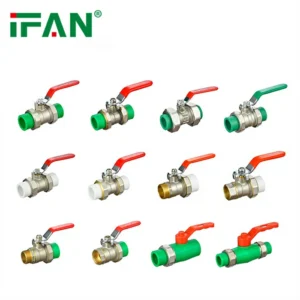
1. What Exactly Is a PPR Ball Valve?
Definition and Core Structure
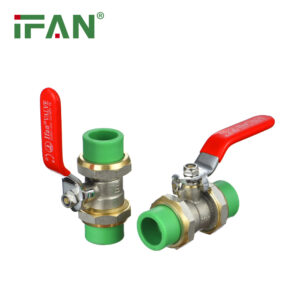
A PPR ball valve is a quarter-turn shutoff valve engineered specifically for Polypropylene Random Copolymer piping. Unlike metallic alternatives, it is constructed from the same high-grade PPR material, ensuring complete compatibility in thermal behavior, pressure rating, and chemical resistance.
The valve comprises several key components:
PPR Body: Fabricated from the same thermoplastic as the piping.
Rotating Ball: A precision sphere with a bore that aligns with the flow path.
Stem and Handle: Translates manual rotation to the ball.
Seats: Typically PTFE or reinforced polymer rings that ensure tight sealing.
Fusion Ends: Socket connections for permanent thermal welding to pipes.
How It Operates
Operation is straightforward: turning the handle 90 degrees rotates the internal ball. When open, the ball’s bore aligns with the pipeline, permitting full flow. Conversely, in the closed position, the solid section of the ball blocks the passage completely. This quarter-turn action allows for quick, unambiguous shutoff, with the handle position providing clear visual indication of status.
2. Key Advantages of Using PPR Ball Valves
Perfect Material Compatibility
Because the valve and pipe share identical PPR material, they exhibit matched thermal expansion, chemical resistance, pressure capacity, and temperature tolerance. Consequently, this homogeneity eliminates potential weak points that often arise when joining dissimilar materials.
Exceptional Durability and Longevity
PPR ball valves deliver outstanding performance over time, primarily due to their:
Corrosion and Chemical Resistance: Immunity to rust, electrolysis, and aggressive fluids.
Scale Resistance: Smooth surfaces hinder mineral deposition.
Long Service Life: Designed to last 50+ years under standard operating conditions.
Broad Temperature Range: Suitable for continuous use from -10°C to 95°C.
Hydraulic Efficiency
Full-Bore Design: Most models offer minimal flow restriction and pressure drop.
Smooth Flow Path: Reduces turbulence and energy loss.
Bidirectional Functionality: Effective in either flow direction.
Ease of Use and Maintenance
Simple Operation: Quarter-turn mechanism requires minimal effort.
Clear Visual Indicator: Handle position instantly shows open/closed status.
Low Maintenance Needs: No regular lubrication or adjustment.
Reliable Sealing: Maintains leak-tight closure over extended periods.
3. Types and Technical Specifications
Connection Method
Socket Fusion Valves: Most common, featuring female sockets for direct thermal welding.
Threaded End Valves: Equipped with PPR threads for specific jointing needs.
Flange Connection Valves: Used for larger diameters and certain industrial setups.
Port Design
Full Port (Full Bore): Bore diameter matches pipe ID, minimizing flow resistance.
Standard Port: Slightly reduced bore, offering a more compact form.
V-Port Design: Provides better flow modulation for control applications.
Pressure Rating
PN10: Rated for 10 bar maximum working pressure.
PN16: 16 bar rating, representing the most common grade.
PN20/PN25: For higher-pressure systems such as central heating mains.
Handle Style
Lever Handle: Standard design offering good mechanical advantage.
Butterfly Handle: Compact, suitable for confined spaces.
Lockable Handle: Allows for secure access control.
Extended Stem: Designed for insulated pipes or recessed installations.
4. Typical Applications Across Sectors
Residential Plumbing
Main supply shutoff points.
Isolation of individual fixtures (toilets, sinks, water heaters).
Outdoor faucet and irrigation control.
Commercial and Institutional Buildings
Zone isolation in multi-story structures.
Equipment shutdown for maintenance.
Branch line control in large complexes.
Laboratory and healthcare water systems.
Heating and HVAC Systems
Radiator isolation valves.
Boiler connections and manifold controls.
Underfloor heating circuits.
Solar thermal system valves.
Industrial and Specialized Uses
Process water and compatible fluid handling.
Compressed air systems.
Agricultural irrigation controls.
5. Professional Installation Guidelines
Pre-Installation Preparation
Review System Design: Confirm valve placement aligns with operational requirements.
Verify Specifications: Ensure valve pressure rating matches the pipe system.
Assess Space and Access: Confirm adequate clearance for handle operation and future maintenance.
Step-by-Step Installation
5. 1: Planning and Measurement
Mark the precise installation location, accounting for handle swing.
Adjust pipe lengths to include the valve dimension.
Plan for proper support of adjacent piping.
5. 2: Pipe Preparation
Cut pipes squarely using a dedicated PPR cutter.
Deburr and clean all joining surfaces thoroughly.
Mark insertion depth on both pipe ends.
5. 3: Valve Positioning
Support the valve body independently during welding.
Align the valve in its intended operational orientation.
Ensure the handle will be easily accessible.
5. 4: Thermal Fusion Welding
Simultaneously heat the pipe ends and valve sockets.
Insert pipes to the marked depth without rotation.
Hold firmly during the cooling period (typically 2–5 minutes).
Inspect the formed bead around each joint for consistency.
5. 5: Testing and Commissioning
Allow the assembly to cool completely before pressure testing.
Cycle the valve several times prior to system pressurization.
Verify smooth operation and leak-tight sealing.
Label the valve according to system documentation.
6. Maintenance and Troubleshooting
Routine Maintenance Practices
Visual Inspections: Regularly check for cracks, discoloration, or deformation.
Operational Exercises: Periodically turn valves in systems with infrequent use.
Handle and Seal Checks: Ensure handles are secure and seals intact.
System-Wide Leak Tests: Include valves in regular system pressure tests.
Common Issues and Resolutions
Stiff Operation: Usually resolved by exercising the valve; PPR valves generally require no lubrication.
Minor Leakage: May necessitate system drainage and inspection of seat integrity.
Loose Handle: Tighten the set screw or retaining nut.
Misaligned Indicator: Reorient the handle to match the ball position.
Replacement Indicators
Visible cracking or material degradation.
Inability to achieve complete shutoff.
Excessive operating torque.
Physical damage to body or connections.
7. Selecting the Right PPR Ball Valve
Technical Selection Criteria
Pressure and Temperature Ratings: Must meet or exceed system operating conditions.
Chemical Compatibility: Confirm resistance to the fluids in the system.
Flow Requirements: Opt for full-port valves where minimal pressure drop is critical.
Connection Type: Choose based on installation method and system design.
Quality Assessment Checklist
Material and Certification: Ensure compliance with ISO 15874 or equivalent standards.
Manufacturer Reputation: Prefer established brands with proven performance.
Testing Documentation: Request pressure-test and material certificates.
Warranty Coverage: A minimum 10-year warranty is advisable.
Sizing Guidance
Typically, valve size should match the nominal pipe diameter.
For high-flow applications, consider upsizing to a full-port design.
Always verify port dimensions against technical datasheets.
Account for spatial constraints in the final installation layout.
Conclusion: The Integral Role of PPR Ball Valves
To summarize, PPR ball valves are fundamental to creating cohesive, reliable PPR piping systems. Their material harmony with PPR pipes, coupled with robust quarter-turn operation, positions them as the optimal choice for flow isolation. By selecting quality products, adhering to precise installation protocols, and performing regular maintenance, these valves will deliver decades of dependable service.
IFAN factory started in 1993. And IFAN has workshop 120000 square meter with 610 staff. IFAN can design and produce all plumbing pipe and fitting include PPR,PVC,CPVC PPSU HDPE PEXA PEXB PERT pipe and fitting ,brass fitting, brass ball valve ,heating system , gas system , sanitary faucets and hose, In the past 30 Years, IFAN has never forgotten his mission-To protect health and safety. And IFAN factory use best materials to produce high quality pipe and fittings with automatic production line and high tech quality control machines. The most important,IFAN can guarantee that all pipes and fittings manufactured byIFAN are qualified. More information pls feel free contact us Whatsapp.
Related products
 PPR
PPRIFAN PPR TEE