

IFAN High Performance Water Use Green PPR Pipe Fittings
Description
1. What Are PPR Pipe Fittings?
PPR (Polypropylene Random Copolymer) pipe fittings are precision-engineered components that connect PPR pipes in modern plumbing and heating systems. Manufactured from high-quality thermoplastic, these fittings create permanent, leak-proof joints through heat fusion welding. Unlike threaded or glued connections, PPR fittings form homogeneous joints that are as strong as the pipe itself, ensuring decades of reliable performance.
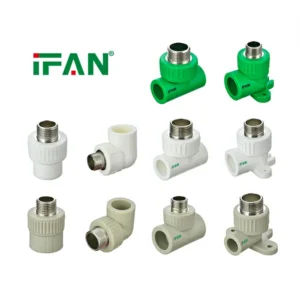
2. Key Advantages
Leak-Proof Joints: Heat fusion creates monolithic, permanent connections
Corrosion-Free: Immune to rust, scale, and chemical attack
Long Lifespan: 50+ years of maintenance-free service
Hygienic: NSF-certified for drinking water; prevents bacterial growth
Thermal Efficiency: Excellent insulation properties reduce heat loss
Cost-Effective: Lower lifetime cost than metal alternatives
3. Material Specifications
Base Material: PPR Type 3 (Polypropylene Random Copolymer)
Temperature Rating: Continuous 70°C (158°F), peaks to 95°C (203°F)
Pressure Ratings: PN10, PN16, PN20, PN25
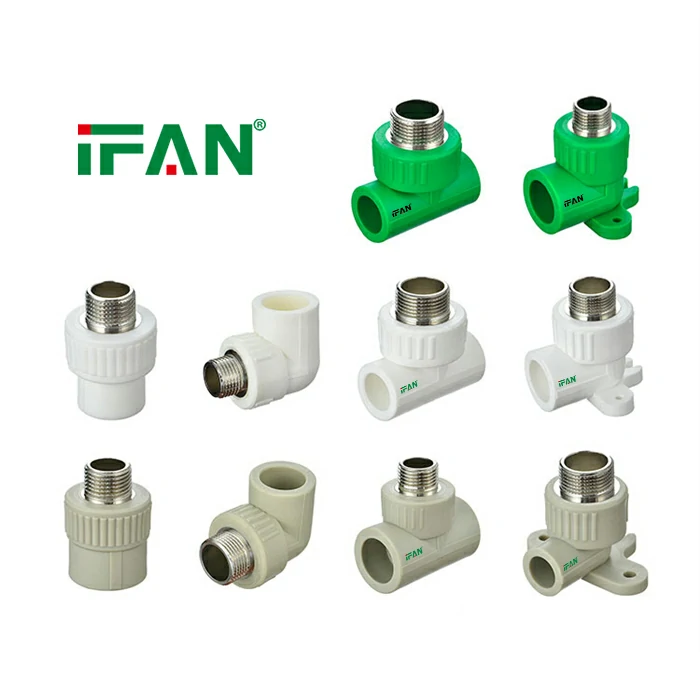
Color Coding: White (standard), Green (hot water), Gray (industrial)
Standards: ISO 15874, ASTM F2389, NSF/ANSI 61
Sizes: 20mm to 110mm diameters
4. Common Fitting Types
Elbows:
90° and 45° angles
Equal and reducing configurations
For changing pipe direction
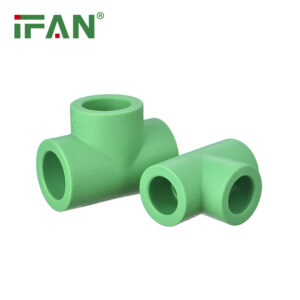
Tees:
Straight and reducing designs
For branch connections
Available with threaded outlets
Couplings:
Straight and reducing types
Repair couplings for damaged sections
For connecting straight pipe runs
Adapters:
Threaded (male/female) for connecting to other systems
Flange adapters for equipment connections
Union fittings for serviceable connections
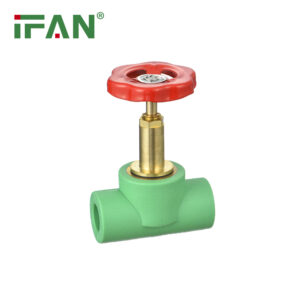
Valves:
Ball valves, check valves, thermostatic valves
Available in matching PPR material
5. Installation Process
5. 1: Preparation
Cut PPR pipe squarely using dedicated cutter
Clean pipe end and fitting socket with isopropyl alcohol
Mark insertion depth using manufacturer’s gauge
5. 2: Heat Fusion
Heat both components simultaneously at 260°C (500°F)
Join immediately without twisting
Hold steady during cooling (2-10 minutes based on size)
5.3: Testing
Pressure test at 1.5× operating pressure
Check for uniform fusion bead formation
Verify no leaks before system use
6. Applications
Residential Plumbing:
Whole-house hot/cold water distribution
Water heater connections
Radiant floor heating systems
Appliance supply lines
Commercial Systems:
Office buildings, hotels, hospitals
School and institutional plumbing
Food service and laboratory installations
Industrial Uses:
Process water lines
Compressed air systems
Chemical transfer (compatible fluids)
Irrigation and agricultural systems
HVAC Applications:
Chiller water lines
Boiler connections
Solar thermal systems
Heat exchanger piping
7. Selection Guide
7.1 For Hot Water Systems:
Use PN20 or PN25 rated fittings
Choose green-colored fittings for identification
Consider thermal expansion in design
7.2 For Cold Water Systems:
PN16 typically sufficient
Standard white fittings adequate
Focus on pressure requirements
7.3 For Heating Systems:
High-temperature resistant formulations
Expansion compensation fittings for long runs
Insulated versions for energy efficiency
7.4 For Industrial Applications:
Verify chemical compatibility
Choose higher pressure ratings
Consider gray fittings for identification
8. Quality Standards
Certification Marks:
ISO 15874 compliance
NSF/ANSI 61 for potable water
CE marking for European markets
Local plumbing code approvals
Quality Verification:
Check for consistent material color and texture
Verify dimensional accuracy
Look for manufacturer’s pressure test certificates
Ensure proper packaging and labeling
9. Professional Tips
Installation Best Practices:
Always use same-brand pipes and fittings
Keep fusion welder clean and calibrated
Allow proper cooling time before pressure testing
Use pipe supports near heavy fittings
Plan for thermal expansion in long runs
Design Considerations:
Include service valves at strategic locations
Consider future expansion needs
Design for accessibility of critical fittings
Account for system pressure drops
Maintenance:
No routine maintenance required
Visual inspection annually
Immediate repair of any damage
Keep installation records for warranty
10. Cost Considerations
Initial Costs:
Competitive with quality metal fittings
Lower than copper system components
Tool investment required for installation
Installation Costs:
Lower labor costs than threading/soldering
Faster installation reduces project time
Minimal waste during installation
Lifetime Costs:
Zero maintenance expenses
No replacement costs from corrosion
Energy savings from thermal insulation
50+ year service life
Warranty:
Typically 10-50 years from manufacturers
Requires professional installation
Must follow manufacturer guidelines
Keep installation documentation
11. Sustainability Benefits
Environmental Impact:
Fully recyclable at end of service life
Lower embodied energy than metal alternatives
Energy efficient during operation
No hazardous materials in manufacturing or use
Health and Safety:
No lead or heavy metal leaching
Non-toxic material composition
Safe installation without fumes or chemicals
Fire-resistant properties
Summary: PPR pipe fittings offer a modern, reliable solution for plumbing and heating systems. Their heat fusion installation creates permanent, leak-proof joints that outperform traditional connection methods. With excellent corrosion resistance, thermal properties, and long service life, PPR fittings provide outstanding value for residential, commercial, and industrial applications. Proper selection based on pressure rating, temperature requirements, and application specifics ensures optimal performance for decades of trouble-free service. For professionals seeking efficient, durable, and hygienic piping solutions, PPR fittings represent a proven technology with global acceptance and proven performance.
IFAN factory started in 1993. And IFAN has workshop 120000 square meter with 610 staff. IFAN can design and produce all plumbing pipe and fitting include PPR,PVC,CPVC PPSU HDPE PEXA PEXB PERT pipe and fitting ,brass fitting, brass ball valve ,heating system , gas system , sanitary faucets and hose, In the past 30 Years, IFAN has never forgotten his mission-To protect health and safety. And IFAN factory use best materials to produce high quality pipe and fittings with automatic production line and high tech quality control machines. The most important,IFAN can guarantee that all pipes and fittings manufactured byIFAN are qualified. More information pls feel free contact us Whatsapp.
Related products
 PPR
PPRIFAN PPR TEE
 PPR
PPRIFAN PPR Valve